


A Marriage Shattered on a Hawaiian Trail: The Trial of Dr. Gerhardt Konig
The Alleged Attack That Changed Everything
The picturesque hiking trails of Oahu, Hawaii, known for their breathtaking views and natural beauty, became the setting for a horrific alleged crime that has gripped the local community and beyond. Dr. Gerhardt Konig, a respected anesthesiologist from Maui, now stands accused of one of the most disturbing charges imaginable: attempting to murder his wife on what was supposed to be a birthday celebration trip. The incident allegedly occurred on March 24, 2025, along the Pali Puka Trail, transforming what should have been a romantic getaway into a nightmare that would ultimately destroy their family and leave their two children caught in the aftermath of unimaginable violence.
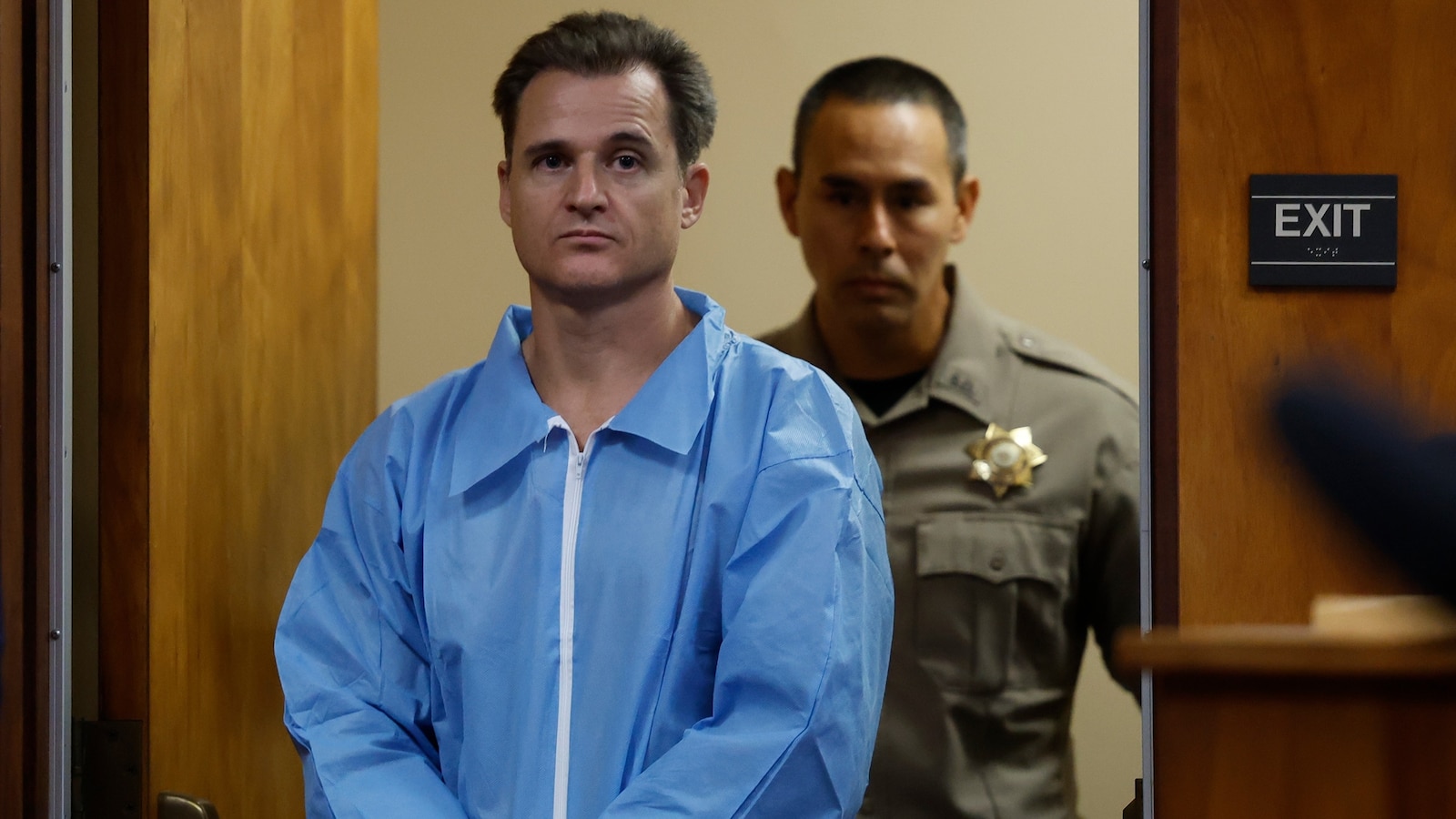
As the trial opened in a Honolulu courtroom this past Thursday, the atmosphere was tense with anticipation. Dr. Konig, who has been held in custody since his arrest a year ago, faces charges of second-degree attempted murder—a serious felony that could result in substantial prison time if he’s convicted. He has entered a plea of not guilty, setting the stage for what promises to be an emotionally charged legal battle. The courtroom heard two starkly different versions of events from that fateful day, with prosecutors painting a picture of premeditated violence and the defense countering with claims of self-defense during an unexpected altercation. The truth, as it often does in such cases, likely lies somewhere within the testimony, evidence, and witness accounts that will unfold in the coming days.
The Prosecution’s Account: A Calculated Act of Violence
Prosecutor Joel Garner opened the state’s case with dramatic flair, beginning his statement with the words that allegedly pierced the tranquil Hawaiian mountainside that day: “Help! Help! Help!” According to Garner’s narrative, these were the desperate screams of Arielle Konig as her husband of many years allegedly turned on her with brutal intent during their descent down the hiking trail. The prosecutor laid out a chilling sequence of events that began with Dr. Konig allegedly pushing his wife toward the edge of a cliff—a precipice that could have resulted in her death had she fallen. What followed was a struggle that would leave Arielle fighting not just for her safety, but for her very life.
During this struggle, Garner told the jury, Arielle managed to knock a syringe from her husband’s hand and attempted to take a vial away from him—details that suggest possible premeditation and preparation on the doctor’s part. The prosecutor claimed that after uttering the words “I’m sick of this s—,” Dr. Konig briefly seemed to calm down, giving Arielle a false sense that the danger had passed. But then, according to the state’s version of events, he picked up a rock and began bashing her head repeatedly, inflicting severe injuries that would require hospitalization. Two women hiking nearby heard Arielle’s screams and came upon a horrifying scene: Dr. Konig allegedly on top of his wife, rock in hand, in what appeared to be an attempt to kill her. These brave women intervened, helping Arielle down the mountain while authorities launched an extensive manhunt that would last for hours before officers finally located Dr. Konig emerging from the forest.
Perhaps the most damning piece of evidence the prosecution plans to present is an alleged phone call Dr. Konig made to his teenage son before his arrest. According to Garner, the doctor confessed to his child, saying, “I’m not going to make it back. I tried to kill Arielle, but she got away.” If true, this statement would be devastating to the defense’s case. The prosecutor also revealed what he claims was the motive behind the alleged attack: jealousy and rage over suspected infidelity. Months before the hiking incident, Dr. Konig had allegedly discovered “flirty” WhatsApp messages between his wife and a coworker. Though the couple had sought counseling and Arielle believed their relationship was improving, the prosecutor suggests that Dr. Konig was harboring dark intentions, telling his son that his wife had been cheating and that he was “at the end of my rope.”
The Defense’s Counter-Narrative: A Marriage in Crisis
Defense attorney Thomas Otake presented a dramatically different picture of what happened on that trail, one that casts his client not as a would-be murderer but as a man falsely accused and driven to a single moment of reactive violence after being attacked first. According to Otake’s opening statement, it was Arielle Konig who initiated what he called an “unplanned, unanticipated scuffle” during an argument about her alleged extramarital affair. The defense claims that Arielle pushed and attacked her husband first, and that she was actually the one who initially wielded the rock as a weapon. In this version of events, Dr. Konig’s actions were defensive rather than predatory—a husband responding to an assault rather than perpetrating one.
Otake firmly denied several key elements of the prosecution’s case, including the claim that his client tried to push Arielle off the cliff or that he had syringes with him on the trail. The defense attorney acknowledged that Dr. Konig did strike his wife with the rock, but characterized it as a single blow delivered in response to her attack, not the repeated bashing described by prosecutors. He also prepared the jury for the graphic nature of the photographic evidence they would see, noting that Arielle’s injuries resulted in a “severe laceration” that bled profusely, but argued that medical testimony would show the wounds were “not as bad as it looks.” This is a delicate argument for the defense—admitting that Dr. Konig caused his wife’s injuries while trying to minimize their severity and reframe the context in which they occurred.
Regarding the alleged confession to his son, Otake offered an alternative explanation that paints his client in a more sympathetic, if still troubled, light. He claimed that Dr. Konig called his teenage son not to confess to attempted murder, but to apologize and say goodbye because he was experiencing suicidal thoughts in the aftermath of the altercation. According to the defense, Dr. Konig remained on the mountain for hours, wrestling with the prospect of his marriage ending and contemplating jumping off the cliff himself. At this point in the opening statement, Dr. Konig became visibly emotional in the courtroom, a display that could have been genuine remorse, the weight of the situation, or a reaction to reliving that traumatic day. Otake promised jurors they would hear a “complex, long, human story” that would be “sad for everyone involved”—a narrative that attempts to humanize his client and present the incident as a tragic moment in a deteriorating relationship rather than a calculated murder attempt.
The Evidence and the Witnesses
As the trial proceeds, the jury will be tasked with sorting through competing narratives and determining which version of events is supported by the evidence. Prosecutor Garner has promised that jurors will hear from several key witnesses who can provide crucial pieces of the puzzle. Arielle Konig herself is scheduled to testify on Tuesday, and her account of what happened on that trail will undoubtedly be the most compelling and emotionally charged testimony of the trial. She will need to recount the details of the alleged attack, describe her injuries, and face cross-examination from the defense attorney representing the man she was once married to and with whom she shares two children. Arielle filed for divorce in May 2025, just weeks after the incident, a legal step that speaks to the irreparable damage done to their relationship regardless of the trial’s outcome.
The jury will also hear from Dr. Konig’s teenage son, who will have to testify about the phone call he received from his father on that terrible day. This will be extraordinarily difficult for a young person who is caught between his parents in the most devastating way imaginable. The two women who came upon the couple on the trail and intervened will provide eyewitness testimony about what they saw and heard, including whether Dr. Konig appeared to be the aggressor or whether there were signs that Arielle had been the one to initiate violence. The officers who apprehended Dr. Konig after the manhunt will describe his condition, demeanor, and any statements he made upon his arrest. Additionally, the prosecution plans to present photographic evidence of the bloody trail, Arielle’s injuries, and the “jagged” rock allegedly used in the attack, which was recovered from the scene.
According to the probable cause document filed at the time of his arrest, Arielle Konig suffered significant injuries including large lacerations to her face and head, and she was hospitalized in serious condition following the alleged attack. The severity of these injuries will be central to the prosecution’s case, as they’ll argue that such damage could only have been inflicted by someone intent on causing grave harm or death. The defense will counter that while the injuries were serious and the photographs are graphic, medical expert testimony will provide context that supports their version of events—perhaps arguing that a single defensive blow could have caused the bleeding and lacerations prosecutors are presenting as evidence of repeated, murderous intent. The credibility of expert witnesses on both sides will be crucial in helping jurors understand the medical evidence and what it can and cannot tell us about what happened on that mountain.
The Broader Context: A Professional Life in Ruins
Beyond the immediate question of guilt or innocence in the attempted murder charge, this case has already had devastating consequences for Dr. Gerhardt Konig’s professional life and reputation. Prior to his arrest, he worked as an anesthesiologist on Maui, a position of significant responsibility and trust within the medical community. Anesthesiologists are responsible for patients’ lives during surgical procedures, managing pain and ensuring safety during some of the most vulnerable moments in healthcare. Following his arrest, Maui Health, the organization that operates Maui Memorial Medical Center where he had privileges, moved swiftly to suspend those privileges pending investigation. This is standard procedure when a medical professional faces serious criminal charges, but it effectively ended his career, at least temporarily and perhaps permanently depending on the trial’s outcome.
The fall from respected medical professional to criminal defendant has been dramatic and complete. Dr. Konig has remained in custody since his arrest, unable to post bail or return to his life and work. A judge denied his motion to dismiss the indictment last month, meaning the legal system determined there was sufficient evidence to proceed to trial. For a man who spent years in medical school and training, who dedicated his career to helping others and relieving suffering, the current circumstances represent a complete reversal of fortune. If convicted, he would not only face significant prison time but would certainly lose his medical license permanently, ending any possibility of returning to the profession that defined his adult life. Even if acquitted, the damage to his reputation may be irreparable, making it difficult or impossible to resume practicing medicine.
The Human Toll: A Family Forever Changed
Perhaps the most heartbreaking aspect of this case is the impact on the two children caught in the middle of their parents’ disintegrating relationship and the violent incident that allegedly occurred. These young people have seen their family unit completely destroyed in the span of a year. Their father sits in jail facing serious criminal charges, their mother has been hospitalized with severe injuries and has filed for divorce, and they are now being called upon to potentially testify in a trial that could send one parent to prison based partly on what the other parent claims happened. The teenage son who allegedly received a phone call from his father on the day of the incident faces the impossible position of having to recount that conversation in court, knowing that his testimony could influence whether his father spends years behind bars.
Regardless of the trial’s outcome, this family will never be the same. If Dr. Konig is convicted, his children will have to grapple with the reality that their father attempted to kill their mother, a trauma that will require years of therapy and support to process. If he is acquitted, there will still be the knowledge that he caused her serious injuries, and the family will have to navigate the complex emotions surrounding that fact. Arielle Konig, meanwhile, has had to physically recover from her injuries while emotionally processing the trauma of the alleged attack and preparing to face her husband in court. She filed for divorce just weeks after the incident, a clear indication that she believes the marriage is beyond repair regardless of legal proceedings. The birthday trip that was meant to be a celebration of their relationship instead became the day that ended their marriage and fundamentally altered the trajectory of their entire family’s lives.
As this trial continues in the coming days and weeks, the jury will have the difficult task of determining which version of events is most consistent with the evidence. Was this a premeditated attempt at murder by a jealous husband who had reached his breaking point, as the prosecution contends? Or was it a tragic moment of reactive violence during an argument that spiraled out of control, as the defense claims? The answer will determine not only Dr. Gerhardt Konig’s fate but will also provide some measure of clarity—though certainly not closure—for a family that has been torn apart by the events of that day on the Pali Puka Trail. Whatever the verdict, the human cost of what happened on that Hawaiian mountainside has already been devastating and irreversible.