


The Austin Yogurt Shop Murders: A 35-Year Journey to Justice
A Crime That Shattered Austin’s Innocence
On a cold December night in 1991, the city of Austin, Texas, lost its sense of safety forever when four teenage girls were brutally murdered at a local yogurt shop. What should have been an ordinary Friday night shift followed by a planned sleepover turned into one of the most horrific and perplexing criminal cases in the city’s history. Amy Ayers, just 13 years old, along with Jennifer Harbison, 17, her younger sister Sarah Harbison, 15, and Eliza Thomas, 17, never made it home that night. As Mindy Montford, a former prosecutor with the Texas Attorney General’s Cold Case and Missing Person’s Unit, reflected, “When the yogurt shop murders took place, it changed Austin forever… [it] really took our innocence away.” The case would haunt the community for nearly 35 years, leaving families devastated and a city demanding answers that seemed impossible to find.
Just before midnight on December 6, 1991, an Austin Police Department patrol officer noticed flames coming from the I Can’t Believe It’s Yogurt! shop on West Anderson Lane. When first responders arrived to extinguish the fire, they discovered a scene of unimaginable horror. The four young girls had been herded to the back of the shop, bound, stripped naked, and shot execution-style. Evidence suggested they had been sexually assaulted before being killed. Their bodies had been deliberately set on fire, leaving charred remains beneath layers of fire and water damage. In the early morning hours, police officers arrived at the homes of four families with news that would destroy their lives forever. The girls—each with bright futures ahead of them—had been stolen from their families in the most violent way imaginable.
Remembering the Victims: Lives Cut Tragically Short
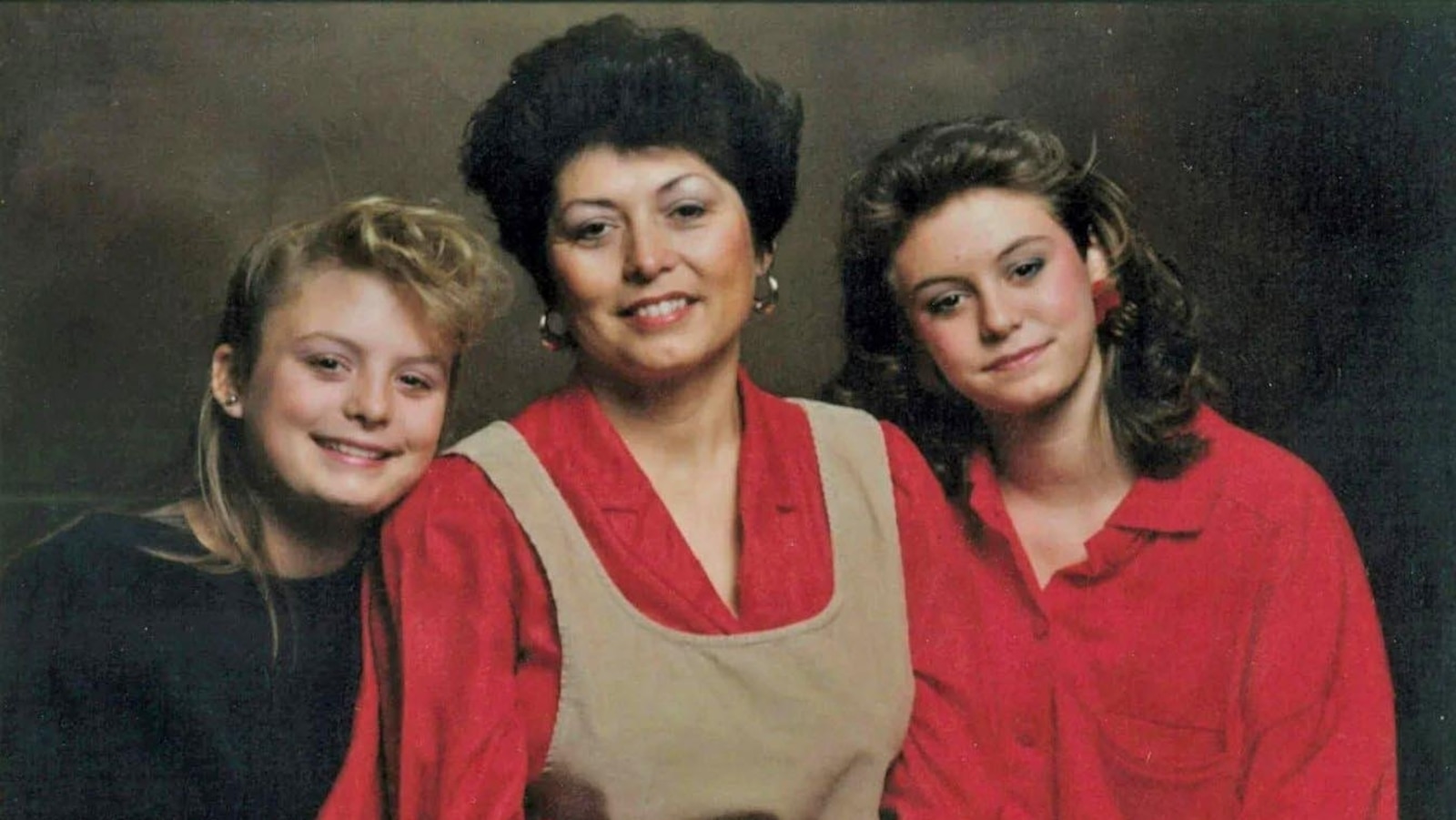
Each of the four victims was a unique individual with dreams, personalities, and people who loved them dearly. Amy Ayers, the youngest at just 13, was described by her family as “just a cowgirl” and “an old soul at an early age.” She was deeply involved with the Future Farmers of America organization, where she had befriended the older girls who worked at the yogurt shop. Her fierce spirit and maturity beyond her years made her stand out, and her family knew she would have fought back against her attackers—a belief that would later prove crucial to solving the case.
Jennifer and Sarah Harbison were sisters whose close bond was evident to everyone who knew them. Their mother, Barbara Ayres-Wilson, remembered them as “lovely people” and noted that Jennifer particularly “loved working together” with Eliza at the yogurt shop. The sisters’ relationship was special, and their simultaneous loss devastated their family in ways that compounded the grief. Eliza Thomas, 17, was remembered by her younger sister Sonora as “very social” and “energetic,” someone who was “really into fitness and fashion” and in the process of “trying to discover who she was during that period” of her life. These weren’t just statistics or case files—they were vibrant young women whose potential would never be realized, whose families would never see them graduate, marry, or have children of their own.
A Decades-Long Investigation Marked by False Leads and Wrongful Accusations
Eight days after the murders, police thought they had caught a break when they found 15-year-old Maurice Pierce armed with a .22 firearm—the type of weapon initially suspected in the killings—at Northcross Mall, which two of the victims had visited the night they died. Pierce told investigators he had been with friends Forrest Welborn, Michael Scott, and Robert Springsteen the evening of the murders. Police questioned all four boys, administered polygraph tests to Pierce and Welborn, and eventually dismissed them all. As Defense Attorney Amber Farrelly later explained to “20/20,” “They didn’t have fingerprints, hair, DNA, nothing that tied any of these boys or anyone to this crime at all. They had, at the beginning, a lot of gossip.”
The devastated families refused to let the case go cold. They created billboards, staffed tiplines, and offered rewards for information. Amy Ayers’ father, Bob Ayers, became particularly relentless in his pursuit of justice. “Every chance I got, I went to the police department to make sure they were working on the case,” he recalled. Despite these efforts, years passed without any concrete leads. Then, in the late 1990s, Texas investigators launched a renewed effort to solve the case. As they reviewed 33 boxes of evidence, they were drawn back to the original suspects—Pierce, Welborn, Scott, and Springsteen.
This time, the interrogations were intense and prolonged. Scott was questioned for days, while Springsteen’s interrogation began after he had worked an overnight shift. Eventually, both Scott and Springsteen confessed to the crimes, but almost immediately recanted, claiming they had been coerced and insisting on their innocence. Welborn and Pierce vehemently denied any involvement. Nevertheless, all four men were arrested in 1999, and the district attorney obtained indictments against Springsteen, Scott, and Pierce. Two grand juries failed to indict Welborn. At their trials in 2001 and 2002, Springsteen and Scott were convicted of capital murder based largely on their confessions being used as evidence against each other. However, these convictions were overturned in 2006 and 2007 following a Supreme Court ruling in a different case that prohibited using one person’s written confession against another defendant.
The Long Shadow of False Accusation
The wrongful accusations destroyed the lives of four innocent men for decades. Maurice Pierce spent three years in jail awaiting trial before his capital murder charges were dismissed. After DNA testing in 2009 ruled out all four initial suspects and revealed no evidence supporting their involvement, Springsteen and Scott were finally released, their cases dismissed pending further investigation. But the damage had been done. These men lived under a cloud of suspicion for years, their reputations ruined, their lives derailed by a criminal justice system that had failed them spectacularly. Pierce never received full exoneration—he died in a police altercation in 2010, still carrying the stigma of having once been accused of these horrific murders.
Meanwhile, the actual killer remained unknown, and the families were left without answers once again. The case seemed destined to remain unsolved forever. Angie Ayers, who married Amy Ayers’ brother Shawn, saw how the prolonged investigation and false starts were taking a toll on the family. “My in-laws and Shawn had gotten to a point in the case that [they] had nothing left in them. We’d already gone through trials,” she told “20/20.” When Shawn asked her to take over as the family’s point person with investigators, she agreed without hesitation. She became instrumental in maintaining communication between law enforcement and the victims’ families, even suggesting that investigators consider using genealogical experts—a suggestion that would prove prescient as investigative techniques evolved.
Breakthrough: Modern Science Solves an Old Mystery
In 2021, thirty years after the murders, the Austin Police Department requested the formation of a new cold case unit, and Detective Dan Jackson was assigned to take charge of the yogurt shop case. Jackson brought fresh eyes and modern investigative techniques to the decades-old evidence. He had an expelled shell casing that had been collected from the yogurt shop’s drain analyzed by forensic experts using current technology. The results were startling: the casing was linked to one from a 1998 cold case in Kentucky. This discovery suggested that the same gun had been used to commit both crimes, indicating the work of a serial offender who had struck across state lines.
Encouraged by this breakthrough, Jackson also contacted the Texas CODIS administrator and requested that laboratories across the country manually search for the unknown DNA that had been collected from Amy Ayers’ fingernails all those years ago. Amy’s mother, Pam Ayers, had told investigators from the very beginning, “Check Amy’s fingernails. We knew that she would’ve fought.” That mother’s intuition proved correct. The search used YSTR profiles, which identify genetic information found on the Y chromosome, passed from father to son. A YSTR profile with similar genetic data matched a sample collected from a South Carolina assault and murder case.
After connecting with South Carolina authorities, Jackson researched their suspect: Robert Eugene Brashers, a man with a string of violent charges across the United States who had died in 1999—just eight years after the yogurt shop murders. As Jackson told “20/20,” “What are the odds that the same Y profile comes back to a serial killer? And when you start researching this guy, you find out that these are similar crimes, this M.O. is very similar to yogurt shop on more than one occasion.” The pattern was clear: Brashers had committed similar violent crimes involving young women in multiple states. He fit the profile perfectly, and the forensic evidence—both the DNA and the ballistics—connected him definitively to the Austin yogurt shop murders.
Justice, Exoneration, and Remembrance
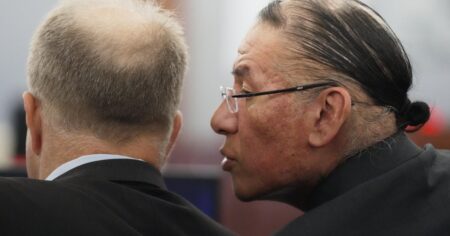
With the case finally solved, two important acts of justice needed to occur. First, on February 19, 2026—nearly 35 years after the murders—Scott, Springsteen, and the estate of the deceased Pierce, along with Welborn, were formally exonerated by the State of Texas. District Attorney José Garza, who had pursued the exonerations through his Conviction Integrity Unit, issued a heartfelt apology at the hearing. “You were wrongfully accused and you are innocent, and I am so sorry for the role that our office played,” Garza said during a press conference. The emotional weight of the moment was palpable as decades of injustice were finally acknowledged.
Michael Scott expressed his profound relief at the February hearing: “For decades, I have carried the burden of wrongful conviction. Every day, I have carried the weight of a crime I did not commit. No court ruling can return the years and the love that were taken from me. But it can acknowledge the truth—I am not guilty.” While exoneration could never restore what these men had lost, it at least cleared their names and provided some measure of closure.
For the families of Amy, Jennifer, Sarah, and Eliza, the identification of Robert Eugene Brashers as their daughters’ killer brought the answers they had sought for more than three decades. Though Brashers’ death in 1999 meant he could never face trial or punishment for his crimes, the families finally knew who had stolen their daughters from them and why the case had remained unsolved for so long. As they told “20/20,” they now focus on preserving the legacy of their beloved girls. Barbara Ayres-Wilson perhaps said it best: “Jennifer and Sarah and Amy and Eliza did not get to be a part of the community, and the community is less for it because they were really good citizens. They would’ve made a difference somehow.” A memorial honoring “our girls” now stands as a permanent tribute to the yogurt shop victims, ensuring that they will never be forgotten and that their young lives, though tragically cut short, will continue to have meaning for generations to come.