



Escalating Border Conflict: Understanding the Pakistan-Afghanistan Crisis
Deadly Clashes Intensify Along the Disputed Border
The fragile relationship between Pakistan and Afghanistan has erupted into violent confrontation, with intense fighting along their shared border entering its fifth consecutive day. According to Pakistani officials, Afghan forces launched coordinated attacks on Pakistani military positions early Tuesday morning, resulting in devastating casualties on both sides. Pakistan reports that 67 Afghan troops were killed in the clashes, along with one Pakistani soldier. However, the Taliban defense ministry in Kabul has categorically rejected these claims, presenting a vastly different narrative. Afghan officials assert that their forces successfully defended against Pakistani aggression, destroying approximately a dozen military posts and killing four Pakistani soldiers. This stark disparity in casualty reports highlights the confusion and propaganda that often surround such conflicts, making it extremely difficult for the international community to discern the truth on the ground.
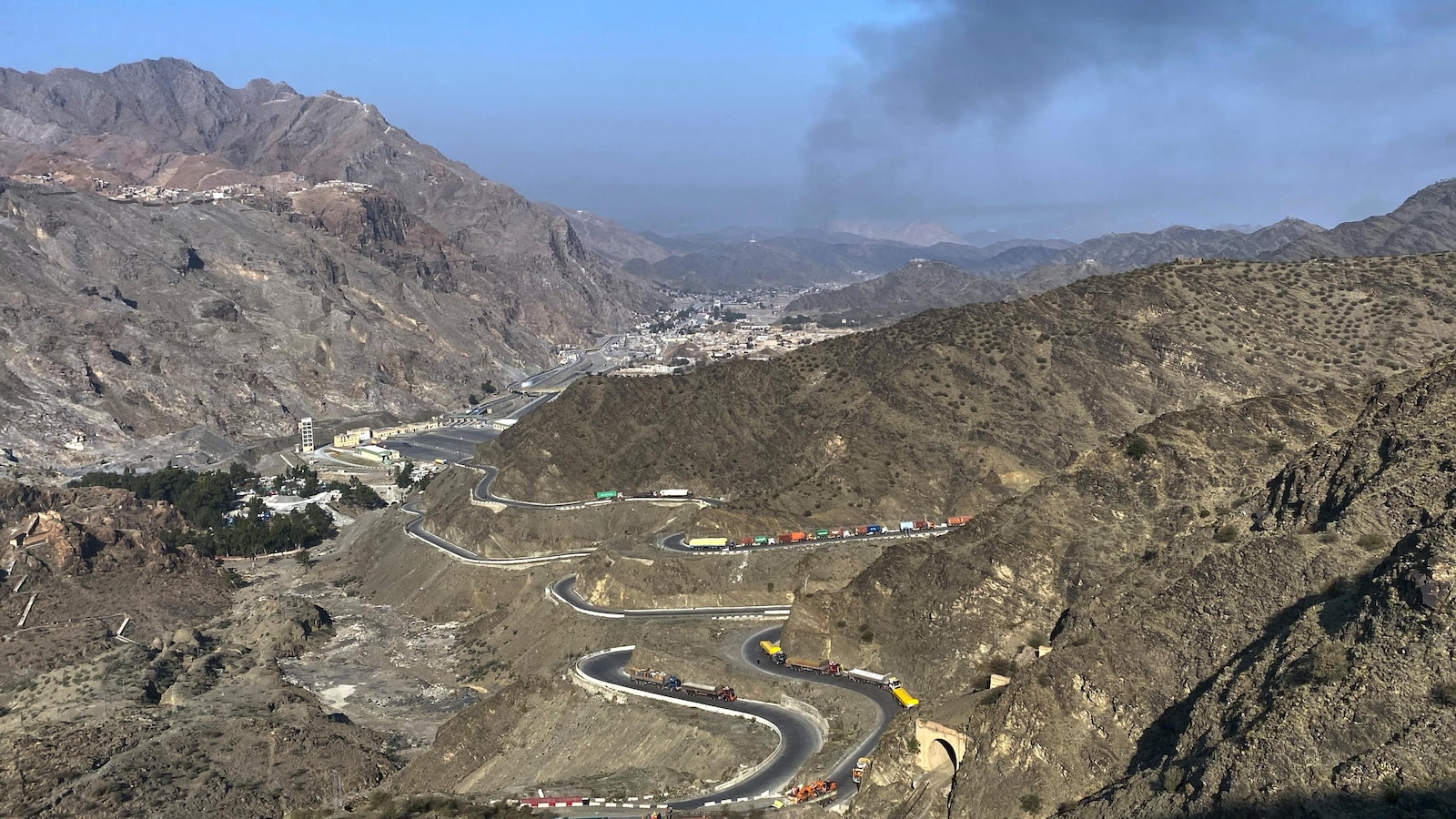
The escalation didn’t emerge from nowhere but rather represents the boiling over of long-simmering tensions between the two neighboring nations. The current cycle of violence began last Thursday when Afghanistan launched retaliatory attacks in response to Pakistani airstrikes conducted the previous weekend. Since then, military operations have intensified dramatically, with Pakistan declaring itself in an “open war” with Afghanistan—a statement that has sent alarm bells ringing throughout the international community. The border region where these clashes are occurring is particularly volatile, serving as a known operational area for various militant groups including al-Qaida and the Islamic State. The remote and dangerous nature of this territory means that independent media cannot access the area to verify the competing claims from both governments, leaving the international community to navigate through contradictory statements and potentially inflated casualty figures that both sides have historically been known to report during previous conflicts.
Conflicting Accounts and the Fog of War
The information emerging from both Islamabad and Kabul presents dramatically different pictures of what’s actually happening along the border. Pakistani Information Minister Attaullah Tarar provided detailed accounts of the Tuesday attacks, explaining that Afghan forces targeted Pakistani military positions in two distinct sections of the border. In the southern region, specifically in the southwestern districts of Qilla Saifullah, Nushki, and Chaman in Pakistan’s Balochistan province, sixteen locations came under attack. Pakistani forces claim to have killed 27 Afghan troops while successfully repelling these assaults. Further north, along the border in Khyber Pakhtunkhwa province, another wave of attacks targeted 25 locations, where Pakistani troops reportedly killed 40 members of Afghan security forces. Over the five days of fighting, Pakistan claims its forces have killed 464 Afghan security personnel and wounded 665 others—figures that seem extraordinarily high and raise questions about accuracy.
In stark contrast, Afghanistan’s defense ministry spokesman Enayatullah Khawarazmi dismissed Pakistan’s statements as “baseless,” maintaining that Afghan forces have been defending their territory against Pakistani aggression rather than initiating attacks. The Afghan government reports significantly lower casualties, stating that 28 Afghan soldiers have died and 42 have been wounded throughout the five-day conflict. This massive discrepancy between the two nations’ reports is characteristic of the propaganda war that accompanies actual military confrontations. Both countries have established patterns in past border escalations of claiming to have inflicted heavy losses on the opposing side while minimizing their own casualties. Without independent verification—impossible given the dangerous and inaccessible nature of the border regions where militant groups operate freely—the international community is left trying to piece together reality from these contradictory accounts, understanding that the truth likely lies somewhere between the two extremes being presented by both governments.
The Root Causes: Militant Safe Havens and Border Security
At the heart of this violent escalation lies a fundamental disagreement that has poisoned Pakistan-Afghanistan relations for years: the question of militant safe havens. Pakistan has consistently and vehemently accused the Taliban government in Kabul of providing sanctuary to militants who carry out attacks against Pakistani targets. Specifically, Islamabad points to the Tehreek-e-Taliban Pakistan (TTP), also known as the Pakistani Taliban, which it claims operates freely from Afghan territory with the protection and support of Afghanistan’s Taliban government. This group, while separate from the Afghan Taliban, is closely allied with them and has significantly intensified its activities since the Afghan Taliban’s return to power in August 2021. Pakistan has experienced a dramatic surge in terrorist violence in recent months, with attacks claiming civilian and military lives across the country, particularly in regions near the Afghan border.
Afghanistan categorically denies these accusations, with spokesman Khawarazmi reiterating their position: “I repeat once again that we will not allow any person or group to use our territory against other countries.” This stance, however, rings hollow to Pakistani officials who point to concrete evidence of cross-border attacks originating from Afghan soil. The relationship is further complicated by Afghanistan’s own grievances against Pakistan. Deputy government spokesman Hamdullah Fitrat has accused Pakistani forces of violating Afghan airspace and deliberately targeting civilian infrastructure including homes, mosques, religious schools (madrasas), and even refugee camps across multiple provinces including Kabul, Laghman, Nangarhar, Paktia, Kandahar, and Kunar. According to Afghan figures, these attacks have killed 110 civilians, including 65 women and children—casualties that Fitrat insists give the Taliban government the “legitimate right” to defend its people and continue fighting “until this aggression is stopped.” This mutual finger-pointing creates a vicious cycle where each side’s actions justify the other’s retaliation in their own eyes.
International Concern and Humanitarian Consequences
The international community has watched the deteriorating situation with growing alarm, particularly given Afghanistan’s already desperate humanitarian circumstances. The United Nations mission in Kabul has issued urgent calls for an immediate cessation of hostilities, warning that the continued fighting is catastrophically worsening Afghanistan’s dire humanitarian situation. According to preliminary UN figures, at least 42 civilians have been killed and 104 injured since the fighting began last Thursday, with women and children comprising a significant portion of these casualties. These numbers represent real families torn apart, children orphaned, and communities traumatized in a country that has already endured decades of continuous conflict and suffering. The civilian infrastructure damage reported by Afghan officials—mosques destroyed, schools damaged, homes obliterated—will have long-lasting impacts on communities that were already struggling to survive.
Pakistani President Asif Ali Zardari has attempted to justify his country’s military operations by emphasizing that Islamabad exhausted all diplomatic options before resorting to force. He has called upon Kabul to disarm the militant groups responsible for attacks inside Pakistan, framing the military action as a last resort after years of failed negotiations and broken promises. However, this justification does little to comfort the civilians caught in the crossfire or address the humanitarian catastrophe unfolding along the border. The international community faces a difficult challenge: how to mediate between two governments with deeply entrenched positions, limited trust in one another, and domestic political pressures that make backing down appear as weakness. The collapse of the ceasefire that Qatar and Turkey successfully brokered in October demonstrates just how fragile any peace agreement between these two nations remains, and how quickly diplomatic progress can unravel when core security concerns remain unaddressed.
Failed Diplomacy and Uncertain Future
The current violence represents not just a military failure but a diplomatic one as well. The ceasefire brokered by Qatar and Turkey in October offered hope for a sustainable peace, with talks held in Istanbul aimed at producing a permanent agreement between the two neighbors. However, those negotiations ultimately failed to bridge the fundamental gaps between Islamabad and Kabul. Pakistan’s position has hardened considerably, with officials now stating unequivocally that military operations will continue until Afghanistan takes “verifiable steps” to rein in the TTP and other militant groups operating from its territory. This demand for verification suggests that Pakistan no longer trusts Afghan promises and wants concrete, demonstrable actions—a reasonable request but one that the Taliban government either cannot or will not fulfill.
The path forward remains deeply uncertain and troubling. Both nations appear locked into positions that make de-escalation extremely difficult without one side making concessions that would be politically costly domestically. For Pakistan, backing down while terrorist attacks continue would expose the government to accusations of weakness and failure to protect citizens. For Afghanistan’s Taliban government, being seen to bow to Pakistani pressure would undermine their sovereignty claims and potentially fracture their already fragile control over the country. The emboldened TTP, having grown stronger since the Afghan Taliban’s return to power, complicates matters further by having an incentive to continue attacks that provoke Pakistani responses, keeping both countries destabilized. The international community, while calling for peace, has limited leverage over either government—particularly over Afghanistan’s Taliban, which already operates as an international pariah. Without fresh diplomatic initiatives that address the legitimate security concerns of both nations while protecting civilian populations, this cycle of violence threatens to become the new normal along one of the world’s most volatile borders, with devastating consequences for the millions of ordinary Afghans and Pakistanis who simply want to live in peace.