

A Mother’s Tears: The Heartbreaking Reunion of Gaza’s Premature Babies
A Separation No Mother Should Endure
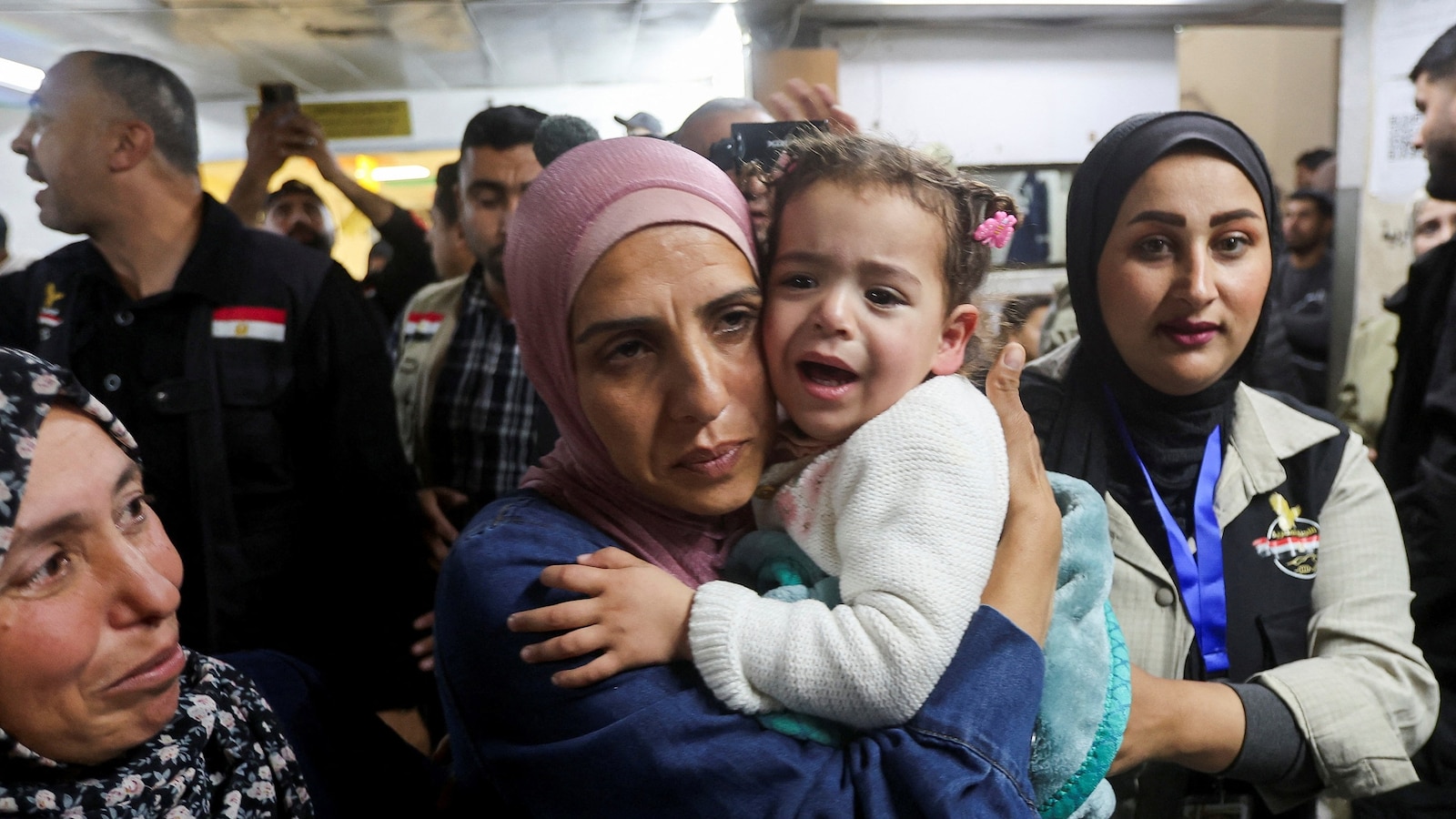
When Sundus al Kurd made the agonizing decision to let her newborn daughter Bissan be evacuated from Gaza in 2023, she had no way of knowing if she would ever hold her baby again. Bissan was barely days old, clinging to life as a premature infant when the World Health Organization and Palestinian Red Crescent carried her to safety in Egypt during the darkest days of the Israel-Hamas conflict. For over two years, al Kurd lived with a hollow ache in her chest, wondering if her daughter would forget her face, her voice, her touch. Now 27 years old, this young Palestinian mother finally experienced what she describes as “complete joy” when Bissan was returned to her arms. “After all this time, my daughter is finally back in my arms!” she exclaimed, tears streaming down her face as she held the toddler for the first time in what felt like a lifetime. The reunion took place at Nasser Hospital in Khan Younis, where several of the evacuated babies were returned to their families after spending their earliest years in Egyptian medical facilities. For al Kurd, that first night together was almost surreal. She couldn’t sleep, instead watching her daughter breathe, touching her hair, convincing herself this wasn’t just another dream that would vanish with morning light. “I was afraid to close my eyes, as if it was all a dream that might disappear,” she confessed, her voice thick with emotion.
The Desperate Days at Al Shifa Hospital
The story of these babies begins in November 2023, when Israeli military forces laid siege to Al Shifa Hospital in Gaza. Inside the neonatal unit, 33 premature babies fought for survival as fuel and oxygen supplies dwindled to critical levels. The hospital had been encircled by Israeli forces, who claimed Hamas operated a hidden command center within its walls—allegations that both Hamas and the medical teams vehemently denied. Dr. Ahmed Mokhallalati, the former head of plastic surgery at Al Shifa Hospital, was one of the few doctors who stayed throughout the siege. What he witnessed still haunts him. “They were meant to die without incubators, without oxygen, without water, but they survived every single stage of this terrible reality,” he told reporters, his voice heavy with the weight of those memories. Most of the doctors caring for these fragile infants weren’t even pediatricians—they were surgeons and specialists from other fields who refused to abandon the babies. “Every morning, we would go just to make sure they were still alive,” Mokhallalati recalled. The situation forced impossible choices upon parents. With bombs falling and the hospital under attack, many families had to flee with the children who could walk, leaving behind the babies too fragile to move. “In the calculus of survival, mothers fled with the children who could run and left behind those who could not, making an impossible choice,” the doctor explained. The abandoned babies wore only small wristbands, usually bearing their mothers’ names—the only link to their identities and families.
A Fight Against All Odds
With just one doctor and six nurses remaining to care for them, the premature babies faced conditions that should have been unsurvivable. The medical team didn’t even know most of the babies’ names. They had no parents present, no medical histories, and dwindling supplies. The odds were stacked impossibly high against these tiny fighters. Tragically, five babies died during those harrowing days as the medical team struggled to keep them fed and warm without proper equipment or resources. Yet Mokhallalati found himself amazed that any survived at all. “They were meant to die at many stages but they survived every single challenge,” he said, adding that in the midst of chaos and destruction, these babies became the medical staff’s only source of hope. On November 19, 2023, rescue finally came. The WHO and Palestinian Red Crescent were granted access to the hospital and undertook the dangerous mission of evacuating the surviving babies. They transported the precious cargo through active war zones to a hospital in Rafah in southern Gaza, then across the border into Egypt. Of the 28 babies evacuated to Egypt, seven more tragically died due to the difficult conditions, leaving 21 survivors. Dr. Ahmed Al-Farra, head of pediatrics and neonatal care at Nasser Hospital, explained that of those survivors, 11 returned in March 2026, four had come back earlier when the Rafah crossing briefly opened, and six remain in Egypt with their families.
Growing Up in Exile
Among the returning children was 2-year-old Azzhar Kafarna, whose mother Heba Saleh had endured her own torment of separation. “For two and a half years, I felt something missing all the time,” Saleh shared, her words reflecting the grief of countless missed moments. She had imagined her daughter’s first smile, her first steps, the sound of her voice—all the small miracles that mothers treasure and that had been stolen from her by circumstances beyond her control. When mother and daughter finally reunited, Saleh was overwhelmed. “I didn’t know what to feel. I just hugged her tightly. It felt like I was holding all the days we lost in that one moment.” The toddlers who returned to Gaza are, according to Dr. Al-Farra, generally in good physical condition with normal weight and growth. However, their extreme prematurity has left lasting effects. Many have vision problems requiring glasses because their optical nerves weren’t fully developed at birth. Bissan now wears bright red spectacles, a visible reminder of her traumatic entry into the world. But these physical challenges pale in comparison to some of the other complications these children face—complications that have nothing to do with their premature births and everything to do with the war that separated them from their families.
The Children With No One to Claim Them
Not all of the returning toddlers have joyful reunions awaiting them. Dr. Al-Farra’s voice grows somber when discussing this reality: “I don’t think all of these children have parents to return to. Some of their families were likely killed during the war.” In at least one heartbreaking case, there is genuine confusion about a child’s identity, with multiple people claiming the same baby. Without access to DNA testing in Gaza, medical staff cannot definitively determine who the child belongs to. These children, saved against impossible odds, now face the trauma of not knowing who they are or where they belong. They survived premature birth, a hospital siege, evacuation through a war zone, and years of medical treatment in a foreign country—only to return to a homeland where their families may no longer exist. The situation represents one of war’s cruelest ironies: these babies were kept alive through extraordinary effort and sacrifice, only to potentially grow up as orphans in one of the world’s most unstable regions.
A Future Shadowed by Fear and Hope
For the mothers who were reunited with their children, joy is tempered by anxiety about the future. Both al Kurd and Saleh expressed deep concerns about raising their daughters in Gaza’s current conditions. “I’m happy she’s finally with me … but at the same time, I feel guilty, even though I had no choice,” Saleh admitted. “I keep thinking about all the moments I wasn’t there for. And of course, I’m worried about raising her in Gaza. I want her to feel safe, to live a normal life, but the situation here is not easy.” Al Kurd shares similar fears, particularly about how her daughter will cope with the sounds of war. “My daughter has never heard the sound of bombing before. I am afraid of how she might react if she experiences it here in Gaza. This fear is always in my heart.” These children spent their first years in the relative safety of Egypt, knowing nothing of conflict or violence. Now they must adapt to a reality their mothers desperately wish they could protect them from. Despite these fears, both mothers cling to hope for their daughters’ futures. “I wish for my daughter to have a better future, a life that is safer and more stable than the one we are living now,” al Kurd said, expressing the universal desire of parents everywhere to give their children better lives than they themselves had. These 11 toddlers—and the others who survived that November 2023 siege—represent both the resilience of human life and the devastating cost of conflict on the most innocent. They are living reminders that in every war, behind every statistic, are individual stories of loss, survival, and the enduring power of a mother’s love.