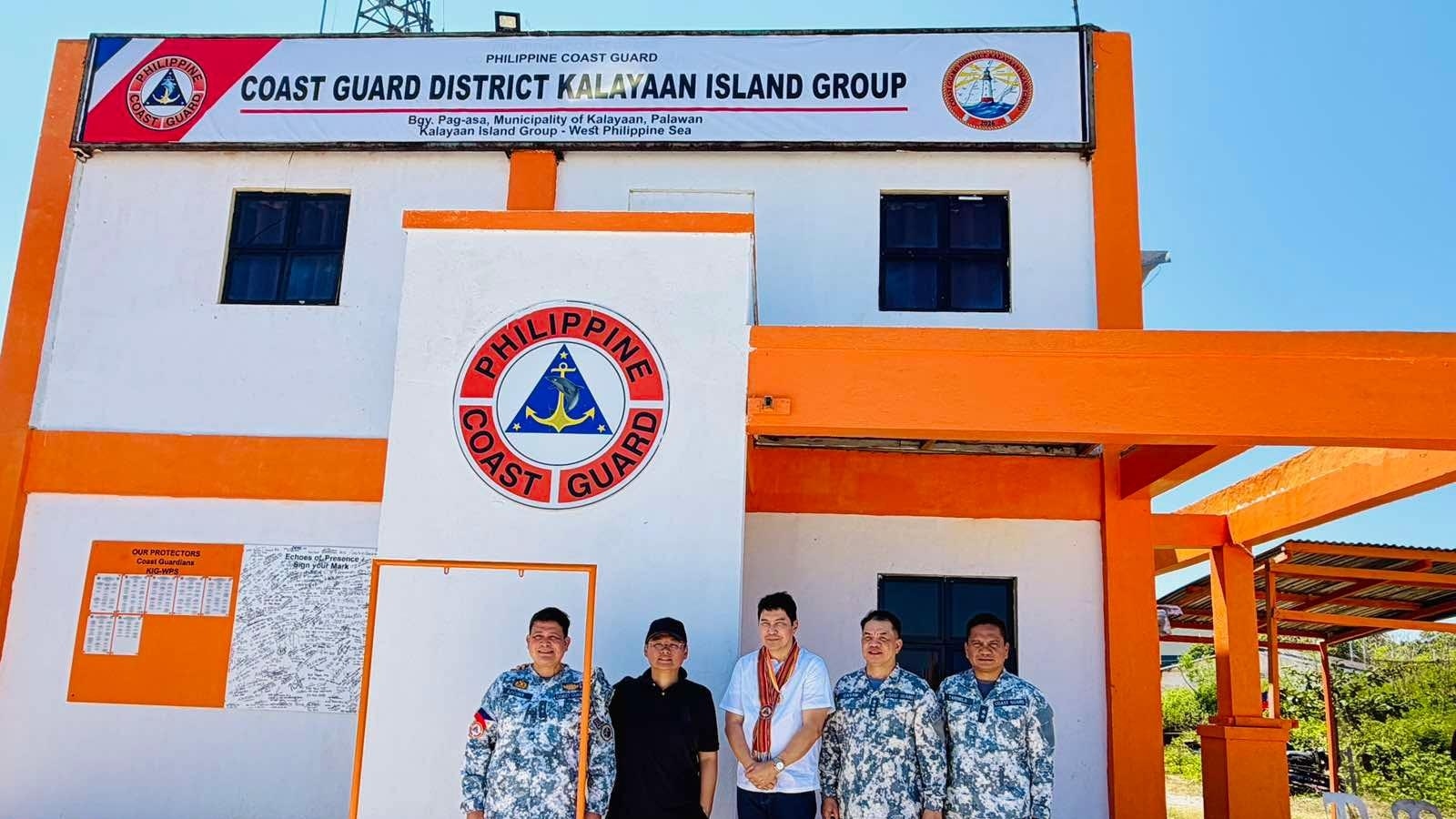

Philippines Strengthens South China Sea Presence with New Coast Guard Base
A Bold Statement of Sovereignty in Contested Waters
The Philippines has taken a significant step in asserting its territorial claims in the South China Sea by inaugurating a major coast guard facility on Thitu Island, a strategically important piece of land that sits at the heart of one of Asia’s most contentious maritime disputes. The new base, unveiled on Thursday during ceremonies coinciding with the country’s Day of Valor commemorations, represents what Philippine officials are calling “a steadfast sentinel of our sovereignty” in waters that China also claims as its own. The facility was opened by high-ranking officials including Transport Secretary Giovanni Lopez, Senator Erwin Tulfo, and Coast Guard Commander Admiral Ronnie Gil Gavan, who flew to the remote island to mark the occasion. This development signals Manila’s determination to maintain and strengthen its presence in the disputed Spratly Islands, despite the constant shadow of Chinese maritime forces that patrol the surrounding waters. The timing and symbolism of the announcement underscore the Philippines’ commitment to defending what it considers its rightful territorial waters, even as tensions with Beijing continue to simmer beneath the surface of diplomatic relations between the two nations.
Thitu Island: A Filipino Outpost in Disputed Waters
Thitu Island, known locally as Pag-asa—which translates to “hope” in Tagalog—has been occupied by Filipino forces and civilians for decades, serving as one of the most visible symbols of Philippine sovereignty in the South China Sea. The tadpole-shaped island is home to approximately 400 Filipino villagers who live alongside military personnel, creating a unique civilian-military community in one of the world’s most disputed maritime regions. The island is one of nine territories in the Spratly archipelago that have been held by Philippine forces since the 1970s, long before China began its controversial island-building campaign in the region. The Philippine government has worked to encourage settlement on Thitu by offering incentives such as free rice to fishing families willing to relocate to this remote frontier, a strategy designed to reinforce the country’s territorial claims through actual occupation and civilian presence. Despite its isolation, the 37-hectare island has developed modest infrastructure over the years, including internet and cellphone connections, improved power and water supplies, a newly cemented runway, a wharf, a grade school, gymnasium, and even an evacuation center for typhoon season. However, as Vice Mayor MP Albayda noted, the villagers face daily reminders of the territorial dispute, with Chinese coast guard and militia vessels constantly visible in the surrounding waters.
The New Coast Guard Command and Its Strategic Importance
The newly established coast guard district command represents a permanent upgrade to the Philippines’ maritime law enforcement capabilities in the contested region. Led by a commodore and supported by an undisclosed number of personnel, patrol vessels, and aircraft, the facility will conduct a range of operations including law enforcement, environmental monitoring, search and rescue missions, and surveillance of the surrounding waters. According to Philippine coast guard officials, the command center will also serve as a hub for smaller outposts planned for other Philippine-occupied features in the Spratlys, creating a network of maritime security stations throughout the disputed area. Transport Secretary Lopez emphasized the significance of this development, stating, “This is a permanent step for us to show that our coast guard is ready to defend our interest in the waters, our fishermen, their livelihood and, most importantly, our sovereignty.” A commemorative marker installed in the new building describes it as being “established as the vanguard and steadfast sentinel of our sovereignty, sovereign rights and maritime jurisdiction,” leaving no doubt about the facility’s intended purpose. For the island’s residents, the new command brings more than just enhanced security—it represents a morale boost and a tangible sign of the national government’s commitment to their community and its strategic importance.
China’s Shadow and Fresh Confrontations
The inauguration of the coast guard base occurred against a backdrop of continuing maritime tensions, with Chinese forces maintaining a persistent presence around Thitu Island just as they do throughout much of the South China Sea. Beijing claims virtually the entire South China Sea as its sovereign territory, despite an international arbitration ruling in 2016 that invalidated these expansive claims under the United Nations Convention on the Law of the Sea. China refused to participate in those arbitration proceedings, rejected the tribunal’s findings, and has continued to act as though the ruling never happened. The proximity of Chinese forces became dramatically apparent on the very day of the base’s unveiling, when new incidents erupted in the area. The Philippine coast guard accused Chinese forces of firing flares toward one of its patrol aircraft in what officials characterized as “a clear and deliberate act of bullying” that endangered Filipino personnel. These flares were reportedly fired in the vicinity of Subi Reef and Mischief Reef, both features that China has occupied and transformed into militarized island bases. Philippine Coast Guard Rear Admiral Jay Tarriela announced the incidents but did not immediately provide additional details, and Chinese officials offered no immediate response to either the flare incident or the opening of the new Philippine facility. Such confrontations, while typically stopping short of actual combat, have become increasingly common as both nations assert their competing claims in the strategic waterway.
The Broader Context of South China Sea Disputes
The South China Sea dispute involves not just the Philippines and China, but multiple nations with overlapping territorial claims, including Vietnam and Taiwan, both of which also claim Thitu Island. The sea serves as one of the world’s most important maritime trade routes, with trillions of dollars in commerce passing through its waters annually, making the stakes of the territorial dispute far more than merely symbolic. China’s approach to asserting its claims has been particularly aggressive, with Beijing undertaking a massive island-building campaign beginning more than a decade ago that transformed seven disputed reefs in the Spratlys into artificial islands with military-grade facilities. Among these is Subi Reef, located just 24 kilometers southeast of Thitu Island, which now features extensive military infrastructure including a runway capable of handling large aircraft. The scale and sophistication of China’s island bases dwarf the Philippine facilities on Thitu, highlighting the asymmetry in resources and strategic reach between the two nations. Despite this imbalance, the Philippines has continued to maintain its presence and resist what it views as Chinese encroachment on its territorial waters. The country’s claims are based on proximity and the provisions of international maritime law, particularly the exclusive economic zone concept that grants coastal nations rights to resources within 200 nautical miles of their shores—a claim that the 2016 arbitration ruling largely validated.
Implications and the Path Forward
The establishment of this new coast guard district command represents both a practical enhancement of Philippine maritime capabilities and a symbolic statement of national resolve in the face of much larger Chinese forces. For the villagers of Thitu Island, who see Chinese vessels on the horizon every day, the facility provides reassurance that they have not been forgotten by their government and that their presence on the island serves a vital national purpose. The coast guard command will enable the Philippines to conduct more regular and sustained patrols of its claimed waters, respond more quickly to incidents involving Filipino fishermen, and gather better intelligence on Chinese activities in the area. However, the opening of the facility also risks escalating tensions with Beijing, which views any strengthening of rival claimants’ positions as a challenge to its own sovereignty claims. The flare incident that occurred on the same day as the base’s inauguration suggests that China may respond to Philippine moves with increased assertiveness of its own. Moving forward, much will depend on whether both nations can manage their competing interests without allowing incidents at sea to spiral into more serious confrontations. The Philippines has walked a delicate diplomatic line, seeking to defend its territorial claims while maintaining generally positive relations with China on other matters. This new coast guard base tests that balance, representing a clear assertion of sovereignty that Beijing cannot ignore but stopping short of the kind of military buildup that might provoke a more aggressive Chinese response. For Manila, the facility on Thitu Island is about ensuring that hope—the island’s Filipino name—remains alive for its residents and for the country’s broader claims in these contested but vital waters.