


The Michigan Synagogue Attack: A Tragedy Fueled by International Conflict and Personal Loss
The Attacker’s Chilling Preparation
In a disturbing revelation that emerged following last Thursday’s attack on Temple Israel synagogue in Michigan, investigators discovered that the perpetrator, Ayman Mohamad Ghazali, had meticulously documented his intentions before carrying out the violent assault. According to U.S. officials, Ghazali sent a carefully staged photograph to a family member in Lebanon on the day of the attack, depicting himself dressed entirely in black with a black and white scarf, holding what appeared to be a semiautomatic AR-style rifle equipped with a scope. What made this image particularly haunting was that Ghazali had edited it with verses from the Quran written in yellow Arabic text, effectively creating a manifesto of sorts that blended religious scripture with violent intent. The photograph wasn’t a spontaneous moment but rather a calculated act of self-documentation taken before the attack on March 12. Officials confirmed that the weapon shown in the photograph was indeed the same rifle Ghazali would later use during his assault on the synagogue, suggesting a deliberate planning process that involved not just the acquisition of weapons but also the creation of imagery meant to justify or explain his actions to others.
Religious Justification and Messages of Violence
The Arabic verses overlaid on Ghazali’s pre-attack photograph provided insight into how he may have rationalized his planned violence. The upper portion of the image contained a Quranic verse that read: “Among the believers are men who have been true to what they pledged to God. Some of them have fulfilled their vow, and some are still waiting. They have never changed.” This particular verse, when placed in the context of the impending attack, suggested that Ghazali viewed his actions as fulfilling some sort of religious obligation or vow. Additionally, the lower portion of the photograph contained script referencing “vengeance,” which investigators believe may have been connected to recent events in his family’s life in Lebanon. Ghazali had been living and working in Dearborn Heights, Michigan, as a naturalized U.S. citizen, but he maintained connections to his hometown in southern Lebanon, an area that has become a Hezbollah stronghold in recent years. The personal tragedy that may have served as a trigger for his actions occurred just one week before the synagogue attack when four of his relatives in Lebanon were killed in an Israeli drone strike on March 5. Among the deceased were two of Ghazali’s brothers, whom sources in Lebanon identified as members of Hezbollah’s rocket squad. Israeli officials later confirmed that one of these brothers, Ibrahim Mohamad Ghazali, was a Hezbollah commander, adding layers of geopolitical complexity to what might have otherwise seemed like an isolated incident of domestic terrorism.
The Attack on Temple Israel
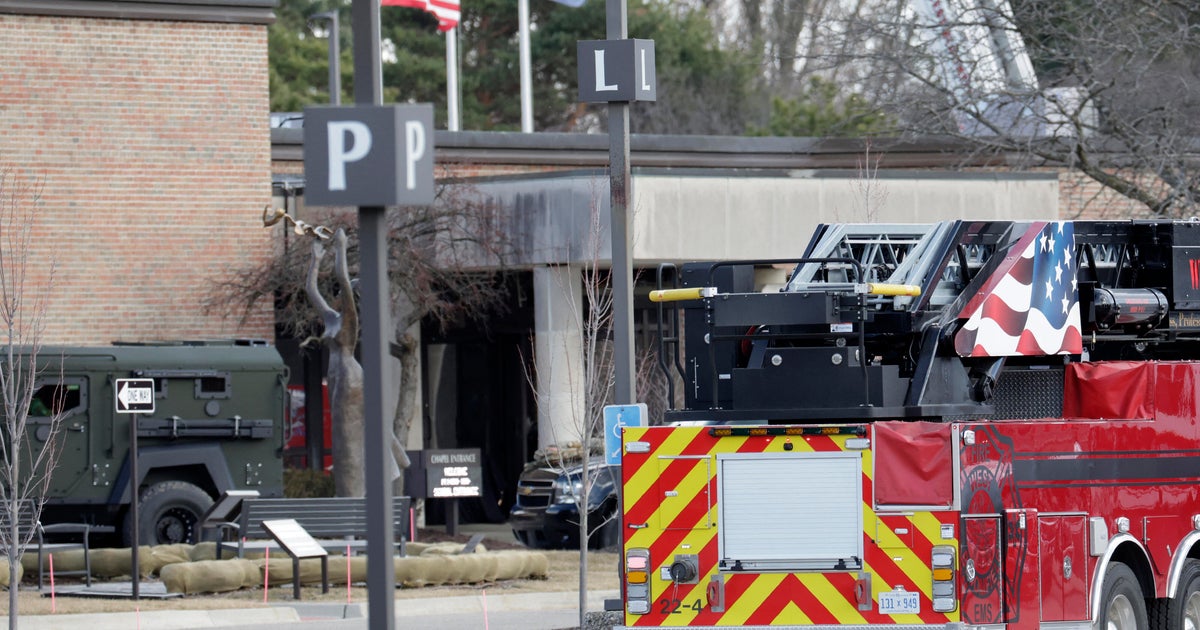
The assault on Temple Israel in West Bloomfield represented an attack on one of the largest synagogue congregations in the entire country, and the timing made it especially horrific—young children were attending school inside the building when Ghazali launched his attack. The fact that no students or staff members were physically injured during the incident can only be described as miraculous, though the psychological trauma inflicted on those present, especially the children who witnessed or heard the violence, will likely last for years. However, there were casualties: a security guard was struck by Ghazali’s vehicle as he rammed it into the building and was knocked unconscious. The vehicle collision started a fire within the synagogue structure, and several first responders who arrived at the scene required treatment for smoke inhalation as they worked to secure the building and ensure everyone inside was safe. According to the FBI, which has taken the lead in investigating the incident, this was clearly a “targeted act of violence against the Jewish community,” not a random occurrence or crime of opportunity. Jennifer Runyon, the special agent in charge of the FBI’s Detroit Field Office, provided additional details during a briefing held the day after the attack, explaining that Ghazali’s truck became wedged in a hallway after he crashed through the building’s entrance, preventing him from exiting his vehicle as he may have planned. Despite this obstacle to his intended rampage, Ghazali engaged in a gunfight with two security guards from inside his trapped vehicle before ultimately turning the weapon on himself and taking his own life. Perhaps most chillingly, investigators determined that Ghazali hadn’t acted impulsively but had instead waited in the synagogue’s parking lot for approximately two hours before finally deciding to ram his vehicle into the building, suggesting he was either gathering courage, waiting for a specific moment, or observing patterns of activity.
Suspicious Purchases and Warning Signs
In the days and weeks leading up to the attack, Ghazali made several purchases that, in retrospect, appeared to be part of his preparation for violence. Among the most puzzling was his acquisition of more than $2,000 worth of fireworks from a local Phantom Fireworks store. This unusual purchase, especially given the time of year, raised questions from store employees who found it odd that someone would buy such a large quantity of fireworks outside of typical celebration periods like Independence Day. According to Bruce Zoldan, CEO of Phantom Fireworks, when a store worker asked Ghazali about his reasons for the substantial purchase, he explained that the fireworks were “to celebrate the end of Ramadan.” While this explanation might have seemed plausible at the time—many cultures do celebrate religious holidays with fireworks—investigators now believe Ghazali may have intended to use these explosives as part of his attack, potentially to cause additional destruction or casualties beyond what his vehicle and firearm could accomplish. This theory is supported by the fact that someone planning a straightforward celebration wouldn’t typically need $2,000 worth of pyrotechnics. The purchase represents one of several warning signs that might have been detected with more robust systems for identifying potential threats, though it’s important to note that buying fireworks, even in large quantities, isn’t illegal and wouldn’t necessarily trigger law enforcement interest without additional context.
Immigration History and Final Warning
Ghazali’s path to becoming the perpetrator of this attack began years earlier with his immigration to the United States. According to the Department of Homeland Security, Ghazali entered the country legally in 2011 through a family sponsorship arrangement with his then-wife, who was a U.S. citizen. Five years later, in 2016, Ghazali himself became a naturalized American citizen, completing what appeared to be a successful integration into American society. He established a life in Dearborn Heights, Michigan, an area with a significant Arab-American population, where he lived and worked in the years leading up to the attack. However, his marriage eventually ended in divorce, and his ex-wife would play an unexpected role in the events of March 12. In what may have been a last-minute attempt to prevent tragedy, Ghazali contacted his former wife shortly before launching his attack on the synagogue. Whether he was saying goodbye, seeking to justify his planned actions, or expressing some ambivalence about what he was about to do remains unclear. What is known is that his ex-wife recognized something alarming in the communication—she later told authorities that her former husband was “not stable”—and she immediately contacted police to warn them about her concerns. Tragically, despite her quick action in alerting law enforcement to the potential danger, the warning came too late to prevent Ghazali from carrying out his attack. This final phone call raises haunting questions about whether earlier intervention might have been possible if mental health concerns had been identified and addressed, or if family members or community contacts had previously noticed signs of radicalization or instability.
Broader Implications and Community Impact
The attack on Temple Israel synagogue represents a convergence of several deeply troubling trends in contemporary America: the rise in antisemitic violence, the internationalization of conflicts that spill over into domestic terrorism, the challenge of identifying radicalized individuals before they act, and the ongoing debate about gun access and security at religious institutions. For the Jewish community in Michigan and across the country, this attack served as yet another reminder that houses of worship require security measures that would have been unthinkable a generation ago. The fact that security guards were present and engaged Ghazali, potentially preventing even greater loss of life, underscores the sad reality that synagogues, churches, mosques, and temples now must operate with security protocols more commonly associated with government buildings or airports. The international dimension of this case—with Ghazali’s family connections to Hezbollah and the Israeli drone strike that killed his relatives—highlights how global conflicts, particularly the Israeli-Palestinian situation and broader Middle Eastern tensions, continue to have repercussions far beyond their geographic origins. For law enforcement and intelligence agencies, cases like this present extraordinary challenges: How do you identify individuals who may be radicalized by international events? How do you balance civil liberties with security concerns? And how do you intervene with someone who has no previous criminal record but may be planning violence? These questions have no easy answers, but the Michigan synagogue attack demonstrates that finding solutions is more urgent than ever for protecting vulnerable communities and preventing ideology-driven violence.