


Poland Exits International Mine Ban Treaty Amid Rising Russian Tensions
A Strategic Shift in Eastern European Defense
In a significant reversal of its longstanding commitment to international humanitarian law, Poland officially withdrew from the Anti-Personnel Mine Ban Treaty on Friday, signaling a dramatic shift in how the nation views its security needs. Deputy Defense Minister Paweł Zalewski announced that Poland would begin manufacturing both antipersonnel and anti-tank land mines as part of a comprehensive defense strategy aimed at protecting the country’s vulnerable eastern borders. This decision marks a departure from Poland’s previous stance—the country had ratified the 1997 Ottawa Convention in 2012 and even destroyed its entire stockpile of antipersonnel mines by 2016. Now, citing the escalating threat posed by Russian aggression, Polish officials argue that they need every available defensive tool to protect their territory and their people from a neighbor that has demonstrated, through its invasion of Ukraine, a willingness to violate international norms and sovereign borders.
The timing of this withdrawal is particularly telling. Since Russia launched its full-scale invasion of Ukraine, countries along NATO’s eastern flank have been fundamentally reassessing their defense postures and questioning whether peacetime international agreements remain practical when faced with an aggressive authoritarian power on their doorstep. Poland’s decision didn’t happen in isolation—last year, Warsaw joined Finland, Estonia, Latvia, Lithuania, and Ukraine in announcing their intention to leave the treaty. These nations share a common concern: they all border either Russia or Belarus, Russia’s closest ally, and they’ve watched with alarm as Moscow has shown itself willing to use military force to achieve its geopolitical objectives. For these countries, the abstract humanitarian principles enshrined in the Ottawa Convention now compete with the very concrete threat of potential invasion, and they’ve concluded that their first responsibility is to their own citizens’ security.
Understanding the Ottawa Convention and Its Purpose
The Anti-Personnel Mine Ban Treaty, commonly known as the Ottawa Convention, was established in 1997 as a humanitarian response to one of warfare’s most indiscriminate and persistent threats. The treaty specifically prohibits signatories from using, stockpiling, producing, or transferring antipersonnel mines—weapons designed to explode when a person steps on them or disturbs them. These weapons gained international notoriety for the catastrophic long-term suffering they caused in former conflict zones around the world. In countries like Cambodia, Angola, and Bosnia and Herzegovina, antipersonnel mines continued to kill and maim civilians—particularly children—decades after conflicts ended. Farmers returning to their fields, children playing in vacant lots, and families simply going about their daily lives faced the terrifying prospect that any step could be their last. The indiscriminate nature of these weapons, their tendency to remain deadly for years or even decades, and their disproportionate impact on civilian populations led to a global movement to ban them entirely.
The Ottawa Convention represented a triumph of humanitarian values over military expediency, with more than 160 countries eventually joining the agreement. However, some of the world’s most powerful military nations never signed on. Russia, China, and the United States notably refused to commit to the ban, arguing that antipersonnel mines served legitimate defensive purposes in certain scenarios. This creates an uncomfortable asymmetry: countries that adhere to the convention limit their defensive options while potential adversaries face no such restrictions. For Poland and its Baltic neighbors, this asymmetry has taken on new significance in light of Russian actions in Ukraine, where international law and humanitarian concerns have proven powerless to prevent aggression. It’s worth noting that the Ottawa Convention does not prohibit anti-tank mines—larger explosive devices designed to destroy vehicles rather than harm individuals—as these are considered more discriminate weapons that won’t detonate under a person’s weight alone.
Poland’s Defense Strategy: The Eastern Shield
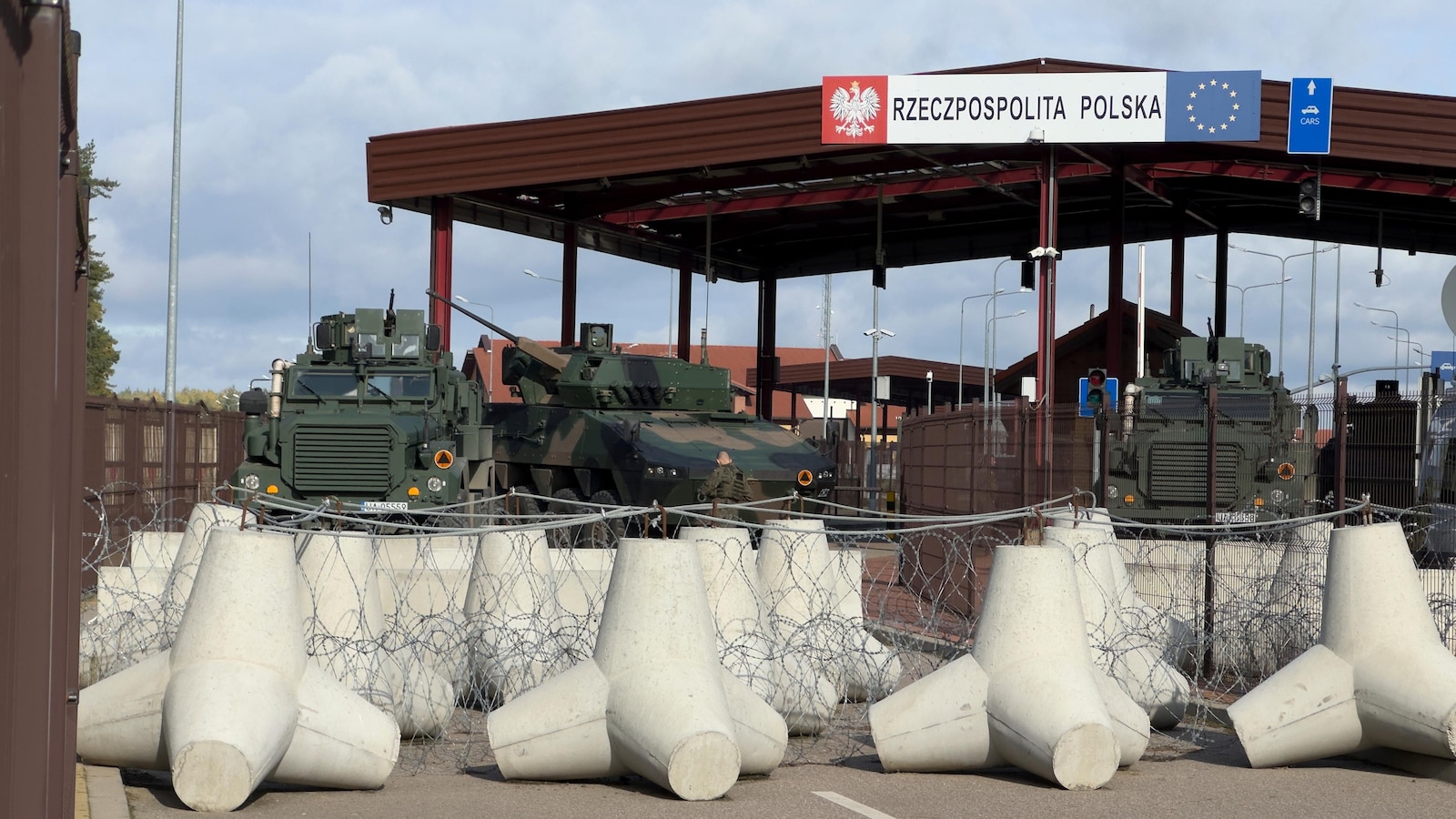
Poland’s decision to resume land mine production fits into a broader defensive initiative known as the Eastern Shield, a comprehensive fortification system the country began constructing along its borders with Belarus and Russia in 2024. This ambitious project represents Poland’s most significant military infrastructure investment in decades and reflects the country’s determination to make any potential Russian aggression as costly and difficult as possible. During a recent demonstration of military equipment, Polish Prime Minister Donald Tusk revealed just how extensive these preparations would be, stating that Poland would soon have the capability to mine its entire eastern border within just 48 hours if a threat emerged. Given the substantial length of Poland’s eastern frontiers, Tusk acknowledged that this would require “a lot” of land mines—a stockpile that Poland intends to produce domestically through cooperation with Polish manufacturers.
Deputy Defense Minister Zalewski emphasized that Poland is pursuing self-sufficiency in land mine production, working with companies like Belma S.A. and military research institutes to develop the necessary capabilities. The government has been showcasing new technology designed specifically for rapid mine deployment, including the Bluszcz, an unmanned vehicle capable of distributing anti-tank mines efficiently across large areas. This emphasis on automated deployment systems suggests Poland envisions using mines not as permanent fixtures but as rapidly deployable barriers that could be put in place when intelligence indicates an imminent threat. Zalewski was careful to stress that Poland wouldn’t simply scatter mines along its borders during peacetime. “We very much respect our territory and we don’t want to exclude it from day to day use for the Polish citizens,” he explained, indicating that mines would remain in stockpiles until “there is a realistic threat of Russian aggression.” This approach attempts to balance military necessity with the humanitarian concerns that led to the Ottawa Convention in the first place.
The Russian Threat and Regional Security Concerns
Poland’s dramatic policy reversal cannot be understood without examining the threat that motivates it. Deputy Defense Minister Zalewski was blunt in his assessment, stating that Russia “has very aggressive intentions vis a vis its neighbors” and pointing out that Moscow never committed to the international land mine ban in the first place. Russia’s 2022 invasion of Ukraine shattered any remaining illusions about European security in the post-Cold War era. What began as a “special military operation” in Russian propaganda has become a grinding war of attrition that has killed hundreds of thousands, displaced millions, and demonstrated Russia’s willingness to use overwhelming military force against a neighboring democracy. For Poland, which shares a direct border with Russia’s Kaliningrad exclave in the north and with Belarus—effectively a Russian client state—in the east, the Ukraine war represents not a distant conflict but a preview of what could happen to them.
Historical memory runs deep in Poland, a nation that was carved up by aggressive neighbors multiple times throughout its history and spent much of the 20th century under Soviet domination. The sight of Russian tanks rolling across Ukraine’s borders awakened these historical traumas and prompted a fundamental reassessment of what Poland needs to ensure “never again” truly means never again. Polish officials argue that they face an adversary that respects only strength, that views compromise as weakness, and that has proven willing to violate every international norm when it serves their interests. In this context, Zalewski’s statement that “we are not an aggressive country, but we have to use all means to deter Russia” reflects a belief that deterrence—making any potential invasion so costly that Russia wouldn’t attempt it—is the surest path to peace. From Poland’s perspective, if Russia knows that crossing into Polish territory means fighting through extensive minefields in addition to facing NATO’s military response, the Kremlin might think twice before attempting aggression.
Human Rights Concerns and the Humanitarian Dilemma
Despite Poland’s security rationale, human rights organizations have strongly condemned the decision to withdraw from the Ottawa Convention, arguing that antipersonnel mines pose unacceptable risks to civilian populations. Their concerns are grounded in decades of evidence from conflict zones worldwide, where these weapons have proven nearly impossible to fully contain or control. Even when mines are deployed with careful mapping and record-keeping, changing circumstances—the chaos of war, the destruction of records, shifting battle lines—often mean that comprehensive removal becomes impossible once hostilities end. The humanitarian cost is measured not just in immediate casualties during wartime but in generations of civilians who face the constant threat of mutilation or death long after peace agreements are signed. Children are particularly vulnerable, as unexploded mines can resemble toys or become exposed in areas where young people play.
Human rights advocates also worry about the precedent Poland’s withdrawal sets. If a democratic NATO member with strong institutions and commitment to the rule of law can justify leaving the Ottawa Convention, what message does this send to other countries? Could this trigger a broader unraveling of international humanitarian law as nations prioritize short-term security concerns over long-term humanitarian principles? These are legitimate concerns that reflect genuine moral dilemmas. However, Polish officials argue they’re attempting to thread a difficult needle—maintaining defensive capabilities without creating the humanitarian catastrophes the Ottawa Convention sought to prevent. By keeping mines in reserve rather than deploying them immediately, by planning for their use only in response to specific threats, and by maintaining them under strict government control with modern tracking systems, Poland claims it can avoid the worst humanitarian consequences while still benefiting from the defensive advantages mines provide. Whether this approach can truly reconcile military necessity with humanitarian responsibility remains an open question—one that may only be answered if Poland ever actually faces the Russian aggression it fears.