


Trump’s Border Czar Clashes with Senator Over Deported Salvadoran Man’s Constitutional Rights
A High-Stakes Diplomatic Mission Sparks Controversy
The Trump administration’s immigration enforcement policies have triggered a fierce public debate between Border Czar Tom Homan and Senator Chris Van Hollen, centering on a controversial deportation case that raises fundamental questions about constitutional rights and national security. The dispute erupted after Van Hollen traveled to El Salvador to meet with Kilmar Abrego Garcia, a Salvadoran native who was deported to the country’s infamous mega-prison in March despite a court order protecting him from such action. Homan sharply criticized the Maryland Democrat’s trip, claiming he used taxpayer money to visit “an MS-13 gang member, public safety threat, and terrorist.” This characterization lies at the heart of the controversy, as Abrego Garcia’s attorneys and family vehemently deny any gang affiliation. The case has escalated to the highest levels of government, with the Supreme Court ultimately ordering the administration to “facilitate” Abrego Garcia’s return to the United States after Immigration and Customs Enforcement acknowledged his deportation was an “administrative error.” What makes this situation particularly sensitive is that Abrego Garcia’s wife is a U.S. citizen and constituent of Senator Van Hollen, adding both a personal dimension and political responsibility to the senator’s involvement in the case.
Dueling Perspectives on Border Security and Civil Rights
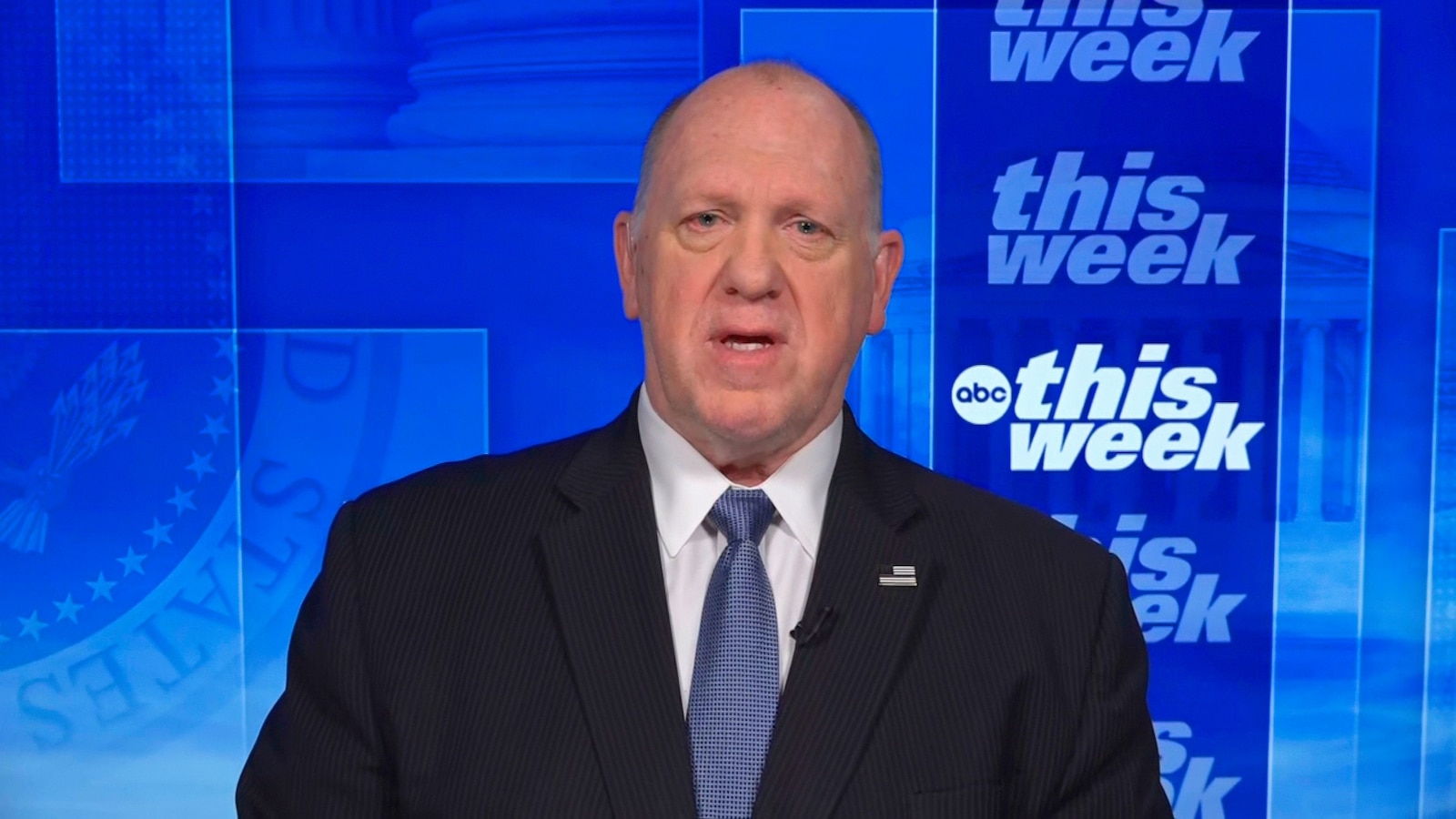
The public exchange between Homan and Van Hollen on ABC’s “This Week” revealed fundamentally different approaches to balancing national security concerns with constitutional protections. Homan accused Van Hollen of remaining silent during what he characterized as a “travesty” at the southern border during the Biden administration, claiming “many people died, thousands of people died” while the senator allegedly ignored the crisis. He questioned why Van Hollen would travel internationally to meet with an alleged gang member when he supposedly hadn’t visited the border during the previous four years. Van Hollen fired back forcefully, accusing Homan of “lying through his teeth” and emphasizing his two-decade commitment to fighting gang violence in the region. The senator highlighted his role in establishing anti-gang task forces and stressed that he has been combating MS-13 “probably longer than Donald Trump ever uttered the name MS-13.” Van Hollen framed the issue not as a defense of any individual’s actions but as a defense of constitutional principles, telling interviewer Jonathan Karl, “I am not defending the man. I’m defending the rights of this man to due process.” He characterized the administration’s approach as creating a dangerous precedent by suggesting Americans must choose between protecting constitutional rights and fighting gang violence—a false choice he argues the Trump administration is deliberately promoting.
The Legal Battle Over the Alien Enemies Act
At the center of this controversy is the Trump administration’s controversial use of the 1798 Alien Enemies Act, a centuries-old law that the current government has invoked to expedite deportations of hundreds of Venezuelan migrants, including Abrego Garcia. Homan defended this legal strategy by arguing that the act provides different—and more limited—due process protections than typical immigration proceedings. “The length of due process is not the same under the Alien Enemies Act,” Homan explained. “That’s why the Alien Enemies Act was created. President Trump invoked the authorities he had under the Alien Enemies Act, an act written and passed by Congress and signed by a President. We’re using the laws on the books.” This interpretation has faced significant legal challenges, with the Supreme Court temporarily halting the use of this law to deport Venezuelans from a facility in northern Texas just hours after Homan’s interview defending it. When pressed by Karl about the constitutional guarantee of due process rights, citing a 1993 Supreme Court opinion by conservative Justice Antonin Scalia stating that “the Fifth Amendment entitles aliens to due process of law in deportation proceedings,” Homan maintained that the administration was following proper legal procedures under the specific framework of the Alien Enemies Act, which he argued provides “a different process” with “less of a process than you see through Title 8,” the immigration statute typically used for deportations.
Questions About Evidence and Gang Identification
The case has also raised serious questions about how the administration determines gang membership and whether its methods meet appropriate evidentiary standards. Homan explicitly denied that migrants are being labeled as gang members based solely on tattoos, despite President Trump posting on social media what he claimed was a photo of Abrego Garcia’s hand showing MS-13 symbols—an image where the gang symbols appeared to be digitally superimposed and where the connection of other visible tattoos to gang activity remained unclear. “Tattoos are one of many factors that’s going to determine someone’s in a gang. That’s not the only one,” Homan insisted. “What I’m saying is you can’t ignore a tattoo. That’s one more factor that leads you to believe maybe it’s a gang member. It’s just not based on tattoos. It’s based on a lot of other things, but tattoos, one of many. But no one’s removed just because of a tattoo.” This explanation has done little to satisfy critics who point out that Abrego Garcia received a protective court order in 2019 specifically barring his deportation to El Salvador due to legitimate fears for his safety. The fact that ICE itself acknowledged the deportation as an “administrative error” suggests significant problems with the process that led to sending him to one of the world’s most dangerous prisons.
The Political and Human Dimensions
Beyond the legal and constitutional arguments, this case highlights the deeply personal impact of immigration enforcement policies and the political calculations surrounding them. Senator Van Hollen’s trip to El Salvador wasn’t a random diplomatic mission but a response to a constituent’s plea—Abrego Garcia’s wife, a U.S. citizen living in Maryland, sought help from her senator when her husband was wrongly deported despite court protections. Van Hollen initially faced obstacles in his efforts, being denied access to Abrego Garcia before finally meeting with him on Thursday during his visit last week. This constituent service aspect of Van Hollen’s involvement underscores how immigration policy isn’t merely an abstract political issue but one with profound consequences for American families. Meanwhile, Homan’s criticism of Van Hollen reflects the administration’s broader strategy of portraying Democrats as soft on border security and sympathetic to dangerous criminals. By framing Van Hollen’s advocacy as support for a terrorist gang member rather than defense of constitutional principles, Homan attempts to put the senator on the defensive politically. This rhetorical approach serves the administration’s goals of justifying aggressive enforcement actions and positioning critics as obstacles to public safety rather than defenders of civil liberties.
Broader Implications for Immigration Policy and Constitutional Rights
This high-profile dispute represents more than an isolated disagreement about one deportation case—it reflects fundamental tensions in American immigration policy about how to balance security concerns with constitutional protections and the rule of law. The Trump administration’s revival of the 1798 Alien Enemies Act represents an attempt to create a faster deportation process with fewer procedural safeguards, justified by designating certain groups like MS-13 as foreign terrorist organizations. Critics argue this approach undermines core constitutional principles and creates a dangerous precedent where the government can bypass normal legal protections by applying special labels to targeted populations. The Supreme Court’s involvement, including its order for Abrego Garcia’s return and its temporary halt on Venezuelan deportations from Texas, suggests the judiciary recognizes serious constitutional questions about the administration’s approach. Van Hollen’s argument that defending constitutional rights and fighting gang violence aren’t mutually exclusive positions challenges the either-or framing the administration promotes. As this case continues to unfold, it will likely influence how immigration enforcement operates more broadly, determining whether expedited removal processes can coexist with constitutional due process requirements or whether one must give way to the other. The outcome will have lasting implications not just for immigration policy but for how America balances security imperatives with the legal protections that define the nation’s constitutional democracy.