


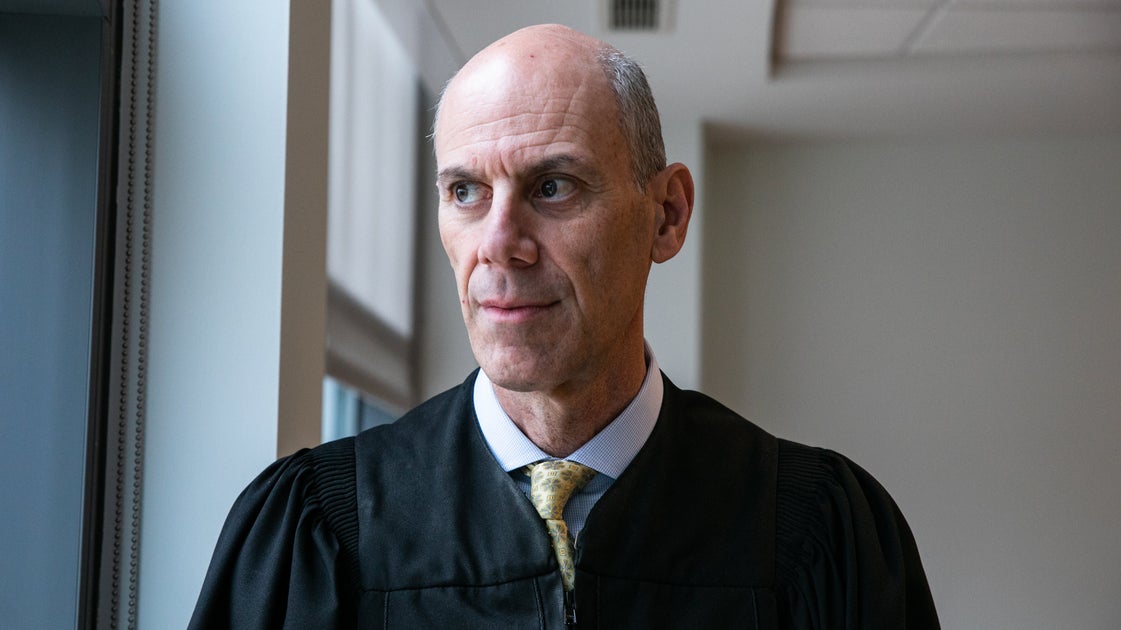

Federal Judge Cleared of Misconduct Complaint in High-Stakes Immigration Dispute
Background of the Judicial Conflict
In a significant development that highlights the ongoing tensions between the federal judiciary and the Trump administration, a federal appeals court judge has dismissed a judicial misconduct complaint filed by the U.S. Justice Department against a prominent federal judge. The case centered on Chief U.S. District Judge James Boasberg of Washington, D.C., who found himself at odds with President Donald Trump’s administration over the controversial deportation of several Venezuelan nationals to El Salvador. U.S. Attorney General Pam Bondi had taken the unusual step of publicly announcing the complaint in July, alleging that Judge Boasberg made inappropriate comments about President Trump during a meeting of the Judicial Conference, the policymaking body of the federal judiciary. The complaint represented a rare public confrontation between the executive branch and a sitting federal judge, raising questions about judicial independence and the proper boundaries of executive oversight of the judiciary.
Chief U.S. Circuit Judge Jeffrey Sutton of the 6th Circuit Court of Appeals, who reviewed the case, issued an order dated December 19 that decisively rejected the Justice Department’s allegations. In his ruling, Judge Sutton concluded that even if the alleged statements were actually made by Judge Boasberg, they would not constitute a violation of judicial ethics rules. The dismissal represents a significant victory for judicial independence and sets important boundaries on the executive branch’s ability to pursue misconduct complaints against judges who make decisions or comments that may be viewed as critical of administration policies. Judge Boasberg, who was appointed to the federal bench by former President Barack Obama, declined to comment on the dismissal, while the Justice Department did not respond to requests for comment following the ruling’s public release.
The Underlying Immigration Case and Judicial Concerns
The controversy that sparked the misconduct complaint stems from a highly contentious immigration case involving Venezuelan nationals who challenged their removal to a Salvadoran prison facility. The timeline of events reveals a deeply troubling sequence that raised serious questions about the Trump administration’s respect for judicial process and the rule of law. Attorney General Bondi announced the misconduct complaint against Judge Boasberg just days after he had publicly stated that he was considering initiating disciplinary proceedings against Justice Department lawyers for their conduct in the lawsuit brought by the Venezuelans. This timing raised eyebrows among legal observers and led to suggestions that the misconduct complaint might have been retaliatory in nature, designed to intimidate a judge who was actively questioning the administration’s legal tactics.
In April, Judge Boasberg had issued a particularly pointed ruling in which he concluded that the Trump administration appeared to have acted “in bad faith” regarding the deportation flights. Specifically, the judge found that on March 15, while he was conducting emergency court proceedings to assess the legality of the deportations, the administration hurriedly assembled and executed three deportation flights. This apparent disregard for ongoing judicial review struck Judge Boasberg as potentially undermining the judicial process and the courts’ ability to properly evaluate the legality of executive actions before they became irreversible facts on the ground. The Venezuelans were removed from the United States under the authority of the Alien Enemies Act, a rarely-used law that grants the president broad powers to detain and deport nationals of countries deemed to be enemies during times of war or national emergency. The use of this law and the circumstances surrounding the deportations became the subject of intense legal scrutiny and public debate.
The Alleged Comments and the Misconduct Complaint
The Justice Department’s misconduct complaint focused specifically on comments that were attributed to Judge Boasberg by The Federalist, a conservative media outlet that reported on a meeting of the U.S. Judicial Conference held in March. This meeting was attended by Chief Justice John Roberts of the U.S. Supreme Court, along with other senior members of the federal judiciary who gather periodically to discuss administrative and policy matters affecting the judicial branch. According to the Justice Department’s allegations, Judge Boasberg expressed concerns to Chief Justice Roberts and other attendees that the Trump administration might disregard court rulings, potentially triggering what he characterized as “a constitutional crisis.” Such a statement, if made, would reflect deep anxiety about the executive branch’s commitment to respecting judicial authority and following court orders, even when those orders might conflict with the administration’s policy preferences.
The Justice Department argued that these alleged comments violated the judicial code of conduct, which sets standards for appropriate judicial behavior both on and off the bench. Furthermore, the DOJ contended that Judge Boasberg had improperly allowed his stated concerns about the administration to influence his decision-making in the litigation involving the Venezuelan deportees. This argument suggested that the judge had prejudged the administration’s intentions and allowed those preconceptions to bias his rulings, rather than evaluating each legal question on its merits. Because of potential conflicts of interest among judges in the District of Columbia circuit, who might have relationships with Judge Boasberg or their own perspectives on the underlying issues, Chief Justice Roberts transferred the complaint to the Judicial Council of the Cincinnati-based 6th Circuit Court of Appeals for independent review, a standard procedure designed to ensure impartiality in the handling of judicial misconduct allegations.
Judge Sutton’s Reasoning and Dismissal
Chief Circuit Judge Jeffrey Sutton’s decision to dismiss the misconduct complaint rested on two independent grounds, either of which would be sufficient to dispose of the case. First, Judge Sutton found that the Justice Department lacked adequate proof that Judge Boasberg actually made the statements attributed to him. This evidentiary shortcoming is particularly significant because misconduct proceedings, even though they are not criminal in nature, still require a solid factual foundation before disciplinary action can be taken against a federal judge. The reliance on media reports, particularly from a single outlet with a known ideological perspective, apparently did not meet the standard of proof necessary to sustain the allegations. Without reliable evidence that the comments were actually made, the entire complaint lacked a factual basis and could not proceed.
Even more significantly, Judge Sutton went on to explain that even if Judge Boasberg had made the alleged statements, they would not violate the codes of judicial conduct that govern federal judges’ behavior. In his written order, Judge Sutton provided important context for understanding when and how judges may appropriately discuss matters that touch on their official duties. He explained that during closed-door meetings of the Judicial Conference, judges regularly discuss sensitive topics related to the functioning of the judicial branch and its relationship with the other branches of government. According to Judge Sutton’s analysis, expressing anxiety about whether the executive branch would comply with judicial orders, “whether rightly feared or not, is not so far afield from customary topics at these meetings—judicial independence, judicial security, and inter-branch relations—as to violate the Codes of Judicial Conduct.” This reasoning establishes important protection for judges to speak candidly about their concerns regarding threats to judicial independence during appropriate internal forums, without fear that their comments will be twisted into ethics violations by officials who disagree with their rulings or perspectives.
Implications for Judicial Independence and Inter-Branch Relations
The dismissal of this misconduct complaint carries profound implications for the ongoing relationship between the federal judiciary and the executive branch, particularly during periods of political tension when courts are called upon to review controversial executive actions. The case illustrates the delicate balance that must be maintained in the American constitutional system between holding judges accountable for genuine ethical violations while simultaneously protecting their independence from political pressure and retaliation. Had the Justice Department’s complaint succeeded, it could have created a chilling effect on judges’ willingness to speak candidly about institutional concerns during internal deliberations, or to rule against the government when the law required such rulings, for fear that doing so might trigger retaliatory ethics complaints.
The broader context of this case includes ongoing debates about the proper scope of executive power, particularly in the immigration context, and the role of courts in checking that power when it may exceed legal boundaries. Judge Boasberg’s alleged concerns about potential disregard for judicial authority reflect genuine institutional anxieties within the federal judiciary about maintaining the rule of law during an administration that has frequently criticized judges and court decisions that have impeded its policy goals. The fact that Chief Circuit Judge Sutton, who was appointed by a Republican president and is generally considered a conservative jurist, dismissed the complaint so decisively suggests that the protection of judicial independence transcends partisan divisions and represents a core institutional value that judges across the ideological spectrum are committed to defending. The decision sends a clear message that the Justice Department cannot use ethics complaints as weapons to intimidate judges who issue unfavorable rulings or who express legitimate concerns about executive overreach, even in private settings designed for candid discussion of exactly such concerns. As the Trump administration continues to pursue aggressive immigration enforcement policies and other controversial executive actions, this ruling helps ensure that federal judges can continue to perform their constitutional role as independent arbiters of legal disputes without fear of retaliation for doing their jobs.