
Venezuelan Opposition Leader Machado: Political Transition is “Unstoppable”
The Path Forward After Maduro’s Capture
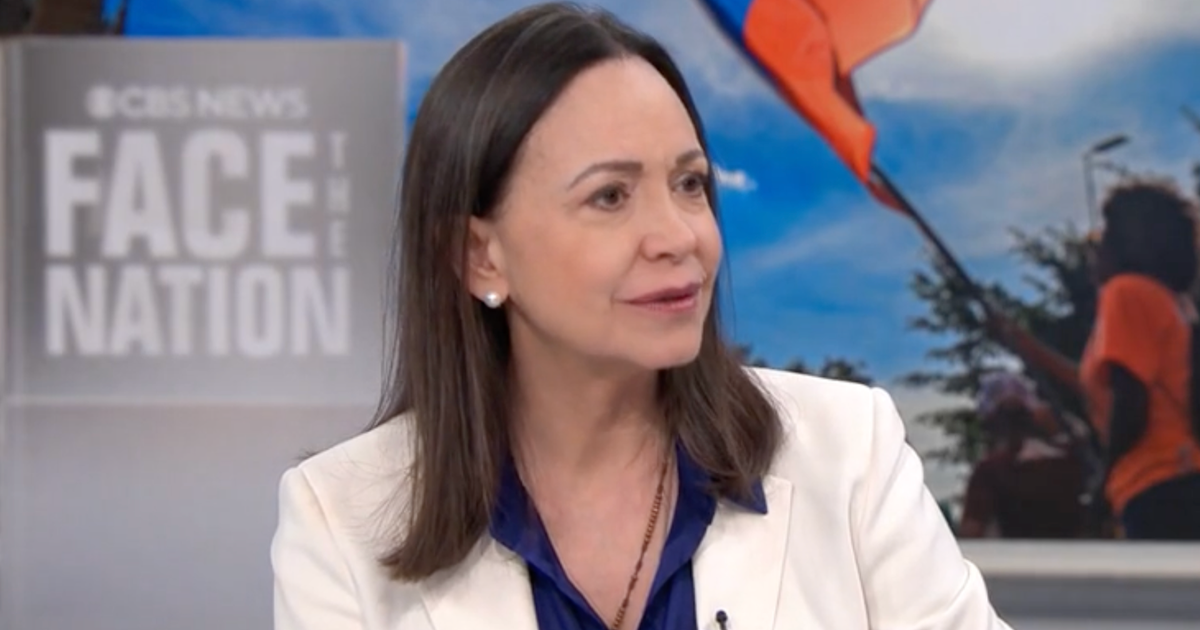
Maria Corina Machado, the Venezuelan opposition leader whose party claimed victory in the 2024 election, has declared that a political transition away from what remains of the Maduro regime cannot be stopped. Speaking with “Face the Nation” moderator Margaret Brennan, the Nobel Peace Prize laureate expressed cautious optimism about recent developments in her troubled homeland, even as she questions the legal legitimacy of changes being implemented by the current interim government. Machado credits pressure from the Trump administration for any positive shifts occurring in Venezuela, though she maintains serious reservations about whether these reforms carry genuine legal weight without free and fair elections. Her interview provides crucial insight into the complex political situation unfolding in Venezuela following the dramatic U.S. military operation that led to former President Nicolás Maduro’s capture, an event that has fundamentally altered the country’s political landscape and created both opportunities and uncertainties for the future.
Working With an Illegitimate Government
The current situation in Venezuela presents a complicated puzzle for both American policymakers and the Venezuelan opposition. Since Maduro’s capture, the country has been led by interim President Delcy Rodriguez, who previously served as Maduro’s vice president before being sworn in by the National Assembly. Rather than completely dismantling the remnants of Maduro’s regime—which includes numerous officials who have been indicted and sanctioned by the United States—the Trump administration has chosen a more nuanced approach, working with these existing power structures while using substantial U.S. restrictions on Venezuelan oil exports as leverage. Secretary of State Marco Rubio made clear to senators that no further military action is planned for Venezuela, stating that “the only military presence you will see in Venezuela is our Marine guards at an embassy,” referring to the potential reopening of an American diplomatic presence in Caracas. On Saturday, American diplomat Laura Dogu arrived in the Venezuelan capital to serve as Charge d’Affaires of the Venezuelan Affairs Unit, tasked with engaging the opposition, civil society, and the interim government. Despite this practical engagement, the U.S. has carefully avoided diplomatically or legally recognizing the Rodriguez government’s legitimacy, creating a situation where America works with Venezuelan authorities without endorsing them.
Reforms Under Pressure and Questions of Legitimacy
Machado argues that every action taken by Delcy Rodriguez is driven by instructions from Washington rather than genuine democratic commitment. “Actually, everything that Delcy Rodriguez is currently doing is because she’s complying with instructions she’s getting from the United States,” Machado explained, adding that the message has been delivered and results are visible both in regime actions and in the growing energy among the Venezuelan population. The Rodriguez government has indeed made some significant changes, including signing legislation that loosens state control over Venezuela’s oil industry—a notable departure from the socialist Chavismo ideology that has defined the Venezuelan state for decades. This shift toward privatization aligns with President Trump’s goal of encouraging U.S. oil companies to return to Venezuela after years of absence following the nationalization of their assets. While Machado sees positive elements in these reforms, particularly the move away from total state ownership, she emphasizes that meaningful economic transformation requires the rule of law and long-term guarantees for both foreign and domestic investment. During her time in exile, Machado has met with energy executives who have consistently told her that a stable, democratic system is essential for restoring confidence and attracting new investment to Venezuela. Most importantly, she contends that all changes promised by Rodriguez rest on a fundamentally flawed legal foundation because the U.S. government has not recognized the National Assembly as legitimate, meaning the existing government remains an “illegitimate power” and whatever emerges from it has “no legality.”
The Human Rights Test and Political Prisoners
One of the most significant tests facing the interim Venezuelan authorities involves their treatment of political dissidents and prisoners—an issue that will reveal how tolerant they are willing to be of opposition voices and human rights concerns. Rodriguez announced that lawmakers would consider legislation granting amnesty to hundreds of political prisoners, a move that Machado has been pressing for relentlessly. The actual release of these prisoners and the conditions attached to their freedom will serve as a critical indicator of whether genuine political opening is possible under the current arrangement. Machado has been clear that securing a safe and credible transition is essential not just for those currently imprisoned, but for the hundreds of thousands—perhaps millions—of Venezuelans living as refugees and political exiles who might want to return home but fear persecution and ongoing instability. “So if we want those hundreds of thousands and millions of Venezuelan to go back, we need to have a secure and precise timeline through which this transition will advance,” she emphasized. Without such guarantees, the massive Venezuelan diaspora scattered across Latin America and beyond will remain in limbo, unable to contribute to rebuilding their country and reuniting with families.
Timeline Uncertainties and the Road to Elections
While Machado shares the Trump administration’s ultimate vision for Venezuela’s future, she has not received a precise timeline regarding when the interim government would agree to hold free and fair elections. This ambiguity creates challenges for planning and for maintaining momentum toward democratic transition. Secretary Rubio stated that while the administration eventually wants Venezuela to hold democratic elections, the transition to democracy will “take some time.” According to a Wall Street Journal report, Energy Secretary told the business community that elections might be eighteen months to two years away. Previously on “Face the Nation,” Wright suggested that direct U.S. involvement in Venezuela might extend well beyond the immediate future: “It’s not weeks, it’s more months. Could be a year or two could be more.” Machado, who met with Rubio to discuss these matters, acknowledges that dismantling what she calls the “criminal structure” of the Maduro regime will be extraordinarily complex, particularly given its extensive connections to U.S. adversaries including Cuba, Iran, and China. These international entanglements add layers of difficulty to any transition process, as various external actors have vested interests in Venezuela’s political direction and resource wealth.
Machado’s Journey and Future Prospects
Maria Corina Machado’s personal story embodies the struggle of Venezuela’s democratic opposition. Banned by Maduro from running against him in the 2024 election, she channeled her political energy into galvanizing her party and supporting former diplomat Edmundo González Urrutia, whom the United States and much of the international community recognized as the legitimate winner despite Maduro remaining in power through what were widely viewed as rigged results. For sixteen harrowing months, Machado lived in hiding within Venezuela, moving locations fourteen times to evade persecution by Maduro’s government. In December, she escaped the country through a daring waterborne operation assisted by a U.S. security firm and local supporters, eventually flying to Norway to accept her Nobel Peace Prize. In a gesture that garnered significant attention, she handed her Nobel medallion to President Trump, explaining that she is “truly grateful for what he has done” in orchestrating Maduro’s removal. When asked about her own political future, Machado stated clearly: “I will be president when the time comes,” but insisted that this “should be decided in elections by the Venezuelan people.” President Trump, when asked aboard Air Force One whether Machado should be able to return to Venezuela, called her “a very fine person” while also praising the current leadership’s performance. Machado herself acknowledges that circumstances are “changing very fast” in Venezuela, noting that if she had been captured before leaving, she “probably would have been disappeared or worse,” but that now, she doesn’t believe authorities “would dare to kill me because of the United States’ presence and pressure and actions.” This cautious assessment reflects both the genuine changes occurring and the continuing dangers that make Venezuela’s path forward uncertain and fraught with risk for those who have fought against authoritarianism.