


Trump Takes Legal Action Against IRS Over Leaked Tax Returns
A $10 Billion Claim Against Federal Agencies
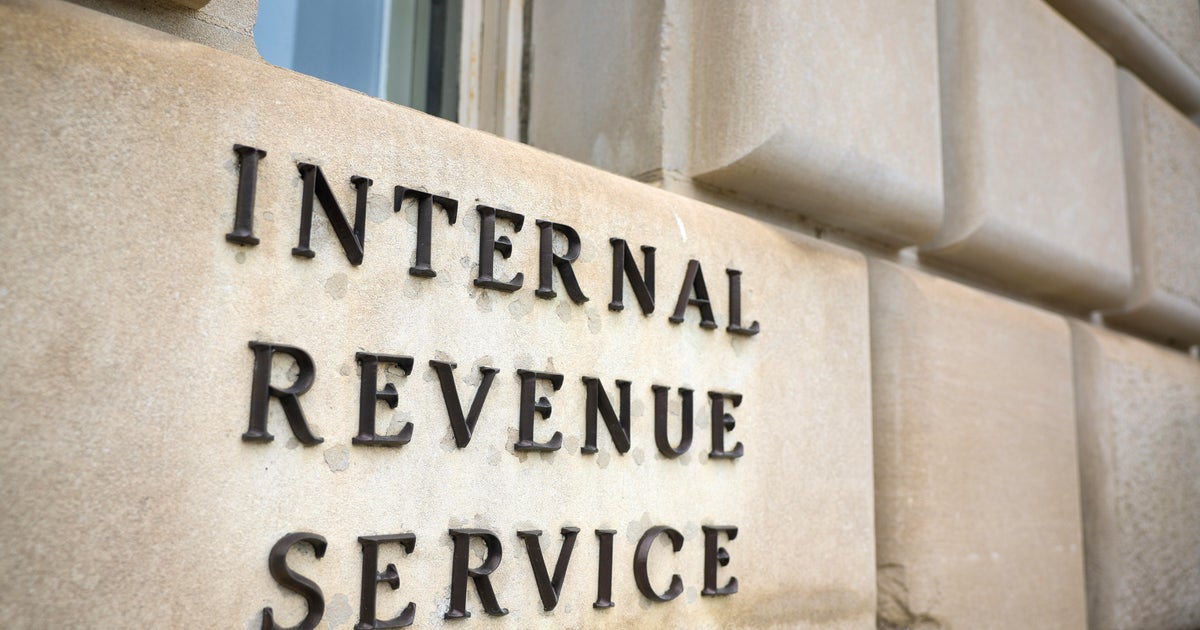
Former President Donald Trump has launched a major legal offensive against the Internal Revenue Service and the Treasury Department, filing a lawsuit that seeks at least $10 billion in damages. The suit, filed in federal court in Miami, represents Trump’s latest effort to hold government agencies accountable for what he claims was the unlawful handling and subsequent leaking of his personal tax returns. The lawsuit isn’t just about Trump himself – it also includes his two oldest sons, Eric and Don Jr., as well as the Trump Organization as plaintiffs. At the heart of this legal battle is the allegation that federal agencies failed in their fundamental duty to protect confidential taxpayer information, leading to what Trump’s legal team describes as devastating personal and professional consequences for the entire Trump family and their business empire.
The lawsuit paints a picture of systemic failure within the IRS, arguing that the agency either knowingly allowed the leaks to happen or was so negligent in its security protocols that the outcome was inevitable. According to the filing, the mishandling of Trump’s tax information resulted in serious reputational damage, financial harm, and public embarrassment. The suit claims that the leaked information unfairly tarnished the business reputations of all the plaintiffs, portrayed them in a false light to the American public, and significantly damaged President Trump’s public standing during a critical time in his political career. These aren’t just abstract claims of harm – the lawsuit suggests that the consequences have been far-reaching and measurable, affecting everything from business relationships to public perception at a time when Trump was seeking the nation’s highest office.
The Contractor Who Broke the Law
The central figure in this controversy is Charles Littlejohn, an IRS contractor who took it upon himself to expose what he apparently viewed as important information the public deserved to know. In 2024, Littlejohn was sentenced to five years in prison for his role in leaking Trump’s federal tax records to major news organizations. At the time of the leaks, Littlejohn worked for Booz Allen Hamilton, a prestigious consulting firm that had contracts with the IRS. Prosecutors didn’t mince words about Littlejohn’s actions, stating that he “abused his position” and “weaponized his access to unmasked taxpayer data to further his own personal, political agenda, believing that he was above the law.” This wasn’t a simple mistake or accidental disclosure – according to investigators, Littlejohn deliberately sent Trump’s tax information to The New York Times in 2020 and also provided a storage device containing tax data to ProPublica, another news organization.
The information Littlejohn leaked proved explosive when it was published. The New York Times reported that in 2016, the year Trump won the presidency, he paid just $750 in federal income taxes. Even more remarkably, the newspaper reported that Trump paid the same amount – just $750 – in 2021, his first year actually serving as president. These revelations stood in stark contrast to the image Trump had cultivated as a successful billionaire businessman. They also highlighted his unusual decision to break with decades of presidential tradition by refusing to publicly release his tax returns, something that every major presidential candidate had done for generations. While the information was undoubtedly newsworthy and of significant public interest, the question at the center of Trump’s lawsuit is whether the government agencies responsible for protecting this confidential information did enough to prevent its unauthorized disclosure.
Government Accountability and Corporate Responsibility
What makes this lawsuit particularly interesting is who Trump has chosen to target – and who he hasn’t. The suit goes after the IRS and Treasury Department themselves, rather than focusing solely on Littlejohn, who has already been convicted and sentenced, or Booz Allen Hamilton, the consulting firm that employed him. This strategic decision reflects Trump’s argument that the ultimate responsibility for protecting taxpayer information lies with the government agencies themselves, not just with individual bad actors or their corporate employers. The lawsuit alleges that the IRS made “unlawful disclosures knowingly—or at the very least negligently or with gross negligence—because they willfully failed to establish appropriate administrative, technical, and physical safeguards to ensure the security and confidentiality of Plaintiffs’ confidential taxpayer information.”
However, the government hasn’t been entirely passive in addressing the security failures that allowed Littlejohn’s actions. In a significant move just this Monday, the Treasury Department announced it was canceling all contracts with Booz Allen Hamilton, directly citing Littlejohn’s crimes as the reason. The Treasury Department’s statement was particularly damning, accusing the consulting firm of having “failed to implement adequate safeguards to protect sensitive data, including the confidential taxpayer information it had access to through its contracts with the Internal Revenue Service.” This action suggests that while Trump’s lawsuit focuses on the government agencies, those agencies are themselves taking steps to hold contractors accountable for security failures. It also raises questions about the broader ecosystem of contractors and consultants who have access to sensitive taxpayer information and whether current safeguards are sufficient to prevent future breaches.
Trump’s Expanding Legal Battlefield
The IRS lawsuit is just the latest in what has become a pattern of aggressive legal action by Trump since his return to the political stage. A spokesman for Trump’s legal team framed the IRS case in stark political terms, stating that “the IRS wrongly allowed a rogue, politically-motivated employee to leak private and confidential information about President Trump, his family, and the Trump Organization to the New York Times, ProPublica and other left-wing news outlets, which was then illegally released to millions of people.” This characterization of the news organizations as “left-wing” reflects Trump’s broader narrative about media bias and what he sees as coordinated efforts to undermine him politically.
Earlier this month, Trump filed a separate $5 billion lawsuit against JPMorgan Chase Bank and its CEO Jamie Dimon in Florida state court, claiming the bank closed his accounts in 2021 due to “political and social motivations” rather than legitimate business reasons. The bank has firmly rejected these allegations, saying the lawsuit “has no merit.” Trump has also gone after major media organizations with significant legal actions. Last fall, he sued The New York Times for defamation over a series of articles examining his business career. The newspaper’s response was defiant, vowing to challenge what it called the president’s “intimidation tactics.” Interestingly, a federal judge initially dismissed this lawsuit, but not on its merits – instead, the judge found the 85-page complaint unnecessarily long and directed Trump’s lawyers to file a simpler, more concise version following court rules. The legal team complied, reducing the complaint to 40 pages. Additionally, Trump sued The Wall Street Journal and media mogul Rupert Murdoch for $10 billion over a story about his relationship with convicted sex offender Jeffrey Epstein, with the newspaper promising to “vigorously defend” itself.
The Broader Implications and Unanswered Questions
As this lawsuit moves forward, neither the IRS nor the Treasury Department has publicly commented on Trump’s allegations, leaving many questions unanswered about how they plan to defend their handling of his tax information. The case raises fundamental questions about the security of taxpayer information in an era when so much sensitive data is accessible to contractors and consultants working for government agencies. If Trump’s allegations are accurate and the IRS truly failed to implement adequate safeguards, it’s not just his privacy that was at risk – it’s the confidential information of millions of Americans who trust that their tax returns will remain private.
The lawsuit also highlights the tension between the public’s right to know information about their elected leaders and individuals’ rights to privacy, even when they hold or seek high office. While Trump chose not to release his tax returns voluntarily, breaking with presidential tradition, the information contained in those returns was undeniably relevant to voters assessing his qualifications and potential conflicts of interest. Yet the method by which this information became public – through what prosecutors have characterized as a criminal abuse of access to confidential data – raises serious concerns about the rule of law and proper procedures. Whatever one thinks about Trump or the newsworthiness of his tax information, the fact remains that Littlejohn took it upon himself to decide what information should be public, bypassing all legitimate channels and processes. The outcome of this lawsuit could have significant implications not just for Trump, but for how government agencies handle sensitive information and what recourse Americans have when their confidential data is improperly disclosed. As the case proceeds through the courts, it will test whether federal agencies can be held financially accountable for security failures that result in unauthorized disclosures of private taxpayer information.