
Pope Leo XIV Stands Firm Against Trump’s Criticism, Vowing to Continue Peace Mission
A Clash Between Spiritual and Political Leadership
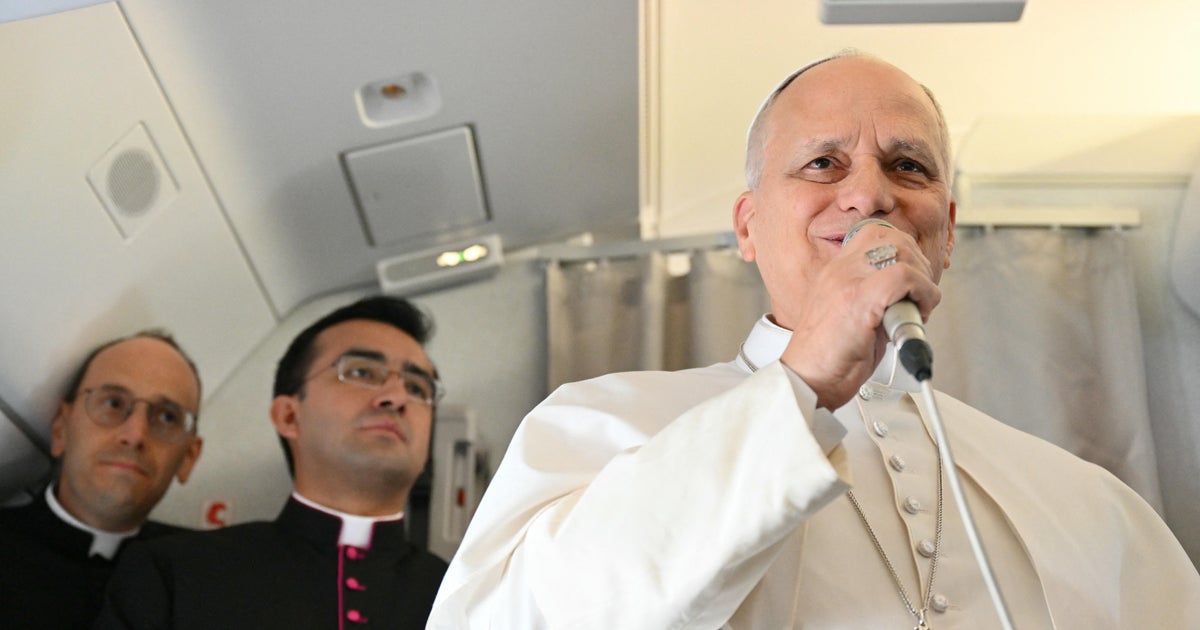
The relationship between religious authority and political power has once again become a flashpoint in global affairs. Pope Leo XIV, the leader of the world’s 1.3 billion Catholics, found himself at the center of a heated exchange with President Donald Trump after the pontiff criticized the administration’s aggressive stance toward Iran. What began as a pastoral call for peace has escalated into a public confrontation that highlights the growing tension between the Vatican’s moral vision and America’s hardline foreign policy approach. Speaking from the papal plane as he embarked on a significant trip to Africa, Pope Leo made it abundantly clear that he would not be intimidated or silenced by political pressure, even when it comes from the world’s most powerful leader. His message was simple but profound: the Church’s mission to promote peace and protect human dignity transcends national borders and political calculations, and no amount of criticism will deter him from speaking what he believes is the truth of the Gospel.
The President’s Harsh Words and the Pope’s Measured Response
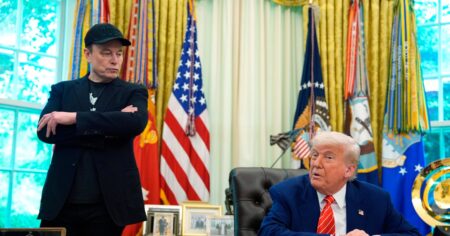
The conflict erupted late Sunday evening when President Trump took to social media to launch a blistering attack on Pope Leo XIV. In characteristically blunt language, Trump called the pontiff “WEAK on Crime, and terrible for Foreign Policy,” escalating what had been simmering tensions into a full-blown public dispute. The president’s most pointed criticism centered on nuclear negotiations with Iran, with Trump writing, “I don’t want a Pope who thinks it’s OK for Iran to have a Nuclear Weapon.” This statement came after Pope Leo had publicly condemned Trump’s threats against Iranian civilization as “truly unacceptable” and had urged Catholics worldwide to contact their political leaders and pressure them to pursue peaceful solutions rather than military confrontation. The pope had specifically encouraged people to “ask them, tell them to work for peace,” a call that apparently struck a nerve in the White House. When journalists aboard the papal plane asked Pope Leo to respond to the president’s attacks on Monday, the pontiff initially declined to engage directly with Trump’s social media post, maintaining the diplomatic restraint expected of his office. “I am not a politician,” he stated simply. “I will leave that to the politicians.” However, while refusing to descend into a tit-for-tat political fight, Pope Leo didn’t back down from defending his message or his mission.
Standing Firm on the Gospel Message
Though Pope Leo avoided directly attacking President Trump, he firmly pushed back against the substance of the criticism, making it clear that the president fundamentally misunderstood the nature of the Church’s mission. The pope warned against attempts to equate his spiritual message with political agendas, suggesting that Trump was trying to force a false equivalence between the Gospel’s call for peace and the administration’s foreign policy objectives. “To put my message on the same plane as what the president has attempted to do here is, I think, not understanding what the message of the Gospel is,” Leo explained to the gathered journalists. His words carried a subtle but unmistakable rebuke: the president might hold tremendous earthly power, but he lacked comprehension of the spiritual principles that guide the Church’s actions. Pope Leo expressed regret that this misunderstanding existed but made it crystal clear that it would not change his course. “I am sorry to hear that, but I will continue with what I believe is the mission of the Church in the world today,” he declared. The mission he described is fundamentally rooted in Scripture itself, specifically the Beatitudes that Jesus preached in the Sermon on the Mount. “The message of the Gospel is very clear: ‘Blessed are the peacemakers,'” the pope reminded his audience, invoking one of Christianity’s most foundational teachings. This wasn’t merely a diplomatic platitude; it was a theological assertion that peacemaking isn’t optional for Christians but rather central to their faith identity.
A Moral Voice in Times of Global Crisis
Pope Leo emphasized that his role isn’t to enter the complicated realm of political debates but rather to offer a moral alternative during a time when global tensions seem to be spiraling toward potentially catastrophic consequences. “Someone has to stand up and say that there is a better way,” he insisted, positioning himself and the Church as a counterweight to the prevailing culture of militarism and nationalist aggression. The pope pointed specifically to dialogue, reconciliation, and multilateral cooperation as the path forward—values that stand in stark contrast to the Trump administration’s “America First” approach and its preference for unilateral action and military threats. His insistence that “too many people are suffering today” and that “too many innocent people have been killed” was a pointed reminder that real human lives hang in the balance of these geopolitical chess games. For Pope Leo, these aren’t abstract policy questions to be decided by cost-benefit analysis or strategic calculation; they’re matters of fundamental human dignity and the sanctity of life. The pope stressed that his call for peace applies universally to all world leaders, not just the United States, though the timing and context of his remarks made clear that America’s current trajectory particularly concerns him. By framing his message in universal terms, Leo attempted to rise above accusations that he’s simply anti-American or politically motivated, instead presenting himself as a consistent voice for peace regardless of which nations or leaders are involved in conflict.
The Africa Trip and Its Symbolic Significance
Pope Leo’s strong remarks came at the beginning of an ambitious 11-day journey that will take him to Algeria, Cameroon, Angola, and Equatorial Guinea—countries that themselves are grappling with conflict, inequality, and political instability. The timing and destination of this trip add additional layers of meaning to his confrontation with President Trump. By traveling to Africa rather than to wealthier Western nations, the first American pope is making a statement about where the Church’s priorities lie: with the marginalized, the suffering, and those living in regions often overlooked by global powers. These African nations face challenges including civil unrest, economic hardship, religious tensions, and the lingering effects of colonialism—problems that are often exacerbated rather than solved by the kind of aggressive foreign policy approaches favored by the Trump administration. For Pope Leo, this trip represents an opportunity to demonstrate solidarity with communities that bear the brunt of global power struggles while having little voice in shaping international policy. The pope’s willingness to speak so forcefully against American policy while embarking on this mission to Africa suggests he sees a connection between the peace agenda he’s promoting and the concrete suffering he’ll witness during his travels. These aren’t separate issues but part of a unified vision of a world where dialogue replaces threats, where diplomacy supersedes military action, and where the dignity of every human person—regardless of nationality or religion—is respected and protected.
A Defining Moment for Pope Leo’s Papacy
According to observers traveling with the papal entourage, these comments represent Pope Leo’s strongest pushback to date against criticism from the American president, marking what may be a defining moment in his papacy. The American-born pontiff finds himself in a unique and somewhat awkward position: he’s a product of American culture and society, yet his spiritual role requires him to transcend national loyalties and speak for universal values that sometimes conflict with his homeland’s policies. Against the backdrop of the ongoing war in Iran, Pope Leo has repeatedly warned in recent days that violence is becoming normalized in international relations and that religious language is at risk of being misused to justify military action. This latter concern is particularly relevant given that some political leaders, including figures in the Trump administration, have used religious rhetoric to frame conflicts as cosmic battles between good and evil, or between civilization and barbarism. Pope Leo appears deeply concerned that authentic Christian teaching about peace, mercy, and reconciliation is being distorted to serve nationalist agendas. His insistence that he has “no fear of the Trump administration” and will continue to speak “loudly” for the Gospel message represents a bold assertion of the Church’s independence from political power. In an era when many religious leaders have been accused of being too cozy with political authorities or too silent in the face of injustice, Pope Leo is staking out a prophetic position that may cost him politically but that he clearly believes is non-negotiable. As this clash between spiritual and temporal authority continues to unfold, it’s becoming clear that Pope Leo XIV sees his papacy as a moment to reassert the Church’s role as a moral voice that answers to a higher authority than any earthly government—even that of his own native land.