


Major Earthquake Strikes Indonesia’s Molucca Sea: What You Need to Know
A Powerful Tremor Shakes the Region
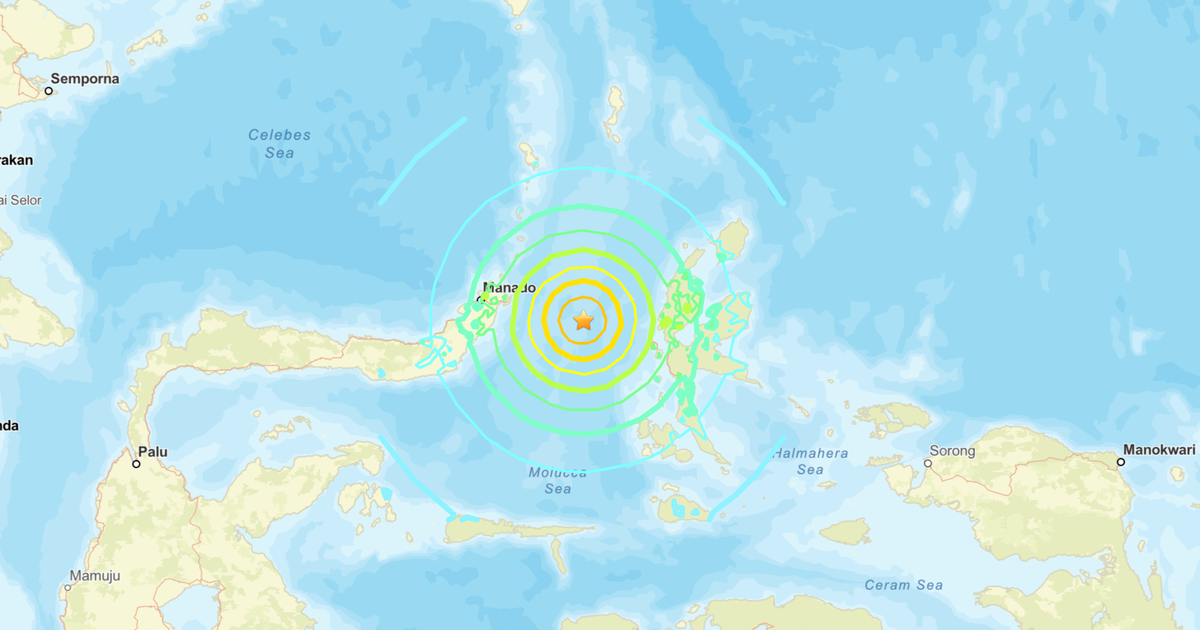
In the early hours of Thursday morning, residents across Indonesia’s northeastern region were jolted awake by a significant seismic event. The U.S. Geological Survey confirmed that a powerful magnitude 7.4 earthquake had struck the Molucca Sea, sending shockwaves through the region and raising immediate concerns about potential damage and casualties. The earthquake’s epicenter was located approximately 79 miles west-northwest of Ternate, a city in Indonesia’s North Maluku province, and occurred at a depth of nearly 22 miles beneath the ocean floor. This substantial depth, while somewhat mitigating the surface impact, still represented a significant seismic event that demanded immediate attention from disaster response teams and triggered alerts across multiple countries in the region. The U.S. tsunami warning system quickly issued warnings that tsunami waves were possible in neighboring countries, prompting coastal communities to prepare for potential evacuations and putting emergency services on high alert throughout Southeast Asia.
Indonesia’s Precarious Position on the Ring of Fire
Indonesia’s vulnerability to such catastrophic natural events isn’t a matter of bad luck—it’s a geological reality that the nation’s more than 280 million residents live with every single day. The country sits directly on what scientists call the “Ring of Fire,” a horseshoe-shaped belt of seismic activity that circles the Pacific Basin like a geological minefield. This arc of volcanoes and fault lines makes Indonesia one of the most earthquake-prone nations on Earth, subjected to constant tectonic pressure as multiple continental plates grind against each other beneath the archipelago’s 17,000-plus islands. The country experiences hundreds of earthquakes each year, though most are too small to cause damage or even be felt by residents. However, the ever-present threat of a major quake means that disaster preparedness is woven into the fabric of Indonesian life. Schools regularly conduct earthquake drills, buildings in major cities are increasingly constructed with seismic considerations in mind, and early warning systems have been developed and improved over the years to give people precious seconds or minutes to seek safety when the ground begins to shake.
A Tragic History of Devastating Earthquakes
The memory of past disasters looms large in Indonesia’s collective consciousness, serving as a sobering reminder of nature’s awesome power. In 2022, a magnitude 5.6 earthquake—significantly smaller than Thursday’s tremor—struck West Java’s Cianjur city with devastating consequences, claiming at least 602 lives and leaving thousands more injured and homeless. The relatively shallow depth of that quake meant its destructive energy was concentrated near the surface, causing widespread building collapses in areas where construction standards weren’t adequate to withstand such forces. That disaster earned the grim distinction of being Indonesia’s deadliest earthquake since 2018, when a magnitude 7.5 quake triggered a tsunami that slammed into the city of Palu on the island of Sulawesi. The combination of ground shaking and massive tsunami waves in that 2018 catastrophe killed more than 4,300 people, with entire neighborhoods swept away by walls of water that reached heights of up to 20 feet in some locations. The destruction was compounded by a phenomenon called liquefaction, where saturated soil temporarily loses its strength and behaves like a liquid, causing entire communities to sink into the earth.
The 2004 Indian Ocean Tsunami: A Wound That Still Hasn’t Healed
When Indonesians think about earthquakes and tsunamis, one date stands out above all others: December 26, 2004. On that day, an unimaginably powerful magnitude 9.1 earthquake—one of the strongest ever recorded—struck off the coast of Sumatra, displacing massive volumes of water and generating tsunami waves that would eventually reach shores as far away as Africa. The resulting catastrophe killed more than 230,000 people across a dozen countries, making it one of the deadliest natural disasters in recorded history. Indonesia’s Aceh province, being closest to the epicenter, suffered the most devastating losses, with entire coastal towns simply erased from the map and families torn apart in moments. The waves reached heights of up to 100 feet in some locations, traveling inland for miles and leaving behind scenes of utter devastation that shocked the world. The disaster prompted a complete overhaul of tsunami warning systems throughout the Indian Ocean region, with countries investing billions in early detection buoys, seismic monitoring stations, and public education campaigns designed to ensure that such a catastrophic loss of life would never happen again.
Living with Uncertainty in a Land of Natural Beauty and Danger
For the people of Indonesia, the constant threat of earthquakes and volcanic eruptions is simply part of the bargain they’ve made to live in one of the world’s most beautiful and culturally rich regions. The same tectonic forces that create deadly earthquakes also produce the fertile volcanic soil that has sustained Indonesian agriculture for millennia, allowing dense populations to thrive on islands like Java and Bali. The archipelago’s position at the meeting point of major tectonic plates has created dramatic mountain landscapes, pristine beaches, and incredible biodiversity that draws millions of tourists each year. Yet this natural splendor comes with an inescapable cost—the knowledge that at any moment, the earth might shake violently or a volcano might erupt with little warning. Modern Indonesians have developed a remarkable resilience in the face of this reality, maintaining their daily routines, building their homes, raising their families, and pursuing their dreams even while knowing that disaster could strike without warning. This resilience is rooted in centuries of cultural adaptation, strong community bonds, and an increasingly sophisticated disaster management infrastructure that helps minimize casualties when earthquakes inevitably occur.
Moving Forward with Preparation and Hope
As emergency responders assess the damage from Thursday’s magnitude 7.4 earthquake and scientists analyze the seismic data to better understand the event, Indonesia once again finds itself at the intersection of tragedy and resilience. The immediate priority is ensuring the safety of affected populations, checking for structural damage to critical infrastructure, and monitoring for aftershocks that could further threaten vulnerable communities. The tsunami warning issued for neighboring countries reminds us that earthquakes don’t respect borders, and regional cooperation in disaster response has become increasingly important in Southeast Asia. Looking ahead, continued investment in earthquake-resistant construction, improved early warning systems, and public education about disaster preparedness will be essential to reducing casualties in future seismic events. Scientists continue working to better understand the complex tectonic processes that cause these earthquakes, though predicting exactly when and where they’ll strike remains beyond current capabilities. For now, the people of Indonesia demonstrate the same strength and solidarity that have seen them through countless natural disasters before, coming together to help those affected, rebuilding what was lost, and maintaining hope that tomorrow will be better—even while knowing that the earth beneath their feet will inevitably shake again.