

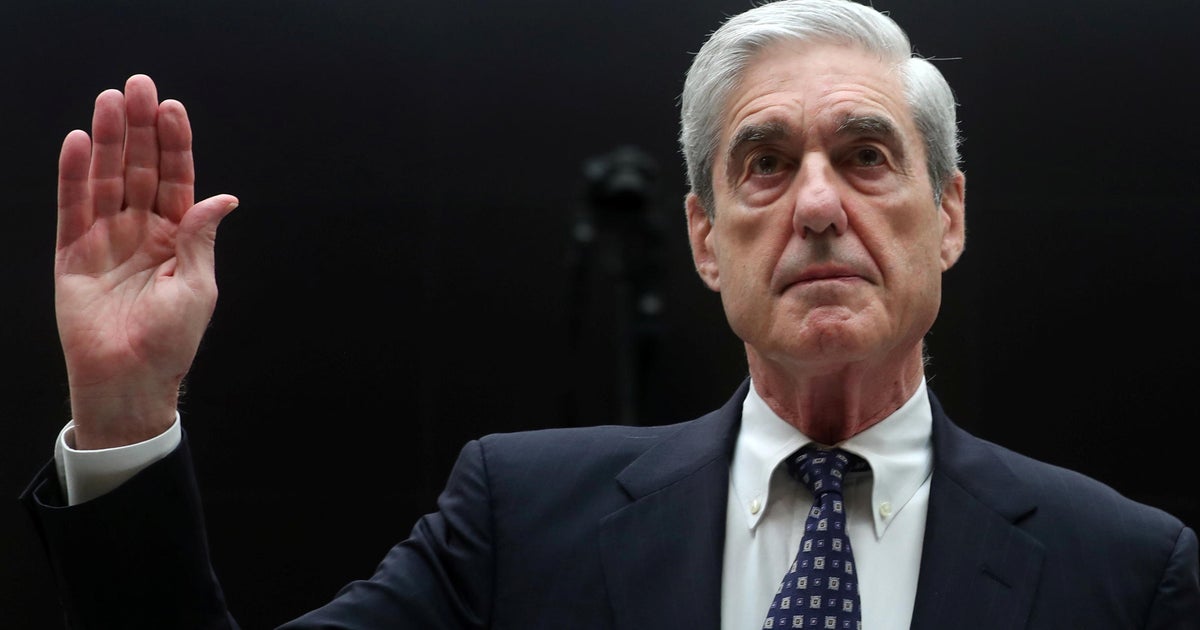

Remembering Robert Mueller: A Legacy of Service and Controversy
The Passing of a Storied Public Servant
Robert Mueller, whose name became synonymous with one of the most politically charged investigations in modern American history, has passed away at the age of 81. Multiple sources confirmed his death to CBS News on Saturday, though the specific cause was not immediately disclosed. Mueller leaves behind his wife of nearly six decades, Ann Cabell Standish, along with their two daughters and three grandchildren. His death marks the end of a remarkable life defined by military valor, prosecutorial excellence, and unwavering dedication to public service. From his decorated service in Vietnam to his transformation of the FBI following the September 11 attacks, and finally to his controversial role as special counsel investigating Russian interference in the 2016 election, Mueller’s career spanned some of the most pivotal moments in American history. His passing sparked reactions across the political spectrum, including a characteristically blunt response from former President Donald Trump, who wrote on Truth Social: “Robert Mueller just died. Good, I’m glad he’s dead. He can no longer hurt innocent people!” This stark comment underscored the deep divisions that Mueller’s final investigation created in American politics, divisions that persisted until his final days.
From War Hero to Legal Eagle
Mueller’s journey to becoming one of America’s most recognizable law enforcement figures began in New York City, where he was born before his family relocated to the Philadelphia suburbs. After graduating from the prestigious Princeton University, Mueller made a decision that would shape his character and approach to public service for decades to come: he enlisted in the U.S. Marine Corps during the Vietnam War. For three years, he served with distinction, leading a rifle platoon through the dangers of combat. His bravery under fire earned him numerous commendations, including a Bronze Star, a Purple Heart, and two Navy Commendation Medals. These weren’t just decorations on a uniform; they represented real experiences of leadership under the most challenging circumstances imaginable. The discipline, attention to detail, and sense of duty that Mueller developed in the jungles of Vietnam would become hallmarks of his later career in law enforcement. Following his military service, Mueller pursued legal education at the University of Virginia School of Law, graduating in 1973. This combination of military leadership and legal expertise created a unique professional foundation that would serve him throughout his career in the Department of Justice and FBI.
Building a Prosecutorial Powerhouse
Throughout the late 1970s and 1980s, Mueller established himself as a formidable force in federal prosecution, working as a U.S. Attorney and rapidly ascending through the ranks of the Justice Department. His rise was meteoric, driven by an uncompromising work ethic and an ability to tackle complex, high-stakes cases. By 1990, his reputation had grown to such an extent that he was appointed U.S. Assistant Attorney General for the Department of Justice’s criminal division, one of the most powerful positions in federal law enforcement. In this role, Mueller oversaw some of the most significant prosecutions of the era, including cases against Panamanian dictator Manuel Noriega and notorious New York crime boss John Gotti. These weren’t simple cases; they required navigating international law, dealing with organized crime’s sophisticated operations, and coordinating multiple agencies and jurisdictions. Mueller’s success in these endeavors demonstrated not only his legal acumen but also his ability to manage complex investigations involving multiple moving parts. His hands-on approach became legendary—he was known for personally diving into the details of investigations, even on relatively minor cases, often surprising field agents who suddenly found themselves on the phone with one of the highest-ranking officials in the Justice Department. This attention to detail and personal involvement would become defining characteristics of his leadership style.
Transforming the FBI in Crisis
In 2001, Mueller was named Director of the Federal Bureau of Investigation, taking the helm of America’s premier law enforcement agency. Just one week later, on September 11, 2001, terrorists attacked the World Trade Center and the Pentagon, fundamentally changing America’s security landscape and Mueller’s mandate. Overnight, the priorities of the FBI shifted dramatically, and Mueller found himself leading an organization that needed to transform from primarily a domestic law enforcement agency into a sophisticated intelligence and counterterrorism organization. Over the next twelve years, Mueller oversaw a massive reorganization of the bureau, enhancing its intelligence capabilities, upgrading its technology infrastructure, and building new partnerships both domestically and internationally. As he reflected in 2012, he had expected to focus on “areas familiar to me as a prosecutor—drug cases, white-collar criminal cases and violent crime,” but instead “had to focus on long-term, strategic change.” This transformation wasn’t easy; it required changing the culture of an established organization, implementing new technologies, and developing new skill sets among agents who had trained primarily for traditional criminal investigations. Mueller’s leadership style during this period was characterized by that same hands-on approach he had demonstrated throughout his career. He famously said that while “the management books will tell you that as the head of an organization, you should focus on the vision,” for him, “there were and are today those areas where one needs to be substantially personally involved.” Mueller served as FBI Director until 2013, when James Comey succeeded him, leaving behind a bureau fundamentally transformed and better prepared for the threats of the 21st century.
The Russia Investigation and Political Storm
In 2017, four years after leaving the FBI, Mueller was thrust back into the national spotlight when the Justice Department appointed him as special counsel to investigate potential coordination between Russia and Donald Trump’s presidential campaign during the 2016 election. This appointment was met with bipartisan praise, as Republicans and Democrats alike recognized Mueller as someone with unimpeachable integrity and independence. However, the investigation would become one of the most politically divisive inquiries in American history, with President Trump repeatedly characterizing it as a “witch hunt” and attacking Mueller and his team regularly. The investigation lasted nearly two years and resulted in seven guilty pleas and charges against 34 individuals, including Trump allies Paul Manafort and Roger Stone, as well as three companies. Despite the significant number of prosecutions, the investigation’s core finding was that it “did not find that the Trump campaign or anyone associated with it conspired or coordinated with Russia to influence the 2016 election.” However, Mueller’s report detailed ten instances in which President Trump may have obstructed justice, though it deliberately did not reach a conclusion on whether obstruction had actually occurred. This ambiguity frustrated both Trump’s critics, who wanted a definitive finding of wrongdoing, and his supporters, who felt the entire investigation was unwarranted. The political fallout from the investigation continued long after its conclusion, with Mueller’s name becoming a touchstone in debates about political accountability, the independence of law enforcement, and the limits of executive power.
Final Years and Lasting Legacy
Following the conclusion of the Russia investigation, Mueller largely retreated from public life, though he remained engaged with legal education and issues related to his investigation. He participated in a six-session course on the investigation at the University of Virginia School of Law, his alma mater, and wrote an introduction for a book by a top prosecutor who had worked on his team. In September 2025, Mueller was subpoenaed to testify before the House Oversight Committee regarding the Jeffrey Epstein case, but the request was withdrawn after information about his declining health became known. A committee aide informed CBS News that Mueller had “health issues that preclude him from being able to testify.” The New York Times reported that same month that Mueller had been diagnosed with Parkinson’s disease in 2021, a progressive neurological condition that his family confirmed had been affecting his ability to function in recent years. Mueller’s death closes the chapter on a life of extraordinary public service, marked by personal courage, professional excellence, and unwavering dedication to the rule of law. Whether one agreed with the outcomes of his investigations or not, few could question his commitment to thoroughness, fairness, and following the evidence wherever it led. His legacy will be debated for generations, particularly regarding his handling of the Russia investigation and its impact on American politics. However, his broader contributions—his military service, his transformation of the FBI, and his decades of prosecutorial work—establish him as one of the most significant law enforcement figures of the late 20th and early 21st centuries.