
Russia Condemns U.S.-Israeli Strikes on Iran Amid Complex Middle East Dynamics
Strong Russian Denunciation of Military Action
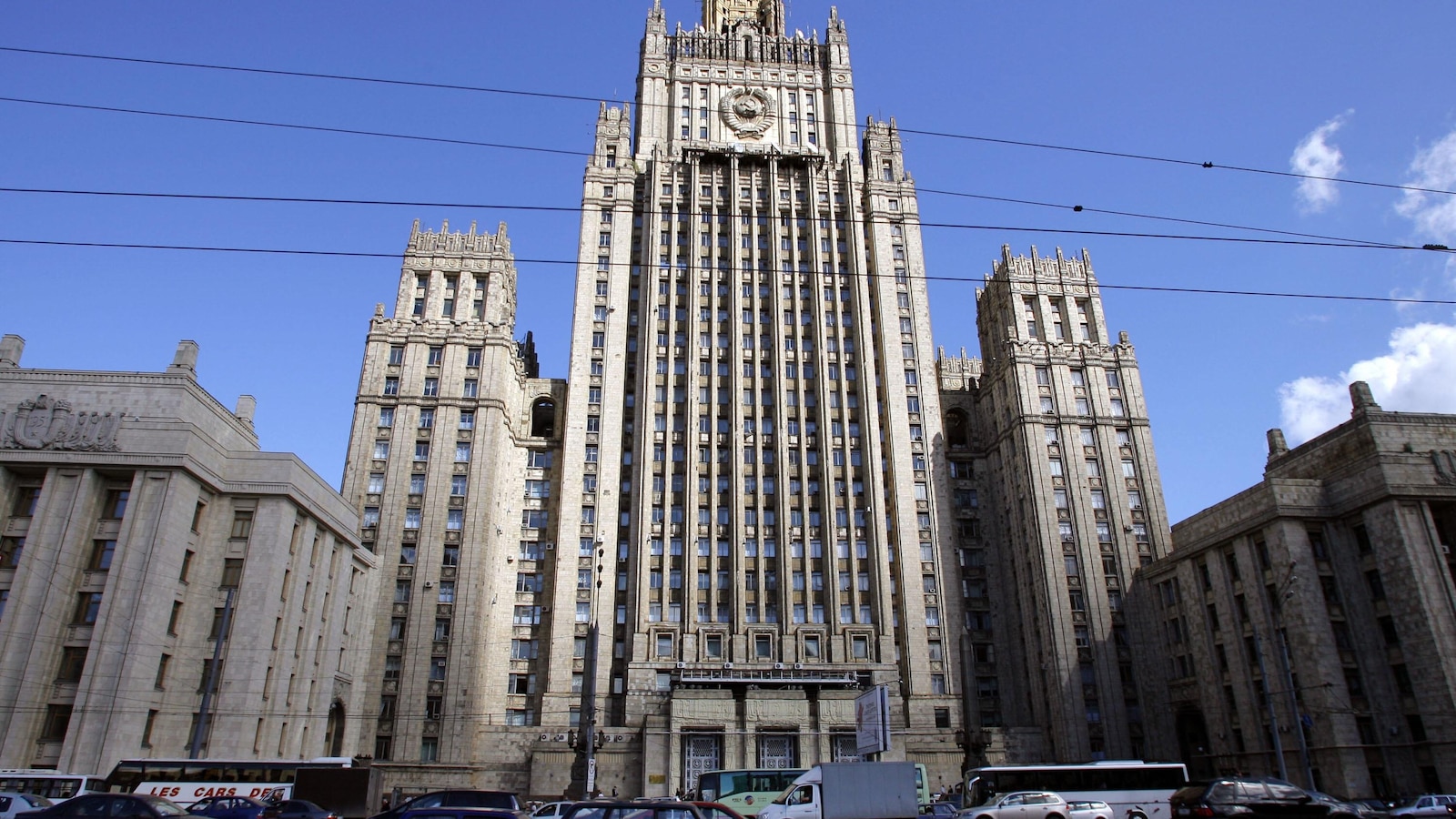
Russia has issued a forceful condemnation of the recent U.S.-Israeli military strikes against Iran, characterizing them as a calculated act of aggression against a sovereign nation. In an official statement released through Telegram, Russia’s Foreign Ministry described the attacks as “a preplanned and unprovoked act of armed aggression against a sovereign and independent U.N. member state.” The ministry demanded an immediate cessation of all military operations and called for a return to diplomatic channels to resolve tensions. Moscow’s statement went further, accusing the United States and Israel of using concerns about Iran’s nuclear program as a cover for their true objective—regime change in Tehran. The Russian government warned that these strikes carry the potential to unleash devastating consequences across the region, including what they termed a possible “humanitarian, economic and possibly radiological catastrophe.” The statement painted a dire picture of the Middle East being pushed toward “an abyss of uncontrolled escalation,” suggesting that the attacks could trigger a chain reaction of violence that would be difficult to contain. This strong language reflects Russia’s growing concern about instability in a region where it has significant strategic interests.
Moscow’s Diplomatic Balancing Act Between Iran and the West
Despite Russia’s harsh criticism of the strikes, the Kremlin finds itself in a delicate position as it attempts to balance its deepening relationship with Iran against a recent thawing of relations with Washington. Russia has become one of Iran’s most important trading partners and a crucial supplier of weapons and military technology, especially as Tehran continues to struggle under the weight of international sanctions that have severely damaged its economy. However, Moscow is also mindful of recent positive developments in its relationship with the United States under President Donald Trump’s administration. Russian President Vladimir Putin has publicly praised Trump’s efforts to mediate a peaceful resolution to the ongoing conflict in Ukraine, and the two nations have begun exploratory discussions about potentially reviving economic ties that were severed following Russia’s invasion of Ukraine. This puts the Kremlin in a complicated position where it must condemn actions against an ally while not completely burning bridges with Washington at a time when diplomatic progress seems possible on issues vital to Russian interests. The Foreign Ministry’s strong statement may represent Russia’s initial public position, but analysts suggest the Kremlin will carefully calibrate its actual response to avoid jeopardizing the diplomatic opening with the Trump administration.
High-Level Diplomatic Communications and International Appeals
In the immediate aftermath of the strikes, Russia’s Foreign Minister Sergey Lavrov engaged in direct communication with his Iranian counterpart, Abbas Araghchi, in a phone conversation that underscored the close coordination between Moscow and Tehran. During this call, Araghchi provided Lavrov with a detailed briefing on Iran’s efforts to defend against the attacks and outlined Tehran’s plans to convene an emergency session of the United Nations Security Council to address what Iran views as an illegal act of aggression. Lavrov reaffirmed Russia’s condemnation of the strikes and pledged Moscow’s willingness to help facilitate a peaceful resolution to the escalating crisis. Meanwhile, Kremlin spokesman Dmitry Peskov revealed that President Putin himself discussed the situation in Iran during a videoconference meeting with Russia’s Security Council, though specific details of that conversation were not made public. In its official statement, the Russian Foreign Ministry reserved particular criticism for the targeting of nuclear facilities that operate under International Atomic Energy Agency safeguards, calling such actions “unacceptable” under international law. Moscow positioned itself as a potential mediator willing to help broker peace, while simultaneously placing complete blame for the escalation squarely on the shoulders of the United States and Israel, stating that “responsibility for the negative consequences of this manmade crisis, including an unpredictable chain reaction and spiraling violence, lies entirely with them.”
Russia’s Strategic Partnership with Iran
The relationship between Russia and Iran has grown substantially stronger in recent years, driven largely by their mutual status as targets of Western sanctions and their shared opposition to American influence in the Middle East and beyond. Just last week, prior to the strikes, Iranian and Russian military forces conducted joint naval exercises in the Gulf of Oman and the Indian Ocean, with Iran’s state-run IRNA news agency reporting that the drills were designed to enhance “operational coordination as well as exchange of military experiences.” This military cooperation represents just one aspect of a broader strategic partnership that was formalized when Putin and Iranian President Masoud Pezeshkian signed an extensive cooperation agreement in January of last year. This pact deepened the relationship between the two nations across economic, military, and political dimensions as both countries sought to mitigate the impact of punishing Western sanctions. Western intelligence agencies have alleged that in 2022, Russia and Iran concluded a $1.7 billion agreement for Iranian-made Shahed drones after Putin launched his invasion of Ukraine, and the United States has also asserted that Iran has supplied short-range ballistic missiles to Russia, though neither Moscow nor Tehran has ever officially acknowledged these transfers. This military cooperation has become a significant concern for Ukraine and its Western supporters.
Ukraine’s Position and the Broader Geopolitical Context
Ukrainian President Volodymyr Zelenskyy broke from many international reactions by expressing support for the strikes on Iran, justifying his position by labeling Tehran “an accomplice of Putin” due to Iran’s supply of Shahed drones and the technology to manufacture them and other weapons systems that Russia has used during its four-year war against Ukraine. This puts Zelenskyy in the unusual position of aligning with Israeli and American military action while most of the international community has called for restraint. The Russia-Iran partnership has manifested in various regional conflicts, most notably in Syria, where both nations worked together to prop up Bashar Assad’s government during the country’s brutal civil war. Despite their combined efforts, they ultimately failed to prevent Assad’s downfall following a rapid offensive by opposition forces, which resulted in Assad and his family fleeing to exile in Russia. Russia has maintained a complex and delicate balancing act in the Middle East for decades, attempting to preserve its historically warm relations with Israel while simultaneously developing strong economic and military partnerships with Iran and other nations often at odds with the West. This diplomatic tightrope walk has required careful navigation and has sometimes resulted in contradictory positions depending on the specific circumstances.
Potential Strategic Implications for Russia
Some political analysts and observers in Moscow have suggested that the escalating confrontation between Israel and Iran, while creating risks, might also present certain strategic advantages for Russia in its ongoing conflict with Ukraine. The theory is that increased global attention focused on Middle Eastern tensions could potentially distract international focus away from the war in Ukraine, possibly weakening Western resolve to continue supporting Kyiv with military and financial assistance. As Western governments and publics become absorbed by developments in the Middle East, the argument goes, there may be less political will and fewer resources available to maintain current levels of support for Ukraine. However, this potential benefit comes with significant risks for Moscow as well. A major regional war in the Middle East could destabilize oil markets and global economics in ways that might negatively impact Russia’s already sanctions-weakened economy. Additionally, if the crisis escalates to involve Russia more directly in supporting Iran militarily, it could further strain Russia’s resources at a time when it is already heavily committed to its military operations in Ukraine. The Kremlin’s response in the coming days and weeks will reveal much about how Putin weighs these competing considerations and whether Moscow chooses to position itself primarily as a defender of Iran, a potential mediator, or attempts to maintain its delicate balancing act between competing interests in this volatile and strategically critical region.