
Deadly Russian Missile Strike Claims Eight Lives in Kharkiv, Including Children
Tragedy Strikes Ukraine’s Second-Largest City
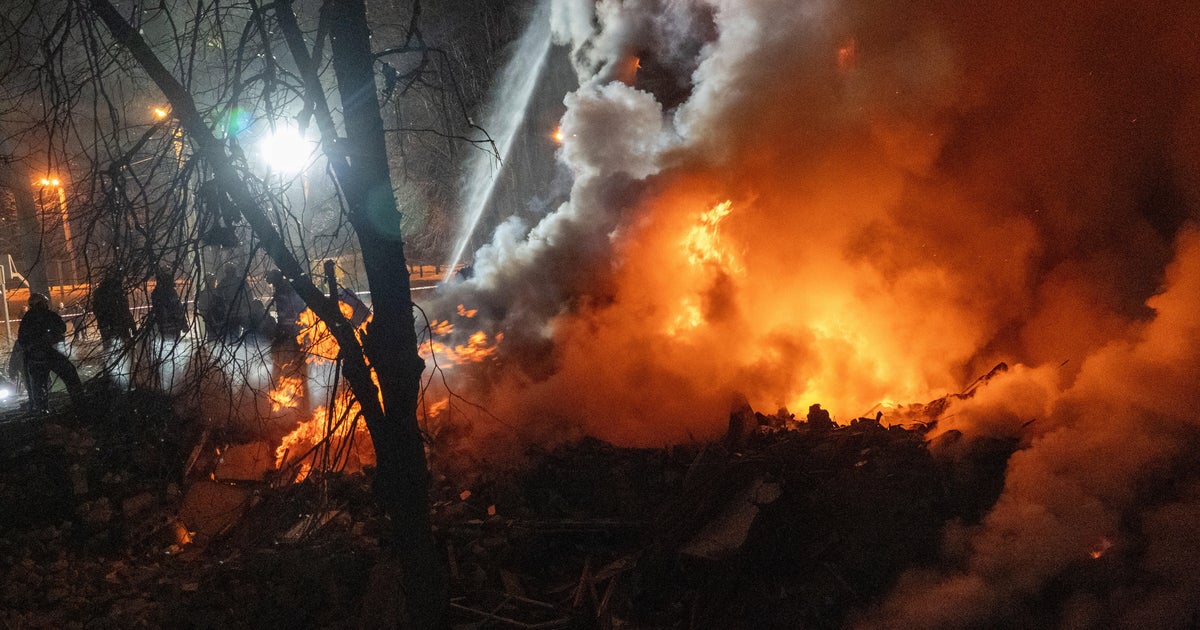
In a devastating attack that once again brought the brutal reality of war to Ukrainian civilians, at least eight people lost their lives on Saturday when a Russian missile tore through a five-story residential building in Kharkiv, Ukraine’s second-largest city. Among the dead were two innocent children, their lives cut tragically short in what should have been the safety of their own homes. Ten others suffered injuries in the strike, which sent emergency workers scrambling through the rubble in desperate searches for survivors. The attack on Kharkiv was part of a massive overnight assault that saw Russia launch 29 missiles and an staggering 480 drones across Ukraine, targeting not only energy infrastructure in Kyiv and other central regions but also striking at least seven other locations throughout the country. The sheer scale of this bombardment demonstrates Russia’s continued commitment to overwhelming Ukraine’s defenses and terrorizing civilian populations, more than four years into a conflict that has reshaped the geopolitical landscape of Europe and beyond.
Innocent Lives Lost: The Human Cost of War
The personal stories emerging from the rubble paint a heartbreaking picture of ordinary families destroyed in an instant. Among those killed were a primary school teacher and her young son, a second-grade student, who died together in their home—a place that should have offered refuge but instead became their final resting place. Another victim was an eighth-grade student who perished alongside her mother, their futures erased by the violence that has become an all-too-common feature of life in Ukrainian cities. Kharkiv’s mayor, Ihor Terekhov, confirmed these tragic details as emergency workers continued their painstaking work of searching through the debris. The weapon used in this attack was identified by the regional Prosecutor’s Office as the Izdeliye-30, a new Russian cruise missile that represents an escalation in the technological sophistication of Russia’s arsenal. According to Ukrainian reports, this subsonic air-launched weapon has only recently been deployed against Ukraine and boasts a range of 930 miles, equipped with an advanced satellite navigation system specifically designed to resist the jamming technologies that Ukraine has used to defend against previous missile attacks. The use of such advanced weaponry against residential areas underscores the indiscriminate nature of these strikes and the ongoing threat faced by Ukrainian civilians.
Nationwide Assault Overwhelms Ukrainian Defenses
Ukraine’s air defense systems worked throughout the night to protect the country from the massive aerial bombardment, managing to down 19 of the 29 missiles and an impressive 453 of the 480 drones launched by Russian forces. However, the sheer volume of the attack meant that nine missiles and 26 strike drones found their targets across 22 different locations throughout Ukraine. The damage was widespread and severe. In the Kyiv region alone, debris from destroyed drones and missiles caused damage across three districts, according to local authorities who scrambled to assess the full extent of the destruction. The southern Odesa region faced its own crisis as 80 firefighters were mobilized to battle massive fires at infrastructure facilities following attacks by multiple drones. The assault also disrupted Ukraine’s critical transportation network, with Ukrzaliznytsia, the state rail operator, reporting damage to rail infrastructure that forced the rerouting of numerous trains in the center-west of the country. These attacks on infrastructure are part of Russia’s broader strategy to degrade Ukraine’s ability to function as a modern state, disrupting everything from power supplies to transportation networks in an effort to break the will of the Ukrainian people.
International Response and Call for Greater Support
President Volodymyr Zelenskyy wasted no time in condemning the attacks and calling for a robust international response to what he characterized as “savage strikes against life.” Taking to social media, Zelenskyy emphasized that Russia has not abandoned its attempts to destroy Ukraine’s residential and critical infrastructure, making continued international support not just helpful but essential for Ukraine’s survival. “There must be a response from partners to these savage strikes against life,” Zelenskyy declared, pointing out that the protection of Ukrainian civilians depends on active collaboration with the European Union and other international partners. He expressed gratitude to those nations and individuals who have helped strengthen Ukraine’s defenses while making clear that much more needs to be done. The Ukrainian president’s appeal comes at a critical juncture in the conflict, as international attention has increasingly shifted to other global hotspots, particularly the escalating tensions in the Middle East. This divided focus has complicated Ukraine’s efforts to maintain the high level of international support it enjoyed during the earlier phases of the conflict, even as Russia continues to demonstrate its willingness to launch devastating attacks against civilian targets.
Evolving Warfare: Drones, Intelligence Sharing, and Regional Complications
The conflict in Ukraine has increasingly become characterized by the extensive use of drone warfare, with Russia having fired tens of thousands of Iranian-designed drones at Ukraine since the invasion began more than four years ago. Russia has not only imported these weapons but has also launched large-scale domestic production, enabling it to deploy hundreds of drones in single nights—numbers that dwarf the drone usage seen during entire months in 2024. This dramatic escalation in drone warfare has forced Ukraine to constantly adapt its defensive strategies while seeking more sophisticated air defense systems from international partners. The situation has become further complicated by the interconnected nature of global conflicts. Iran, which has provided drone technology to Russia, has itself been launching similar Shahed drones at targets in the Middle East in response to joint U.S.-Israeli strikes. Intelligence sources have revealed to CBS News that Russia is now providing Iran with intelligence about U.S. positions in the Middle East, creating a dangerous feedback loop of military cooperation between nations opposed to Western interests. Defense Secretary Pete Hegseth, speaking to “60 Minutes,” acknowledged that President Trump is “well aware of who’s talking to who” and insisted that “anything that shouldn’t be happening” is being “confronted strongly,” though he provided few specifics about what actions might be taken to address this intelligence sharing.
Shifting Global Dynamics and Ukraine’s Strategic Position
In an interesting twist that highlights the complex web of international relationships in modern warfare, President Zelenskyy revealed that Ukraine had received a request from the United States for support in defending against Iranian drones in the Middle East—the same type of drones that Russia has been using against Ukrainian cities and infrastructure. Zelenskyy confirmed that he had given the order for equipment to be provided along with Ukrainian experts, demonstrating Ukraine’s willingness to contribute to global security efforts even as it fights for its own survival. This exchange illustrates how Ukraine’s experience in combating drone warfare has given it expertise that is now valuable to other nations facing similar threats. However, the escalating conflict in the Middle East has had a significant negative impact on Ukraine’s strategic position, as it has drawn international attention away from what remains Europe’s biggest military conflict since World War II. The shift in global focus has had concrete consequences, including the postponement of a new round of U.S.-brokered talks between Russia and Ukraine that had been planned for this week. As Russia continues to demonstrate its willingness to strike civilian targets with increasingly sophisticated weapons, Ukraine finds itself in a difficult position—needing to maintain international support and attention while the world’s gaze increasingly turns elsewhere, even as the daily toll of death and destruction continues to mount in cities like Kharkiv, where families mourn children who will never return to school and teachers who will never again stand before a classroom.