
Russia’s Internet Crackdown Sparks Widespread Discontent and Public Resistance
Citizens Take a Stand Against Digital Restrictions
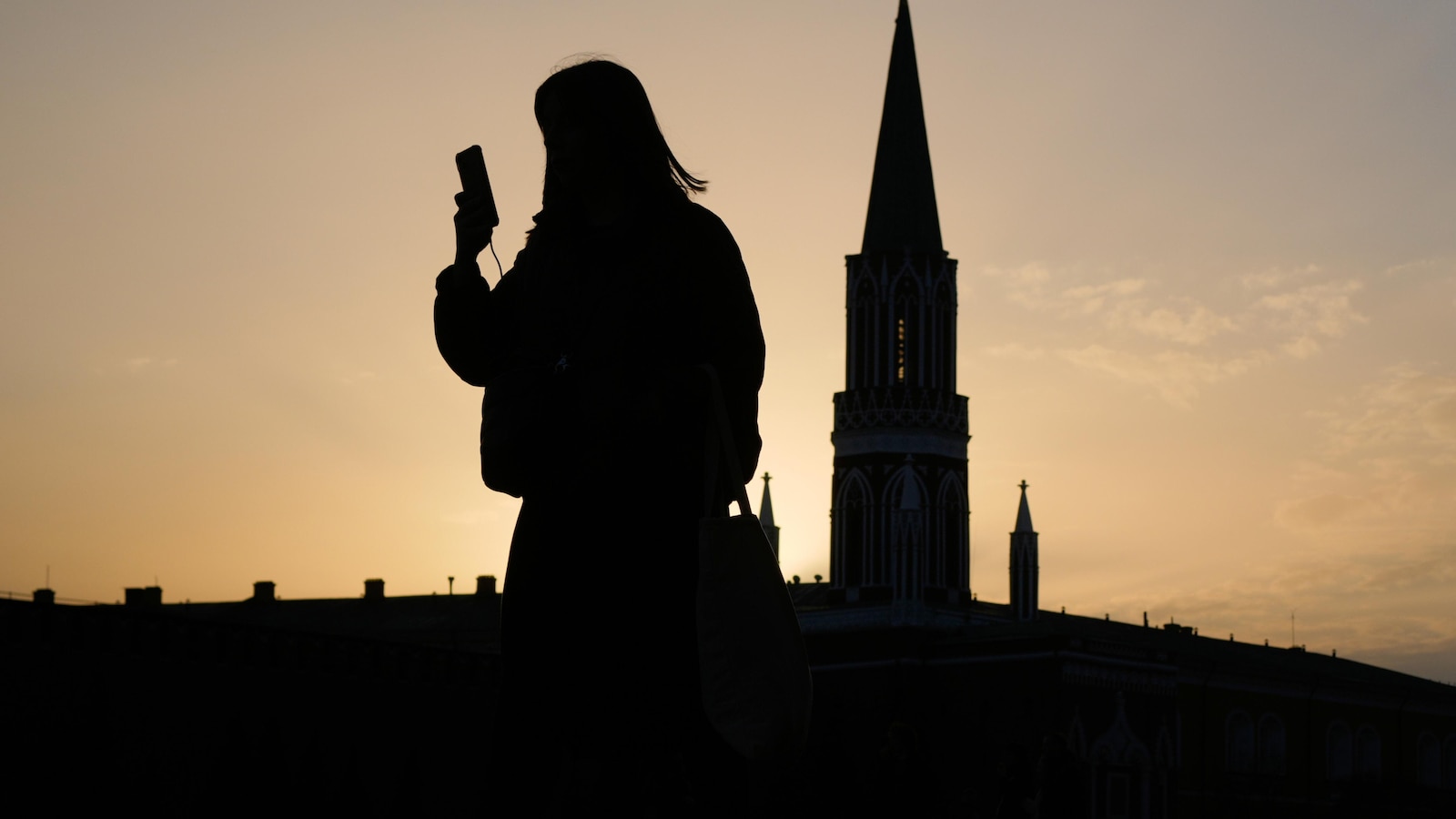
On a bright spring weekend in the heart of Moscow, an unusual scene unfolded outside a presidential administration building. Several dozen Russians stood in line, police officers watching their every move, waiting to file official complaints against their own government. Their grievance wasn’t about traditional political issues or economic hardship—it was about something that has become essential to modern life: access to the internet. These citizens were protesting an increasingly aggressive government crackdown that has disrupted their digital lives through regular cellphone internet shutdowns, blocked messaging applications, and restricted access to thousands of websites and online services. This public display of frustration represents just the tip of the iceberg in a growing wave of anger sweeping across Russia, affecting everyone from ordinary citizens to business leaders and even drawing subtle criticism from neighboring countries. The protesters, aware that unauthorized demonstrations in Russia are met with harsh consequences, have been forced to channel their opposition through official complaints, authorized rallies, wall posters, and legal challenges—any avenue that might allow them to voice their discontent without facing arrest.
The Government’s Iron Grip on Digital Freedom
For years, the Russian government has been working systematically toward complete control over the internet within its borders, with the ultimate goal of potentially severing the country from the global digital network entirely. This campaign has involved blocking tens of thousands of websites, messaging applications, and social media platforms that refuse to comply with government demands. Russian internet users had grown accustomed to circumventing these restrictions using Virtual Private Networks (VPNs), though the government has been actively working to block these workarounds as well. However, the situation escalated dramatically last year when authorities began implementing sweeping shutdowns of cellphone internet connections—and sometimes even broadband services—leaving only a handful of government-approved websites and applications on so-called “white lists” accessible to users. Government officials have justified these extreme measures by claiming they’re necessary to prevent Ukrainian drones from using Russian cellphone networks for navigation during strikes against Russian targets in the ongoing conflict. Yet this explanation rings hollow to many, as the shutdowns have affected remote regions that have never been targeted by Ukrainian drone attacks, causing significant disruption to everyday citizens and businesses who depend on reliable internet access for basic functions.
Daily Life Disrupted and Businesses Struggling
The internet restrictions have done far more than simply control what websites Russians can visit—they’ve thrown the entire fabric of digital life into chaos. The crackdown has made routine activities surprisingly difficult, from ordering taxis and food deliveries to making electronic payments for goods and services, and even staying connected with friends and family members. Boris Nadezhdin, a politician and vocal Kremlin critic, captured the sentiment of countless frustrated Russians when he told the Associated Press: “This infuriates a huge number of people.” The government has specifically targeted Russia’s two most popular messaging applications—WhatsApp and Telegram—while simultaneously promoting a state-backed “national” app called MAX, which many view with suspicion as a surveillance tool designed to monitor citizens’ communications. Initially, authorities blocked voice and video calling features on WhatsApp and Telegram, but eventually made even sending simple text messages effectively impossible without using a VPN. The situation continued to deteriorate when Digital and Communications Minister Maksut Shadayev announced his ministry had received orders to further reduce VPN usage, with unconfirmed reports suggesting a wave of new anti-VPN measures were being proposed. Sarkis Darbinyan, a lawyer and co-founder of the digital rights organization RKS Global, characterized the government’s strategy as an attempt to force internet users into what he called a “digital ghetto” of Russian, government-controlled applications and platforms, declaring: “The internet is no longer this universal digital good.”
Business Leaders Break Ranks to Voice Concerns
In a surprising development that underscores the severity of the situation, even prominent business figures and Kremlin-aligned leaders have begun publicly expressing concern about the sweeping internet restrictions. Alexander Shokhin, who heads the Russian Union of Industrialists and Entrepreneurs and is a member of the ruling United Russia party, directly addressed President Vladimir Putin at a recent forum, stating that cellphone internet shutdowns had “made life difficult for both businesses and citizens.” Given Russians’ heavy reliance on mobile technology in their daily lives, Shokhin expressed hope that “a systemic, balanced solution will be found.” Notably, Putin, who was onstage and spoke immediately after Shokhin, completely ignored the issue in his remarks. Similar concerns emerged from executives of two of Russia’s four major cellphone operators at a recent telecommunications conference. Sergei Anokhin of Beeline and Khachatur Pombukhchan of Megafon proposed alternative approaches, suggesting that instead of blanket cellphone internet shutdowns, operators could identify suspicious users and restrict only their access, which would “make life significantly easier for people, for clients.” Even more pointed criticism came from prominent IT entrepreneur Natalya Kasperskaya, who publicly blamed Roskomnadzor, the government’s internet oversight agency, for causing a brief outage of banking and other services through its aggressive VPN-blocking efforts. She wrote sarcastically on Telegram: “There’s no technical way to block VPNs without disrupting the entire internet. So, comrades, take screenshots of interesting websites, withdraw as much cash as possible, and get ready to listen to radio reports about foreign enemies who have blocked our once-beloved RuNet.”
Creative Resistance and Grassroots Activism
Faced with an authoritarian government that brutally suppresses unauthorized demonstrations and routinely imprisons critics, Russian activists have been forced to get creative in their opposition to internet restrictions. Since late February, activists from Moscow to Vladivostok in Russia’s Far East have attempted to organize rallies against the digital crackdown, carefully navigating the country’s strict protest laws by seeking official authorization for their gatherings. In most cases, authorities have rejected these requests, and some activists have even been arrested on various charges for simply trying to exercise their right to peaceful assembly. Despite these obstacles, small groups have managed to hold limited pickets in a few cities, while in others, activists have resorted to plastering flyers and banners on walls and public notice boards to spread their message of opposition to the restrictions. Opposition politician Nadezhdin, along with his supporters and other activist groups, has filed requests for permission to hold rallies in dozens of cities on April 12—Cosmonautics Day, when Russia celebrates Yuri Gagarin’s historic 1961 flight as the first human in space. With a knowing smile, Nadezhdin explained the strategy: “We’re filing for authorization (and saying) we’re marking Cosmonautics Day. Our slogans will be (about the fact that) cosmonautics is impossible without science, technology and progress, and progress, science and technology development is impossible without connectivity, without communication, without the internet.” This clever framing allows activists to tie their internet freedom demands to patriotic celebration of Russian achievement, making it harder for authorities to reject outright.
A Growing Movement with Uncertain Future
The discontent over internet restrictions has clearly struck a nerve across Russian society, cutting across traditional political and social divides. Nadezhdin has expressed determination to continue increasing pressure on authorities despite the risks, noting that public frustration is “enormous” and that people are ready to participate in protests that are both authorized and safe. Moscow-based opposition politician Yulia Galyamina reinforced this assessment in a video she recorded near the presidential administration building while filing her own formal complaint, stating that the discontent “is truly widespread.” She emphasized the importance of public outcry in potentially changing government policy: “The more there is public outcry over the blocking of the internet, Telegram in particular, and depriving us of the possibility to communicate with each other, interact, express our political position, the bigger the effect will be.” Even international observers have taken notice, with Armenia’s Prime Minister Nikol Pashinyan delivering a subtle but unmistakable criticism during a televised meeting with Putin on April 1, noting that in Armenia, “our social media, for example, is 100% free. There are no restrictions whatsoever.” Putin’s stony-faced response—staring at Pashinyan with slightly raised eyebrows—spoke volumes about his displeasure at the comparison. Whether this growing chorus of opposition from citizens, business leaders, foreign allies, and even some within the establishment will force the Kremlin to reconsider its internet control strategy remains to be seen, but what’s clear is that the digital restrictions have become a flashpoint for broader frustrations with government overreach in contemporary Russia.