
A $117 Ticket Turns Into a Million-Dollar Masterpiece: The Lucky Winner of Picasso’s Portrait
The Unexpected Phone Call That Changed Everything
Imagine sitting at home on an ordinary Tuesday when your phone rings with news that seems too incredible to be true. This was the reality for Ari Hodara, a 58-year-old sales engineer from Paris, who recently became the fortunate winner of an authentic Pablo Picasso painting valued at over $1 million. The catch? He’d only spent $117 on a raffle ticket purchased just days before the draw. Hodara, who describes himself as an amateur art lover with a particular fondness for Picasso’s work, had stumbled upon the opportunity quite by chance during a casual dinner at a local restaurant. When the raffle organizers contacted him to deliver the life-changing news, his initial reaction wasn’t excitement but disbelief. “How do I check that it’s not a hoax?” he asked the caller, struggling to accept that such extraordinary luck could be real. His skepticism is entirely understandable—after all, winning a genuine Picasso painting in a raffle sounds more like a movie plot than real life. This remarkable stroke of fortune would soon transform Hodara from an ordinary art enthusiast into the owner of a historically significant masterpiece, created during one of the most turbulent periods of the 20th century.
The Masterpiece: A Portrait Born During Wartime
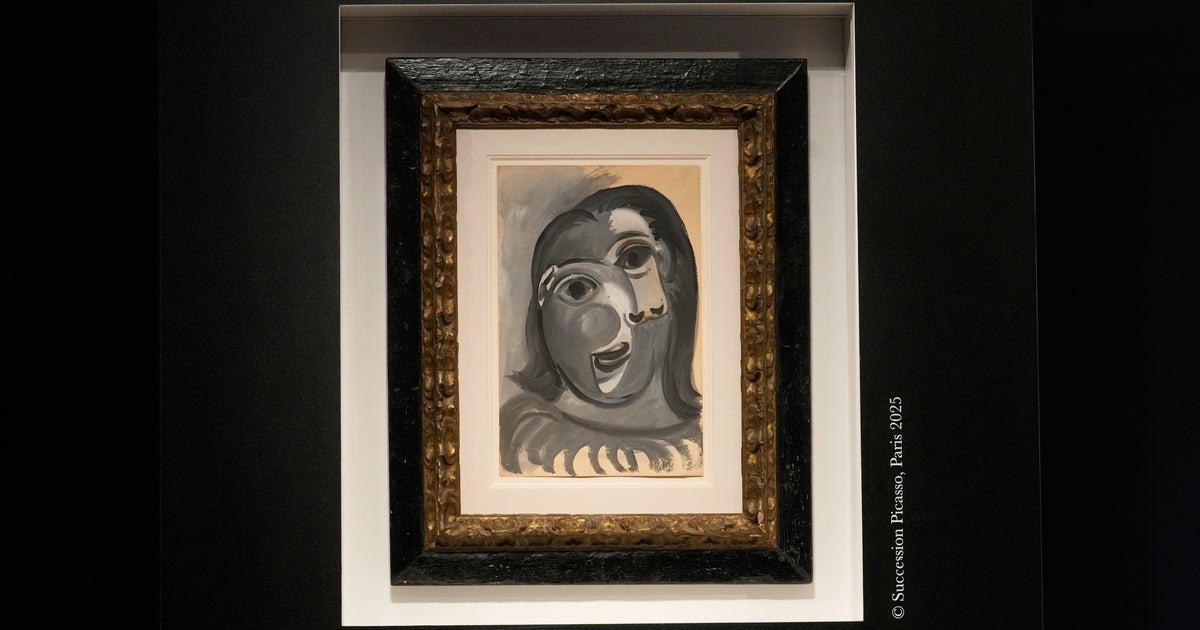
The painting that Hodara won, titled “Head of a Woman,” carries significant historical and artistic weight. Created by Pablo Picasso in 1941 during the dark days of World War II, when Paris was under Nazi occupation, this gouache-on-paper work depicts Dora Maar, who was more than just a subject to the legendary artist—she was his longtime companion, muse, and a talented photographer and painter in her own right. Their relationship, which lasted nearly a decade during the 1930s and 1940s, produced some of Picasso’s most emotionally intense works, including the famous “Weeping Woman” series. The portrait being raffled represents a deeply personal connection between artist and subject, created during a period when both were living under the shadow of war and occupation. Dora Maar herself was a fascinating figure in the Surrealist movement, and her influence on Picasso’s work during this period cannot be overstated. The painting’s value extends beyond its monetary worth—it’s a window into a specific moment in art history when creativity persevered despite the darkness of war. For Hodara, the new owner, this means he now possesses not just a beautiful artwork but a tangible piece of 20th-century cultural history, a testament to the enduring power of artistic expression even in humanity’s darkest hours.
A Global Lottery With an Extraordinary Purpose
The “1 Picasso for 100 euros” raffle represents the third iteration of an innovative fundraising approach that has captured imaginations worldwide. This particular draw attracted participants from across the globe, with approximately 120,000 tickets sold at 100 euros (roughly $117) each, ultimately raising an impressive 12 million euros, or about $14 million. Hodara wasn’t alone in his spontaneous decision to try his luck—countless other ticket buyers made impulsive purchases, drawn by the tantalizing possibility of owning an authentic Picasso for little more than the cost of a nice dinner. The raffle was conducted at Christie’s auction house in the French capital, lending the event an air of legitimacy and prestige befitting the caliber of the artwork being offered. Of the total funds raised, 1 million euros went to the Opera Gallery, an international art dealership that previously owned the painting. Gilles Dyan, the gallery’s founder, explained that he offered the painting at a preferential price for the charitable cause, noting that the public market price stood at 1.45 million euros. This meant that the vast majority of the funds raised—approximately $13 million—could be directed toward the raffle’s true purpose: supporting critical Alzheimer’s disease research, a cause that affects millions of families worldwide.
A History of Creating Unlikely Art Collectors
This isn’t the first time ordinary people have become owners of extraordinary Picasso works through these charitable raffles. The inaugural raffle in 2013 saw Jeffrey Gonano, a Pennsylvania man who worked in the fire-sprinkler business, win “Man in the Opera Hat,” a painting Picasso created in 1914 during his revolutionary Cubist period. The second raffle, held in 2020, awarded the oil-on-canvas “Still Life” to Claudia Borgogno, an accountant from Italy whose son had thoughtfully purchased the ticket as a Christmas present, never imagining it would result in his mother becoming the owner of a genuine Picasso. That particular work, painted in 1921, had been acquired for the raffle from David Nahmad, a billionaire art collector who expressed to The Associated Press his belief that Picasso himself would have approved of this democratic approach to art ownership. Nahmad’s comment touches on something profound about these raffles—they represent a democratization of access to masterworks that would typically remain locked away in the collections of the ultra-wealthy or behind museum glass. These previous winners, like Hodara, were ordinary working people whose lives were transformed by a modest investment and extraordinary luck. Their stories demonstrate that sometimes the most precious things in life come not from careful planning or vast wealth, but from taking a chance on something that seems improbable.
Supporting Medical Research Through Artistic Legacy
The true beneficiary of this innovative fundraising approach is the Alzheimer Research Foundation, the organization behind all three Picasso raffles. Based in one of Paris’s leading public hospitals, the foundation has established itself as France’s foremost private financier of Alzheimer-related medical research since its establishment in 2004. This is particularly significant given that Alzheimer’s disease and related dementias affect an estimated 50 million people worldwide, a number expected to triple by 2050 as global populations age. The disease devastates not only patients but entire families who watch their loved ones slowly lose memories and cognitive function. By raising approximately $14 million through this single raffle, the foundation can fund crucial research into prevention, treatment, and hopefully one day, a cure for this heartbreaking condition. The two previous Picasso raffles organized by the foundation raised a combined total of more than 10 million euros, though those funds were directed toward different humanitarian causes—cultural preservation work in Lebanon and water and hygiene programs in Africa. Together, these three raffles have generated more than $30 million for charitable purposes, demonstrating how the legacy of a single artist, who died in 1973, continues to create positive change in the world decades later.
What Happens Next for the Lucky Winner
As the reality of his incredible fortune sinks in, Hodara faces decisions that most people will never have to contemplate. His immediate priority, he told reporters, was to share the news with his wife when she returned from work—imagine that dinner conversation! He also indicated his initial inclination to keep the painting rather than sell it, a decision that speaks to his genuine appreciation for art rather than viewing the win purely as a financial windfall. However, owning a million-dollar Picasso comes with significant responsibilities and considerations. There are insurance costs to consider, security concerns about keeping such a valuable work in a private home, and questions about proper conservation and climate control to preserve the delicate gouache-on-paper medium. Hodara will also need to decide whether to display the work publicly, loan it to museums, or keep it for private enjoyment. Some previous raffle winners have chosen to sell their prizes, while others have treasured them as family heirlooms. Whatever Hodara decides, his $117 investment has certainly paid off in ways he never imagined when he impulsively bought that ticket over dinner. His story reminds us that sometimes life’s most extraordinary moments come from the simplest decisions—and that supporting a good cause can occasionally result in rewards beyond the satisfaction of helping others. As for the Alzheimer Research Foundation, they’re already demonstrating that combining art, accessibility, and charitable purpose creates a winning formula that changes lives in multiple ways: for the lucky ticket holder, for the patients who will benefit from funded research, and for society as a whole.