
Spain’s Strategic Pivot: Prime Minister Sánchez’s Fourth China Visit in Three Years
Building Bridges with Beijing in Turbulent Times
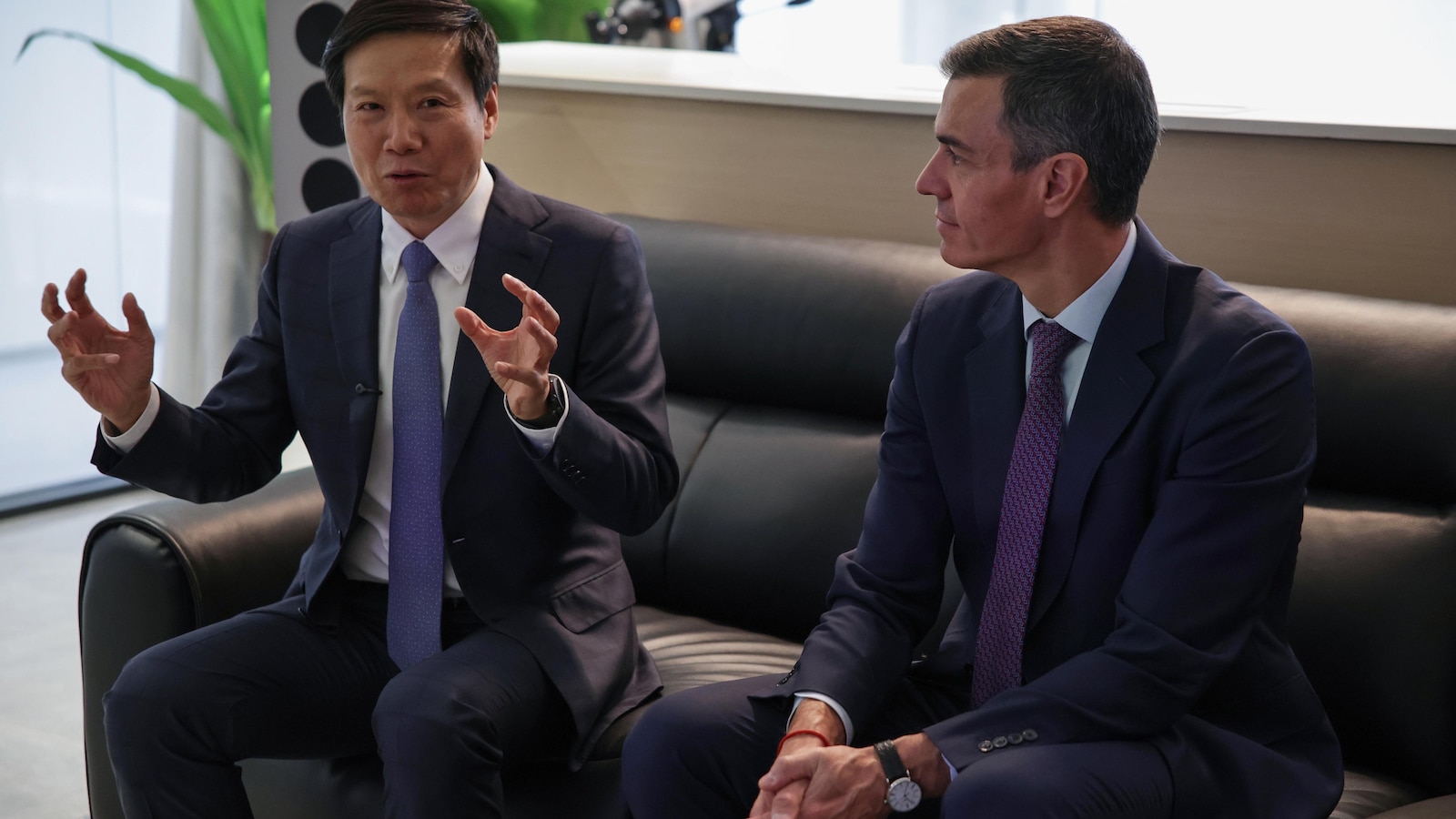
Spanish Prime Minister Pedro Sánchez has embarked on his fourth visit to China in just over three years this week, signaling Spain’s determination to strengthen its relationship with the world’s second-largest economy. This visit, taking place from April 13-15, comes at a particularly delicate moment in international relations, as global powers navigate complex conflicts in the Middle East and as tensions rise between traditional Western allies. Sánchez’s repeated trips to Beijing—averaging roughly one per year—demonstrate a clear strategic priority for Spain: diversifying its international partnerships and reducing its dependence on traditional Western alliances, particularly with the United States. The Spanish leader’s itinerary includes high-level meetings with Chinese President Xi Jinping, Premier Li Qiang, and Zhao Leji, the third-ranking leader of China’s ruling Communist Party, underscoring the seriousness with which both nations view this relationship.
The timing of this visit is particularly noteworthy. Spain has recently emerged as one of Europe’s most vocal critics of U.S. and Israeli military actions in the Middle East, creating friction with Washington. The Sánchez government recently took the extraordinary step of declaring its airspace closed to U.S. military planes involved in operations in Iran and refused to allow the United States to use jointly operated military bases in southern Spain. This bold stance has set Spain apart from many of its European neighbors and has inevitably strained the traditionally strong relationship between Madrid and Washington. Against this backdrop, Sánchez’s visit to China takes on added significance, representing not just an economic mission but also a political statement about Spain’s desire to chart a more independent foreign policy course in an increasingly multipolar world.
Spain’s Call for Chinese Global Leadership
During a speech at Beijing’s prestigious Tsinghua University on Monday, Sánchez made a direct appeal to China to assume a more prominent role in addressing global challenges. His message was clear: as the United States appears to be stepping back from certain international commitments, there is both space and necessity for China to step up. “China can do more,” Sánchez stated, specifically calling on Beijing to demand respect for international law and to work toward ending conflicts in Lebanon, Iran, Gaza, the West Bank, and Ukraine. This appeal represents a significant diplomatic gambit—essentially asking China to fill a leadership vacuum that Spain perceives has been created by recent American foreign policy decisions.
The Spanish Prime Minister didn’t limit his request to conflict resolution. He also encouraged China to partner more closely with the European Union on critical global issues including climate change, global health initiatives, responsible artificial intelligence development, and nuclear weapons control. “Especially now that the U.S. has decided to withdraw from many of these fronts,” Sánchez pointedly added, referencing recent American policy shifts under the Trump administration. This statement reflects a broader European concern about American reliability as a partner on global issues and represents an attempt to find alternative partners who can help advance priorities that many Europeans consider vital. By positioning China as a potential partner on these issues, Sánchez is acknowledging Beijing’s growing influence while also attempting to shape how that influence is exercised on the world stage.
Economic Realities and Trade Imbalances
Spain’s repeated overtures to China are driven in large part by economic considerations, though the results so far have been mixed at best. The southern European nation, which is the eurozone’s fourth-largest economy with a population of 49 million, finds itself in a dramatically unbalanced trade relationship with China, which has a population of over 1.4 billion. Currently, China accounts for approximately 74% of Spain’s overall trade gap, meaning that Spanish imports from China far exceed Spanish exports to the Asian giant. Spanish officials have stated that their government wants to attract more Chinese investment and boost exports to China, though they acknowledge that trade policy is ultimately conducted at the European Union level, which negotiates on behalf of all 27 member states.
Despite this significant trade imbalance, Spain continues to pursue closer economic ties with China, partly because of the country’s transition to renewable energy. Spain now generates more than half of its electricity from renewable sources and, like other European countries moving away from fossil fuels, needs Chinese critical raw materials, solar panels, and green technologies. This creates a certain dependency that makes the trade relationship even more complex. Alicia García-Herrero, chief economist for Asia Pacific at the French investment bank Natixis, has described Sánchez’s “repeated annual pilgrimage” to China as highlighting “an increasingly one-sided and unbalanced relationship.” From China’s perspective, she notes, Spain serves as “a relatively soft, conciliatory partner” that advocates for dialogue over the tougher measures that some other EU countries favor. This suggests that while Spain may be hoping to gain economic advantages through its diplomatic approach, it may actually be providing China with political benefits without receiving proportional economic returns.
Eric Sigmon, a Madrid-based political analyst and former U.S. national security adviser, has observed that given the increased friction with the U.S. administration, these annual meetings with Chinese leaders have taken on increased importance for Spain. However, Sánchez himself acknowledged the trade imbalance during his speech in Beijing, urging China to reciprocate European efforts toward more balanced trade relations. “We need China to do the same,” he said. “To open up so that Europe doesn’t have to close itself off.” This statement reflects growing European frustration with Chinese trade practices while simultaneously trying to maintain a constructive tone in the relationship—a delicate balancing act that characterizes much of Spain’s approach to China.
Spain’s Multipolar Strategy
Spain’s strategy under Sánchez represents an attempt by a midsize power to maximize its influence and options in an increasingly multipolar world. Spanish officials have been explicit about their goal: diversifying political relations with the world’s major powers rather than relying primarily on traditional Western alliances. In addition to deepening ties with China, Spain has been working to strengthen relationships with other emerging powers, particularly India, while maintaining its transatlantic relationship with the United States—albeit one that has become considerably more complicated in recent months. This approach reflects a calculation that in a world where power is more distributed than it was during the Cold War or the immediate post-Cold War period, medium-sized countries can gain advantage by maintaining productive relationships with multiple major powers rather than aligning too closely with any single bloc.
The symbolic importance of this strategy was underscored when Spain’s King Felipe VI made an official visit to China last November—the first time a Spanish monarch had done so in 18 years. Royal visits carry particular weight in international diplomacy, as they represent the state itself rather than any particular government, and Felipe’s trip demonstrated that Spain’s interest in strengthening ties with Beijing extends beyond the current administration’s preferences. This broader institutional support for closer China relations suggests that Spain’s pivot toward Beijing is not merely a temporary tactical adjustment but rather represents a more fundamental strategic reorientation that is likely to persist regardless of which party controls the Spanish government.
Navigating Between Washington and Beijing
Spain’s diplomatic balancing act between Washington and Beijing has become increasingly precarious, particularly given recent events. Sánchez’s previous visit to Beijing ruffled feathers in Washington and occurred shortly after the Trump administration announced sweeping global tariffs. U.S. Treasury Secretary Scott Bessent issued what many interpreted as a warning to Spain, suggesting the country was “cutting your own throat” by pursuing closer ties with China at a moment when Washington was trying to present a united Western front in dealing with Beijing. Such warnings highlight the real risks that Spain faces in its strategy—the possibility that by trying to maintain good relations with both sides, it may ultimately damage its most important relationships without gaining sufficient benefits to offset those costs.
The recent tensions over U.S. military operations in the Middle East have brought these contradictions into sharp relief. Spain’s decision to close its airspace to U.S. military aircraft involved in Iran operations and to restrict American use of jointly operated bases in Spain represents perhaps the most serious breach in Spanish-American relations in decades. While these decisions were driven by Sánchez’s opposition to the conflict rather than by any particular affinity for China, they nonetheless create an opening for Beijing to position itself as a more reliable partner for Spain—at least on certain issues. Whether China will actually prove to be such a partner, particularly given the trade imbalances and the broader context of EU-China relations, remains an open question. What is clear is that Spain is betting that the future belongs to countries that can skillfully navigate between multiple major powers rather than those that commit exclusively to a single alliance system, and Sánchez’s fourth visit to China in three years represents the latest chapter in that strategic gamble.