



The Discovery of a Legendary Musketeer: Could This Be d’Artagnan’s Final Resting Place?
An Unexpected Find Beneath Ancient Floorboards
In a remarkable turn of events that seems almost too fitting for a swashbuckling tale, archaeologists in the Netherlands may have finally solved a 350-year-old mystery. During routine repair work following a partial floor collapse this past February, workers stumbled upon a skeleton buried beneath the nave of a church in Maastricht, a historic Dutch city near the Belgian border. What makes this discovery extraordinary isn’t just the age of the remains, but who they might belong to: Charles de Batz de Castelmore, better known to history as d’Artagnan, the real-life French musketeer whose adventures inspired one of literature’s most beloved characters. The church itself, with origins stretching back to at least the 13th century, has stood witness to centuries of history, quietly keeping its secret until construction work literally brought it crashing into the present day. Local news outlet L1 Nieuws broke the story, sending ripples of excitement through both the archaeological community and literary enthusiasts around the world who have grown up with tales of musketeer heroism.
The Man Behind the Legend
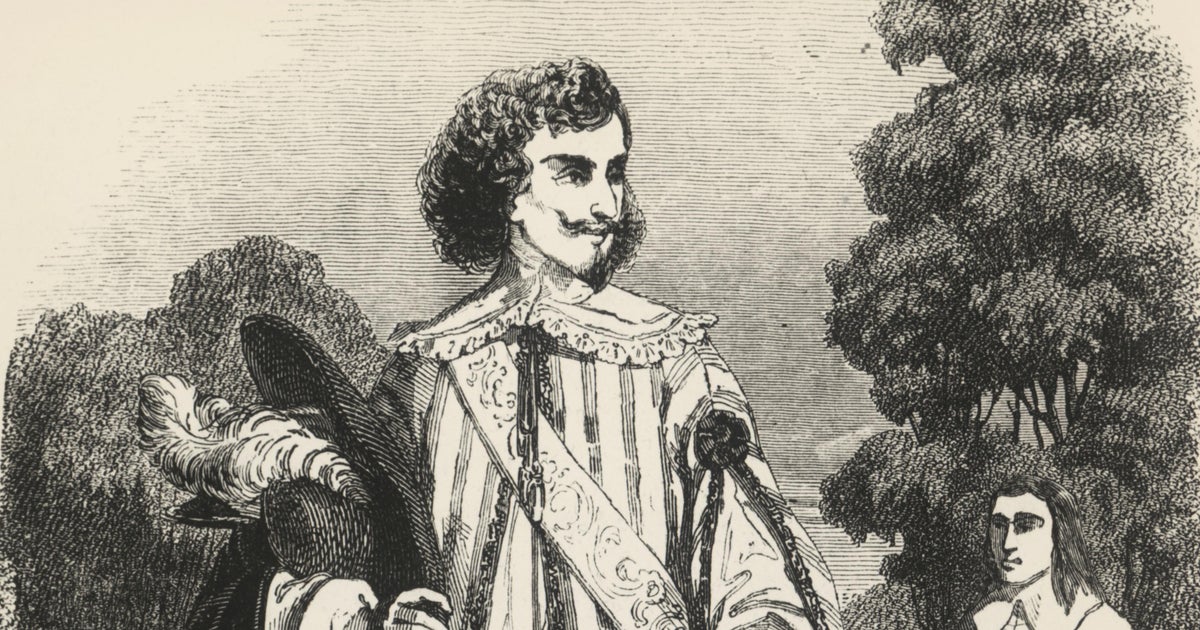
To understand the significance of this discovery, we need to appreciate who d’Artagnan actually was beyond the romanticized figure that Alexandre Dumas immortalized in his 19th-century novel “The Three Musketeers.” Charles de Batz de Castelmore was a Gascon nobleman—that is, he came from the Gascony region of southwestern France, an area known for producing soldiers with a reputation for bravery, pride, and a certain theatrical flair. D’Artagnan wasn’t just a fictional construct; he was a genuine captain of the King’s Musketeers who served two French monarchs with distinction: Louis XIII and his son Louis XIV, the Sun King. His career spanned decades of military service during a tumultuous period in European history, when France was consolidating its power and frequently engaged in territorial conflicts with its neighbors. Unlike the young, impetuous hero Dumas created, the real d’Artagnan was a seasoned military officer whose loyalty to the French crown was absolute. His life was one of actual battlefield heroics rather than purely romantic adventures, though there was certainly no shortage of drama in the France of the 1600s. The musketeer met his end during the siege of Maastricht in 1673, when French forces under King Louis XIV were attempting to capture the strategically important city. According to historical accounts, d’Artagnan was struck by a bullet during the assault, dying on foreign soil far from his native Gascony.
Clues That Point to a Royal Connection
What makes archaeologists and historians increasingly confident that these remains might actually belong to the famous musketeer are several compelling pieces of evidence discovered alongside the skeleton. First, there’s the location itself: the bones were found precisely where the altar of the old church once stood, a position of immense significance in Catholic burial practices of that era. As Deacon Jos Valke, who was present during the initial excavation, explained to local media, only royalty or figures of exceptional importance were granted the honor of being interred beneath or near a church altar. This wasn’t a privilege extended to common soldiers or even typical officers; it was reserved for those who had distinguished themselves in extraordinary ways or who held particular significance to the community. Additionally, excavators discovered a French coin near the remains, a detail that, while not conclusive on its own, adds another layer of circumstantial evidence. But perhaps most striking is the discovery of what appears to be a bullet at chest level with the skeleton—exactly corresponding with historical accounts of how d’Artagnan died. The historical record is quite specific about the musketeer’s death: he was shot in the chest during the siege. Finding projectile evidence in precisely that location, in a grave befitting someone of his stature, in the exact city where he fell, creates a constellation of facts that are difficult to dismiss as mere coincidence.
The Long Search Comes to Fruition
For some researchers, this discovery represents the culmination of decades of dedicated investigation. Archaeologist Wim Dijkman has spent twenty-eight years searching for d’Artagnan’s final resting place, following leads, examining church records, and piecing together the fragmentary evidence left behind by three and a half centuries of history. For someone who has devoted nearly three decades to solving this particular historical puzzle, the discovery must feel almost surreal. Yet Dijkman maintains the cautious optimism of a trained scientist, telling reporters, “I’m always very cautious, I’m a scientist. But I have high expectations.” This careful balance between excitement and professional skepticism reflects the standard that archaeologists must maintain when dealing with potentially significant historical finds. The temptation to declare victory and announce a definitive identification is strong, particularly with a figure as culturally significant as d’Artagnan, but premature conclusions can damage both scientific credibility and historical understanding. The mystery of d’Artagnan’s burial location has persisted precisely because the records from that era are incomplete or contradictory, a common problem with battlefield deaths far from home. Soldiers who died during sieges of foreign cities weren’t always given the ceremonial treatment they might have received at home, and record-keeping during military campaigns could be haphazard at best.
Modern Science Meets Historical Mystery
The skeleton has been carefully removed from the church and transported to an archaeological institute in Deventer, in eastern Netherlands (not Germany as initially reported), where it will undergo extensive analysis using the full arsenal of modern forensic and archaeological techniques. On March 13, researchers extracted DNA samples from the bones, which have been sent to a specialized laboratory in Munich, Germany, for detailed genetic analysis. This represents the cutting edge of archaeological science, where ancient mysteries can finally be resolved through molecular biology. The DNA testing will be compared against any surviving genetic material from known relatives of d’Artagnan or from family lines that can be traced back to his era, a painstaking process that requires meticulous documentation and cross-referencing. Dijkman told local media that the DNA analysis should be completed within a matter of weeks, though he emphasized that multiple other investigations are proceeding simultaneously. “At the moment, all kinds of analyses and investigations are underway domestically and abroad,” he explained. “It has really become a top-level investigation. We want to be absolutely certain that it is d’Artagnan.” This multi-pronged approach might include radiocarbon dating to confirm the age of the remains, isotope analysis to determine where the person lived during different periods of their life, forensic examination of the bones to determine age at death and physical characteristics, and detailed study of any artifacts found with the body.
A Hero’s Legacy Lives On
Whether or not these bones ultimately prove to belong to the historical d’Artagnan, the discovery has already accomplished something remarkable: it has reminded us that behind the swashbuckling fiction lies genuine history, real people who lived, fought, and died in service of causes they believed in. The d’Artagnan that Alexandre Dumas created in 1844 has become a cultural icon, inspiring countless film adaptations, television series, and retellings that have introduced generation after generation to tales of loyalty, friendship, and adventure. The character’s influence extends far beyond French literature; he has become a universal symbol of certain ideals—courage, wit, camaraderie, and unwavering dedication to one’s principles. Maastricht itself has long honored its connection to the famous musketeer, with a statue commemorating him standing in the city as a reminder of the historical siege that cost him his life. If the DNA analysis and other investigations confirm that these remains are indeed d’Artagnan’s, it will provide a tangible connection to a figure who has existed for most people only in the realm of imagination and historical records. The discovery would give us a physical link to the man who inspired one of literature’s most enduring heroes, allowing us to literally stand in the presence of someone whose story has captivated millions. And in a time when we often struggle to separate fact from fiction, historical truth from mythologized memory, finding concrete evidence of legendary figures serves as a powerful reminder that the most compelling stories often have their roots in actual human experience, in the lives of real people whose deeds were extraordinary enough to echo through the centuries.