
Former South Korean President Yoon Suk Yeol Sentenced to Life in Prison for Insurrection
Historic Verdict Marks Unprecedented Fall from Power
In a historic and dramatic turn of events, former South Korean President Yoon Suk Yeol received a life sentence from the Seoul Central District Court on Thursday, marking one of the most stunning downfalls in the nation’s political history. The court found him guilty of leading an insurrection connected to his controversial declaration of martial law on December 3, 2024. This landmark ruling represents an extraordinary moment in South Korea’s democracy, as a sitting president’s attempt to seize emergency powers has now resulted in the most severe criminal punishment possible outside of capital punishment. The core of the court’s finding centered on Yoon’s decision to mobilize military and police forces in what judges determined was an illegal attempt to take control of the National Assembly and detain prominent political figures who opposed him. The severity of the sentence reflects the court’s view that Yoon’s actions struck at the very heart of South Korea’s democratic institutions and constitutional order.
The Court’s Reasoning: When Martial Law Becomes Insurrection
Presiding judge Ji Gui-yeon delivered a comprehensive explanation of the court’s reasoning, making clear that the verdict wasn’t simply about declaring martial law itself, but about the intent and actions that accompanied that declaration. “The deployment of martial law troops to the National Assembly during the state of emergency constitutes ‘rioting,’ a key legal element required to establish the crime of insurrection,” Judge Ji stated during the proceedings. The court’s legal analysis established a crucial precedent: declaring martial law can cross the line into insurrection when it is intended to obstruct or completely paralyze constitutional institutions rather than protect them. While the judges acknowledged that there were genuine political tensions between Yoon’s administration and an opposition-controlled legislature, they firmly stated that these circumstances, however challenging, did not provide constitutional justification for declaring martial law. The court’s message was clear—political difficulties and legislative gridlock, even when severe, cannot be resolved by military force in a democratic system. Additionally, the judges noted that Yoon showed no remorse or acknowledgment of any wrongdoing throughout the entire legal proceedings, a factor they explicitly considered when determining the harshness of his sentence.
Defense Dismisses Ruling as Predetermined, Questions Justice System
Yoon’s legal team responded to the verdict with fierce criticism and expressions of deep frustration with what they characterized as a fundamentally flawed process. His attorneys dismissed the ruling as nothing more than “a mere formality for a predetermined conclusion,” suggesting that the outcome was decided before the trial truly began. In a particularly pointed statement to reporters immediately following the ruling, defense attorney Yoon Gab-geun expressed his disillusionment with the entire judicial process: “Watching the rule of law collapse in reality, I question whether I should even pursue an appeal or continue participating in these criminal proceedings.” Despite these doubts, he invoked a familiar refrain of embattled politicians throughout history, declaring that “the truth will be revealed in the court of history.” This appeal to historical judgment rather than the current legal system reflects the defense’s apparent strategy of framing their client not as a criminal but as a misunderstood leader whose actions will be vindicated over time. The dramatic nature of these statements underscores the deep polarization surrounding the case and suggests that Yoon and his supporters view themselves as victims of political persecution rather than legitimate legal accountability.
Immediate Detention and the Long Road of Appeals Ahead
Following the announcement of the verdict, Yoon was immediately taken into custody and transferred to the Seoul Detention Center, where he will remain unless the court grants release pending appeal—a development that legal experts consider unlikely given the severity of the charges and conviction. The former president now faces a potentially lengthy appeals process that could extend for years through South Korea’s multi-tiered court system. If Yoon decides to appeal, which appears almost certain despite his attorney’s expressed doubts, the case will move to the Seoul High Court, which has the authority to review both legal interpretations and factual findings from the lower court. Should he remain dissatisfied with that outcome, a final appeal could be filed with the Supreme Court, South Korea’s highest judicial authority. Interestingly, prosecutors had actually sought an even harsher penalty—the death penalty—arguing that Yoon’s actions posed such a grave and fundamental threat to the constitutional order that the ultimate punishment was warranted. The fact that the court imposed life imprisonment rather than capital punishment suggests judges found a middle ground between the prosecution’s maximum request and the defense’s argument for acquittal.
Multiple Legal Battles Continue Beyond This Verdict
Thursday’s life sentence addressed only the insurrection charge, but it represents just one piece of a much larger legal puzzle surrounding the former president. Other criminal cases tied to the December 2024 martial law declaration remain pending in various stages of prosecution, including serious charges of abuse of power and obstruction of official duty. These additional cases could potentially add years to Yoon’s prison term if he is convicted on those charges as well. In a separate case that concluded last month, Yoon was already sentenced to five years in prison for obstructing his own arrest—a conviction that marked the first criminal penalty directly tied to the constitutional crisis he triggered. This earlier conviction established a pattern of the former president actively resisting legal accountability, which likely influenced the court’s assessment of his character and lack of remorse in the current case. The existence of multiple parallel legal proceedings means that even as this historic insurrection verdict makes headlines, the full legal reckoning for Yoon’s actions during that tumultuous period in late 2024 remains incomplete.
Political and Social Implications: Has the Nation Moved On?
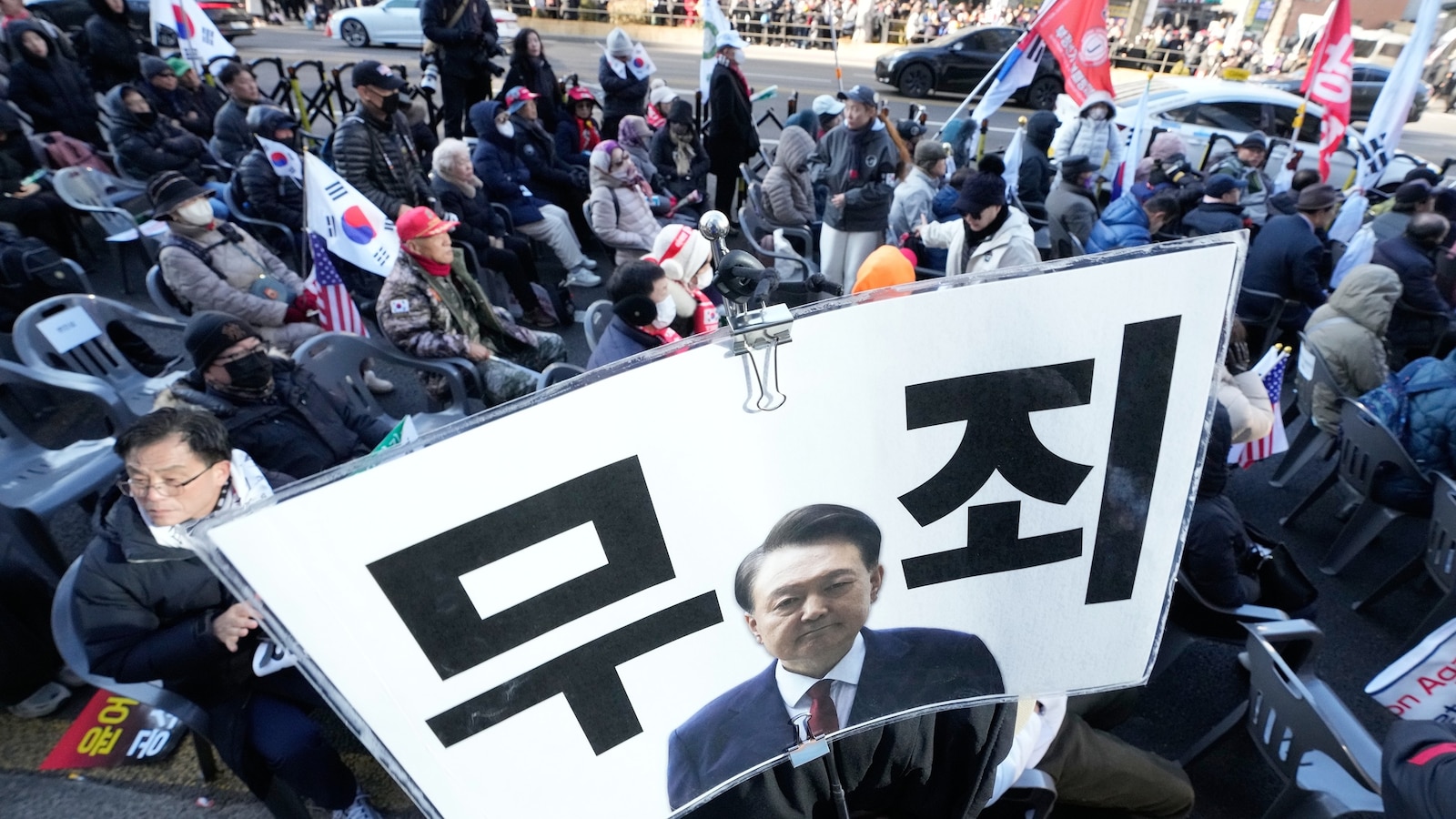
Despite the historic nature of this verdict and the dramatic images of a former president being sentenced to life in prison, some observers suggest that the South Korean public may have already emotionally processed and moved beyond this chapter of their political history. Leif-Eric Easley, a professor at Ewha University in Seoul, offered this perspective to ABC News: “Yoon’s sentencing does not represent a national catharsis since most Koreans have already emotionally moved on from the former president.” This observation suggests that while the legal system continues to methodically work through the consequences of Yoon’s actions, the broader society has already rendered its own judgment and shifted its attention to current challenges and future leadership. Professor Easley also noted that “this televised verdict marks closure because many cases and appeals related to Yoon’s martial law debacle have yet to be fully adjudicated,” indicating that legal proceedings could continue to generate headlines for months or even years to come. The contrast between the public’s apparent readiness to move forward and the slow, grinding machinery of legal accountability highlights a common tension in democracies recovering from constitutional crises. Meanwhile, supporters of the former president gathered outside the Seoul Central District Court, holding signs declaring “Not Guilty” and demonstrating that despite his conviction, Yoon retains a base of loyal followers who view the proceedings as politically motivated rather than a legitimate exercise of judicial authority. This division in public opinion suggests that while the courts have delivered their verdict, the political and social debate over Yoon’s legacy and the events of December 2024 will likely continue long into the future.