
Sudan’s Forgotten War: A Humanitarian Catastrophe Entering Its Fourth Year
The Shadow of an Abandoned Crisis
As Sudan marks the grim milestone of entering its fourth year of devastating civil war, the international community stands accused of abandoning millions of people to unimaginable suffering. What began as a power struggle in April 2019 has metastously transformed into what humanitarian officials are calling not just a forgotten crisis, but an “abandoned” one—a deliberate distinction that highlights the world’s conscious choice to look away. The conflict between Sudan’s military forces and the paramilitary Rapid Support Forces (RSF) has created what experts describe as the world’s largest humanitarian emergency, yet it receives scant attention compared to other global conflicts. The emergence of the Iran war has further pushed Sudan’s plight into the shadows, leaving 13 million displaced people—almost a third of the country’s population—struggling to survive with minimal international support. The North African nation, once hopeful after ousting longtime dictator Omar al-Bashir, now finds itself torn apart by violence that shows no signs of ending. U.N. humanitarian chief Tom Fletcher captured the international failure succinctly, stating that this anniversary “marks another year when the world has failed to meet the test of Sudan.”
A Death Toll Beyond Comprehension
The human cost of Sudan’s war defies easy comprehension, with numbers that struggle to capture the true scale of suffering. At least 59,000 people have lost their lives since fighting began, though the actual figure is likely far higher given the difficulties in documenting deaths in active conflict zones. The violence reached particularly horrific levels in October when the RSF launched a devastating assault on el-Fasher, an outpost in the Darfur region, killing at least 6,000 people over just three days. U.N.-backed experts examined this offensive and concluded it bore “the defining characteristics of genocide”—a chilling echo of Darfur’s tragic history from two decades ago. Beyond those confirmed dead, more than 11,000 people remain missing according to the Red Cross, their fates unknown to desperately waiting families. The conflict has been marked by widespread atrocities including mass killings and rampant sexual violence, with gang rapes being used as weapons of war. Healthcare workers and facilities haven’t been spared from the violence either—the World Health Organization reports that attacks on hospitals, ambulances, and medical personnel have claimed more than 2,000 lives, crippling an already struggling healthcare system at the very moment it’s needed most.
Famine and Malnutrition: A Silent Killer
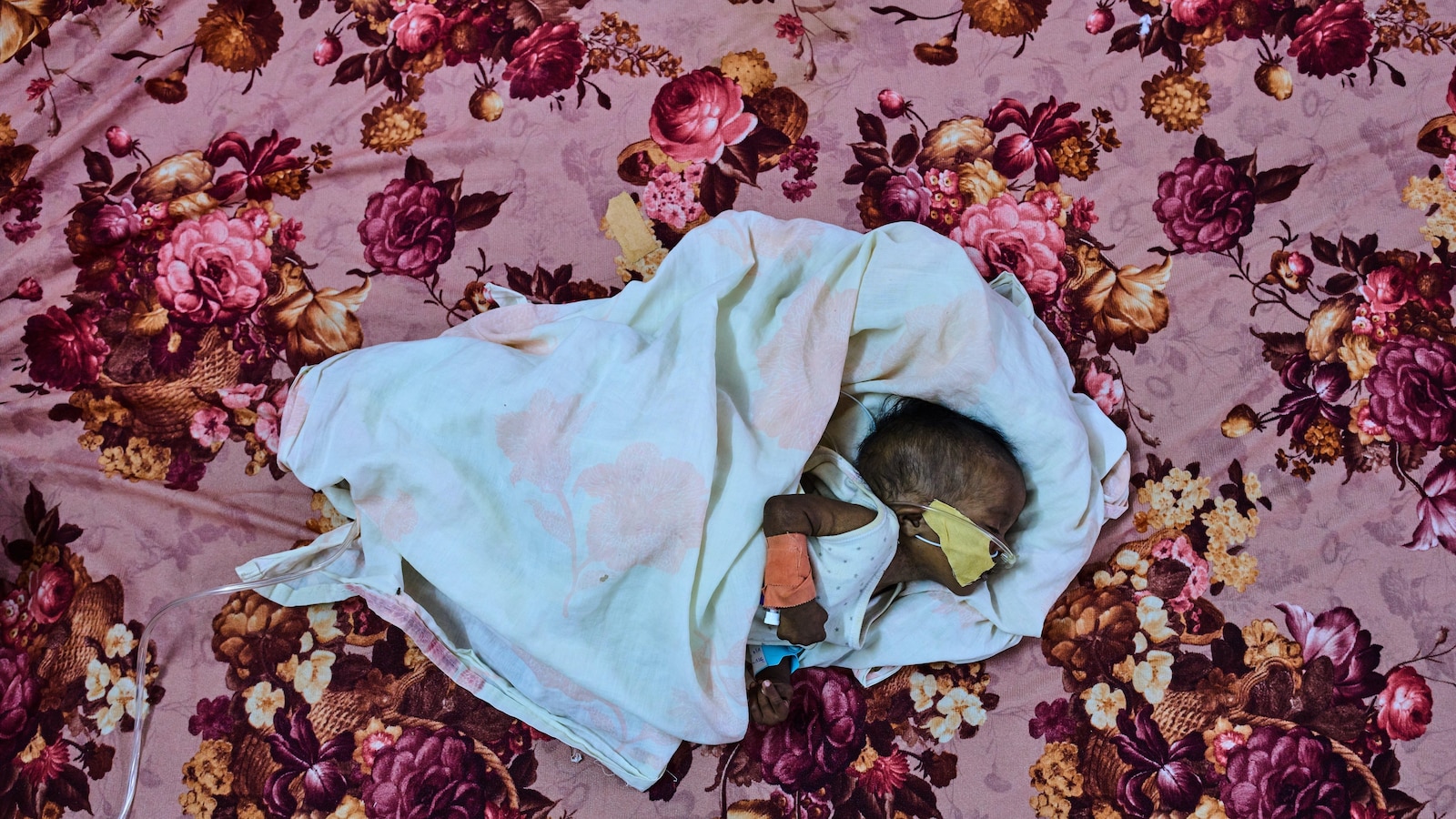
While bullets and bombs grab headlines, hunger is waging its own deadly war across Sudan. The conflict has pushed parts of the country into outright famine, with the world’s leading food security experts warning that 800,000 people are expected to suffer from severe acute malnutrition—the most dangerous and deadly form of hunger. The statistics paint a picture of wholesale societal collapse: about 34 million people, representing almost two out of three Sudanese citizens, now require humanitarian assistance to survive. The healthcare system that might address this crisis has been decimated, with only 63% of health facilities remaining fully or partially functional amid outbreaks of diseases including cholera. At a center for malnourished children in Port Sudan, the reality of these statistics becomes heartbreakingly tangible. Health workers weigh crying babies and feed severely malnourished infants through tubes inserted in their noses. The number of severely malnourished children arriving at this facility has doubled since the war began, reaching 60 per week, while the clinic has just 16 beds—forcing multiple children to share single mattresses. Dr. Osman Karrar, a physician working at the center, expressed the helplessness felt by many on the frontlines of this crisis: “I don’t know what will happen in the coming days.” Making matters worse, fuel prices have surged by more than 24% due to the Iran war’s impact on shipping routes, driving food prices even higher and pushing more families toward starvation.
A Country Divided: The Power Struggle That Started It All
Understanding Sudan’s current nightmare requires looking back to the hopeful days of 2019 when a popular uprising forced the military ouster of Omar al-Bashir, who had ruled the country with an iron fist for decades. What should have been Sudan’s transition toward democracy instead became a powder keg as two military leaders struggled for supremacy. General Abdel-Fattah Burhan, who chairs the ruling sovereign council and leads the national military, found himself at odds with General Mohamed Hamdan Dagalo, commander of the RSF and formerly Burhan’s deputy. When diplomacy failed, these tensions exploded into full-scale war in April 2021. Today, Sudan is effectively split between two competing authorities: a military-backed, internationally recognized government based in the capital city of Khartoum, and a rival RSF-controlled administration in Darfur. The military has consolidated control over the north, east, and central regions, including crucial Red Sea ports, oil refineries, and pipelines. Meanwhile, the RSF and its allies dominate Darfur and areas in the Kordofan region along the border with South Sudan—territories that encompass many of Sudan’s valuable oil fields and gold mines. Neither side appears capable of achieving a decisive victory, leaving Sudanese civilians trapped in what journalist and researcher Shamel Elnoor describes as a situation where they “have become powerless and are subjected to foreign dictates.”
Foreign Interference and Regional Complications
Sudan’s civil war has increasingly become a proxy conflict with regional powers backing different sides, each pursuing their own strategic interests at the expense of Sudanese lives. Egypt has thrown its support behind Sudan’s official military, while the United Arab Emirates stands accused by U.N. experts and human rights organizations of providing arms to the RSF, despite UAE denials of these allegations. The Yale School of Public Health’s Humanitarian Research Lab, which uses satellite imagery to track the conflict, reported this month that the RSF has received military support from a base in Ethiopia—an allegation on which the RSF has remained silent. These foreign entanglements have transformed what began as an internal power struggle into a complex regional conflict with international dimensions. All attempts by the United States and regional powers to broker a ceasefire have failed, with these potential mediators now distracted by the Iran war and other pressing concerns. Growing evidence suggests that this regional interference is only deepening and prolonging the conflict. Josef Tucker, a senior analyst for the Horn of Africa at the International Crisis Group, warns that the war could spill beyond Sudan’s borders, potentially destabilizing neighboring countries and making the conflict “even more intractable.” The International Criminal Court has announced investigations into potential war crimes and crimes against humanity, particularly in Darfur—a region that tragically became synonymous with genocide and war crimes two decades ago. Most recent atrocities have been attributed to the RSF and their Janjaweed allies, Arab militias infamous for committing atrocities against people identifying as East or Central African during Darfur’s earlier crisis in the early 2000s. The RSF actually grew out of these same Janjaweed militias, representing a continuation of historical patterns of violence.
The International Response: Too Little, Too Late
The international community’s response to Sudan’s crisis has been characterized by inadequate attention, insufficient funding, and failed diplomatic initiatives. Germany hosted a Sudan conference in Berlin aimed at rallying humanitarian donors and promoting an immediate ceasefire, bringing together governments, U.N. agencies, and aid organizations. However, the Sudanese government in Khartoum slammed the conference as “unacceptable” interference, claiming Germany failed to properly consult with Sudan before convening it—highlighting the diplomatic challenges that complicate even well-intentioned relief efforts. Denise Brown, the top U.N. official in Sudan, issued a plea that captures the frustration of humanitarian workers: “Please don’t call this the forgotten crisis. I’m referring to this as an abandoned crisis.” Her word choice is deliberate and damning, suggesting the international community has made a conscious decision to neglect Sudan rather than simply overlooking it. There have been some positive developments—the military’s seizure of Khartoum and other urban areas in central Sudan in early 2025 allowed about 4 million people to return to their homes, according to the U.N. migration agency. However, these returnees face damaged infrastructure and enormous challenges in rebuilding their lives. As Tjada D’Oyen McKenna, CEO of aid group Mercy Corps, observes: “It’s not really a return to normal. It is trying to survive amid a new normal.” After three years of war, Sudan’s people face not just the immediate threats of violence and starvation, but the long-term challenge of rebuilding a society that has been fundamentally shattered. Without sustained international attention, diplomatic pressure for peace, and massive humanitarian assistance, Sudan’s crisis will only deepen, claiming more lives and creating ripple effects that could destabilize an entire region.