

Supreme Court to Decide the Fate of Birthright Citizenship in America
A Historic Case That Could Reshape American Identity
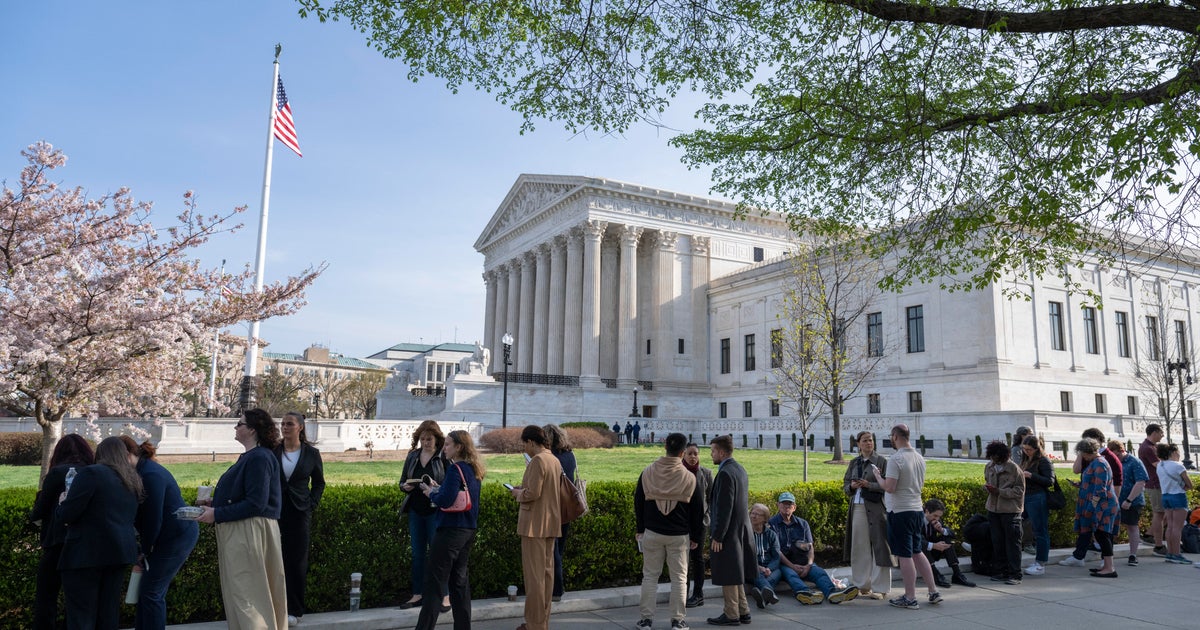
The Supreme Court is preparing to hear one of the most consequential cases in recent memory—a challenge to President Trump’s executive order attempting to end birthright citizenship as we’ve known it for over a century. This Wednesday, the nation’s highest court will grapple with a fundamental question: Who gets to be an American? The case, Trump v. Barbara, centers on whether the president has the authority to redefine citizenship through executive action, potentially overturning more than 125 years of established legal precedent. What makes this moment even more remarkable is that President Trump himself has indicated he may attend the oral arguments in person—a move that would make him the first sitting president on record to do so. The stakes couldn’t be higher, as the outcome will affect not just legal theory but the lives of hundreds of thousands of families and potentially cast doubt on the citizenship status of millions of Americans stretching back generations.
The executive order in question was signed on the very first day of Trump’s second term, signaling just how central immigration restrictions are to his administration’s agenda. Though the order hasn’t actually taken effect due to lower court rulings finding it likely unconstitutional, its mere existence has sent shockwaves through communities across the country. The president’s plan would deny citizenship to children born in the United States to parents who are in the country illegally or temporarily—including those on student visas, work visas, or under certain deportation protections. This represents a dramatic departure from how America has understood citizenship since the adoption of the 14th Amendment after the Civil War. In the lead-up to the arguments, Trump has been characteristically vocal on social media, defending his position and criticizing the courts as “stupid,” even going so far as to predict that the Supreme Court “will find a way to come to the wrong conclusion.” It’s an unprecedented situation where a sitting president is publicly attacking the very institution that’s about to rule on his policy.
The Constitutional Foundation Under Question
At the heart of this legal battle is the 14th Amendment’s Citizenship Clause, a piece of our Constitution adopted in the aftermath of the Civil War specifically to overturn the Supreme Court’s shameful Dred Scott decision, which had denied citizenship to African Americans. The clause states clearly: “All persons born or naturalized in the United States and subject to the jurisdiction thereof, are citizens of the United States and of the state wherein they reside.” For more than a hundred years, this language has been understood to grant citizenship to nearly every baby born on American soil, with only the narrowest of exceptions. Congress reinforced this understanding by codifying similar language in the Nationality Act of 1940 and again in the Immigration and Nationality Act of 1952. This isn’t some obscure legal technicality—it’s a foundational principle that has shaped American identity and opportunity for generations.
The Trump administration, however, is pushing a much narrower interpretation. Solicitor General D. John Sauer argues that the 14th Amendment was only meant to grant citizenship to freed slaves and their children, not to babies whose parents are undocumented or temporarily in the country. He contends that since the mid-1900s, parts of the executive branch have “misread” the amendment, resulting in citizenship being granted to hundreds of thousands of people who supposedly don’t qualify for it. According to this view, the longstanding interpretation has created perverse incentives, encouraging illegal immigration and so-called “birth tourism,” where people come to the United States specifically to have children who will be American citizens. The solicitor general writes that “birthright citizenship for children of illegal and transient aliens degrades the meaning and value of American citizenship,” and the president is simply trying to correct a historical misinterpretation.
The Legal Arguments and What’s Really at Stake
The American Civil Liberties Union, representing the plaintiffs in this case—parents whose children would be affected by the executive order—sees things very differently. Their lawyers argue that the 14th Amendment is crystal clear: it guarantees citizenship based on where you’re born, not on your parents’ nationality, immigration status, or how long they plan to stay in the country. “For generations, all three branches of the U.S. government and the American people have understood, applied, and relied on that constitutional bedrock,” they wrote in their filings, adding that birthright citizenship embodies “our American values of equality and opportunity” and has contributed to the nation’s thriving. This isn’t just about legal interpretation—it’s about the kind of country America aspires to be.
The key phrase everyone is fighting over is “subject to the jurisdiction thereof.” The Trump administration interprets this to mean “completely subject” to political jurisdiction—that only those who owe “direct and immediate allegiance” to the United States and can claim its protection qualify for citizenship. Under this reading, children born to undocumented immigrants or temporary residents simply don’t make the cut. But the plaintiffs’ lawyers argue that “subject to the jurisdiction” simply means subject to U.S. laws. They point out that the 14th Amendment recognizes only a very narrow set of exceptions: children of diplomats, invading enemies, and babies born into certain Native American tribes. Everyone else born on U.S. soil is a citizen, period. The ACLU warns that accepting the government’s arguments would mean “nothing less than a remaking of our Nation’s constitutional foundations” and would “cast a shadow over the citizenship of millions upon millions of Americans, going back generations.”
Precedent, History, and the Wong Kim Ark Case
The Supreme Court has actually addressed this exact question before, in the landmark 1898 case of United States v. Wong Kim Ark. Wong Kim Ark was born in San Francisco to parents who were Chinese citizens living in the U.S. When he returned from a visit to China in 1895, he was denied re-entry on the grounds that he wasn’t a citizen and was therefore barred by the Chinese Exclusion Acts. But in a 6-2 decision, the Supreme Court ruled that because Wong Kim Ark was born in the United States, the 14th Amendment guaranteed him citizenship. It was a powerful statement about what it means to be American—that citizenship isn’t about bloodlines or ethnic heritage, but about the accident of geography and the commitment to include all who are born here.
Now, more than 125 years later, the Trump administration is asking the Court to essentially revisit that decision. They argue that Wong Kim Ark’s parents were permanent residents of the U.S., noting that the opinion referenced this fact several times, and therefore the ruling shouldn’t apply to children of parents who are here temporarily or illegally. But opponents of the executive order say this is a fundamental misreading of the decision and an attempt to rewrite settled law. They argue that the framers of the 14th Amendment deliberately adopted the English common-law principle of birthright citizenship, and the Wong Kim Ark decision cemented that understanding. If the framers had wanted to require parents to be permanent residents, they would have written that into the Constitution. “Birthright citizenship is foundational to who we are as a Nation,” the ACLU argues. “Wong Kim Ark is one of the most important decisions in our history, and its vindication of the Clause stands as a cornerstone of modern American society.”
The Human Impact and What Comes Next
Beyond all the legal arguments and historical precedents, there are real human lives hanging in the balance. According to estimates from the Migration Policy Institute and Penn State’s Population Research Institute, more than 250,000 babies born each year would be affected by Trump’s executive order. These aren’t abstract statistics—they’re newborns being welcomed into families who believed their children would be American citizens, with all the rights and opportunities that entails. The administration has said the directive would only apply prospectively, to babies born more than 30 days after the policy takes effect, but even that “forward-looking” approach would devastate hundreds of thousands of families annually and create a two-tiered system of citizenship based on parents’ immigration status.
The Supreme Court is expected to issue its decision by late June or early July, and whatever they decide will reverberate through American society for generations. If the Court upholds Trump’s executive order, it would represent the most significant rollback of citizenship rights in modern American history, fundamentally altering what it means to be American. If they strike it down, they’ll be reaffirming a principle that has defined the nation for over a century—that America is a place where anyone born here has an equal claim to citizenship, regardless of who their parents are or where they came from. As the justices prepare to hear arguments this Wednesday, the entire nation is watching, knowing that this decision will help define what kind of country we are and what kind of country we want to be. It’s a moment that reminds us that the most fundamental questions about American identity are never fully settled, and that each generation must decide anew what our founding principles really mean.