
Stranded in the Crossfire: Thousands Trapped Across Middle East as Regional Conflict Escalates
A Growing Humanitarian Crisis Unfolds
The escalating conflict involving Iran has created a massive humanitarian crisis across the Middle East, leaving tens of thousands of people stranded far from home with limited options for escape. From religious pilgrims on spiritual journeys to families on vacation, people from around the world find themselves trapped in an increasingly dangerous situation. Major airlines have grounded flights throughout the region, and critical airspace across the Gulf has been shut down completely. Some of those stuck in the conflict zone have been forced to take shelter from airstrikes, while others remain marooned on luxury cruise ships that cannot safely navigate through the Strait of Hormuz, one of the world’s most strategically important waterways. The situation has evolved from an inconvenience to a genuine safety crisis, prompting urgent responses from governments worldwide as they scramble to bring their citizens home safely.
Urgent American Evacuation Orders
The gravity of the situation became crystal clear on Monday when the U.S. State Department issued an extraordinary warning urging all Americans to immediately leave more than a dozen Middle Eastern countries due to escalating safety risks. In a forceful statement posted on social media, U.S. Assistant Secretary of State for Consular Affairs Mora Namdar emphasized the urgency by writing “DEPART NOW” in capital letters, instructing Americans in Iran, Iraq, Jordan, Lebanon, and Israel to use any available commercial transportation to leave the region. The State Department has taken the unprecedented step of evacuating nonemergency personnel and their families from six nations, even adding the United Arab Emirates to the list on Tuesday—a particularly significant development since the UAE, home to the glamorous cities of Dubai and Abu Dhabi, has long been considered one of the safest destinations in the Middle East. The fact that even this relatively stable country has been dragged into the conflict, experiencing interceptions and attacks, underscores how rapidly the situation has deteriorated. Meanwhile, U.S. Ambassador to Israel Mike Huckabee advised Americans in Israel that their best escape route is through Egypt’s Sinai Peninsula, highlighting the complexity of evacuation efforts.
Russia Mobilizes Mass Evacuation Efforts
The Russian government has mounted one of the largest evacuation operations, with twenty-four flights from the UAE and Oman scheduled to land in Russia on Tuesday alone, bringing approximately 4,500 people back home. By Tuesday morning, about 1,000 Russians had already returned aboard emergency flights from the two Middle Eastern countries, according to the Russian Transport Ministry. The scale of Russia’s challenge is enormous—as of Saturday, around 50,000 Russian tourists remained stranded in the UAE. The Emirates has become an increasingly popular destination for Russian travelers in recent years, offering the convenience of direct flights and generous 90-day visas granted upon arrival. What should have been dream vacations have turned into nightmares, with thousands of Russians now desperately trying to secure seats on any available flights home as commercial aviation remains severely disrupted throughout the region.
European Nations Race Against Time
European governments are working frantically to assist their stranded citizens, with varying degrees of success and some political controversy. In Italy, the government has organized special flights to Milan and Rome amid growing criticism of Defense Minister Guido Crosetto, who found himself stuck in Dubai with his family during the initial phase of the U.S.-Israeli attack on Iran. The minister eventually returned to Rome on Sunday aboard a military aircraft, but the incident sparked significant political controversy at home. Left-wing opposition parties have called for Crosetto’s resignation, arguing that a defense minister should not have traveled to the Middle East during such a volatile period, though Italian Premier Giorgia Meloni has defended her minister’s actions. Germany faces perhaps the largest challenge among European nations, with an estimated 30,000 German tourists stranded on cruise ships, trapped in hotels, or stuck at closed airports throughout the Middle East. The first relief flight from Dubai to Frankfurt landed Tuesday afternoon, but the German government is now considering chartering additional planes at taxpayer expense, prioritizing vulnerable travelers including sick individuals, children, and pregnant women. France is grappling with a similarly massive situation, with the foreign affairs minister announcing Tuesday that authorities are working to organize the return of thousands of French citizens. An estimated 200,000 French people live in the region affected by the conflict, with roughly 25,000 French citizens believed to be visiting the area when the crisis erupted.
Personal Stories of Fear and Resilience
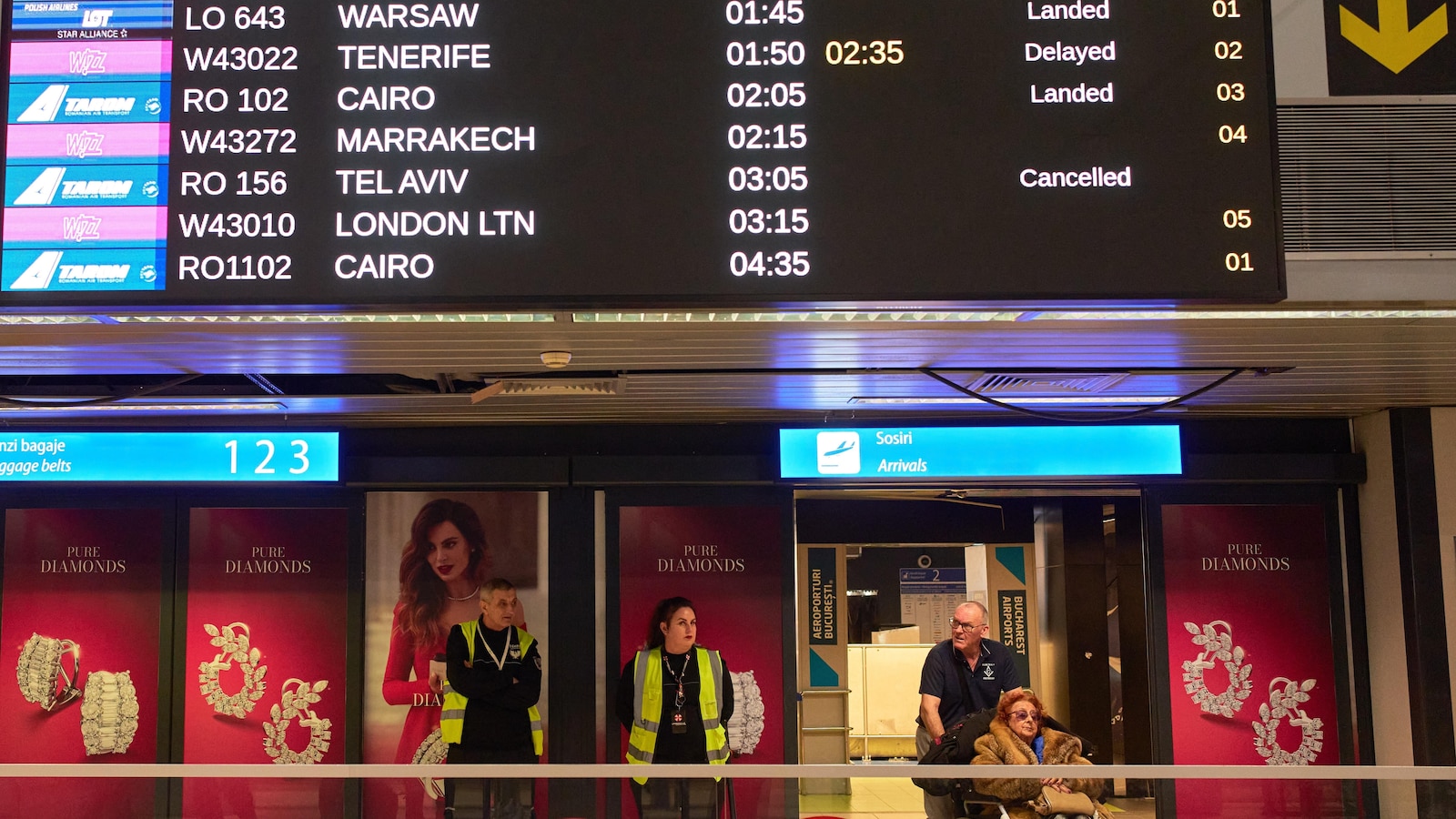
Behind the statistics are countless personal stories of ordinary people caught in extraordinary circumstances. Early Tuesday morning, Romanian tourists arrived in Bucharest after a harrowing journey from Israel to Cairo to escape the conflict zone. Among them were hundreds of Romanian Orthodox Church pilgrims who had been stranded in Israel while visiting Bethlehem on a religious trip led by Romanian priests when the war broke out, forcing them to abandon their spiritual journey and flee for their lives. Pilgrim Mariana Muicaru described her terror during the time in Israel as rockets streaked across the sky above them. In a heart-wrenching account, she told reporters how she and others called their children at 3 a.m. “to ask forgiveness because we might die and to tell them we love them and to let them know that it’s over for us.” Her words capture the genuine fear that has gripped thousands of travelers who never imagined their trips would put them in mortal danger. Louise Herrle, a retiree from Pennsylvania, found herself stranded in Dubai with her husband after what was supposed to be a pleasant vacation in Dubai and Abu Dhabi. Speaking from her hotel on Tuesday, she explained their frustration: “We’ve had several flights canceled. We are now scheduled to go out Thursday at 2:30 in the morning, and, you know, we don’t know if it’s gonna happen or not.” Despite the uncertainty, Herrle demonstrated remarkable composure, explaining that she makes it a habit to register with the U.S. State Department before traveling abroad and that her general life philosophy has helped her cope: “Just accept the fact that we can’t control (the situation) … and go from there.”
Hope and Relief for Some, Uncertainty for Many
For those fortunate enough to secure passage home, the relief is palpable. When travelers deplaned at Frankfurt airport Tuesday afternoon following a flight from Dubai, reporters asked if they were glad to be home. “Yes, of course,” responded Wassim Mahlas with evident emotion. “I’m breathing German air again.” His simple statement reflects the profound gratitude felt by those who have successfully escaped the conflict zone. However, for every person who makes it home safely, thousands more remain in limbo, refreshing flight booking websites, calling embassies, and anxiously monitoring news about airspace reopenings. The situation remains fluid and dangerous, with no clear timeline for when normal commercial aviation will resume throughout the region. Families separated by the crisis wait anxiously for news of their loved ones, while governments continue working around the clock to organize evacuation flights and provide assistance to their stranded citizens. The crisis has exposed the vulnerability of international travelers when regional conflicts suddenly escalate, transforming tourist destinations and pilgrimage sites into danger zones in a matter of hours. As the conflict continues to unfold, the international community watches with concern, hoping for both a swift resolution to the military situation and the safe return of all those caught in circumstances completely beyond their control.