
Tesla Eyes Shanghai Factory as Key to Mass-Producing Humanoid Robots
A Strategic Shift from Electric Vehicles to Robotics
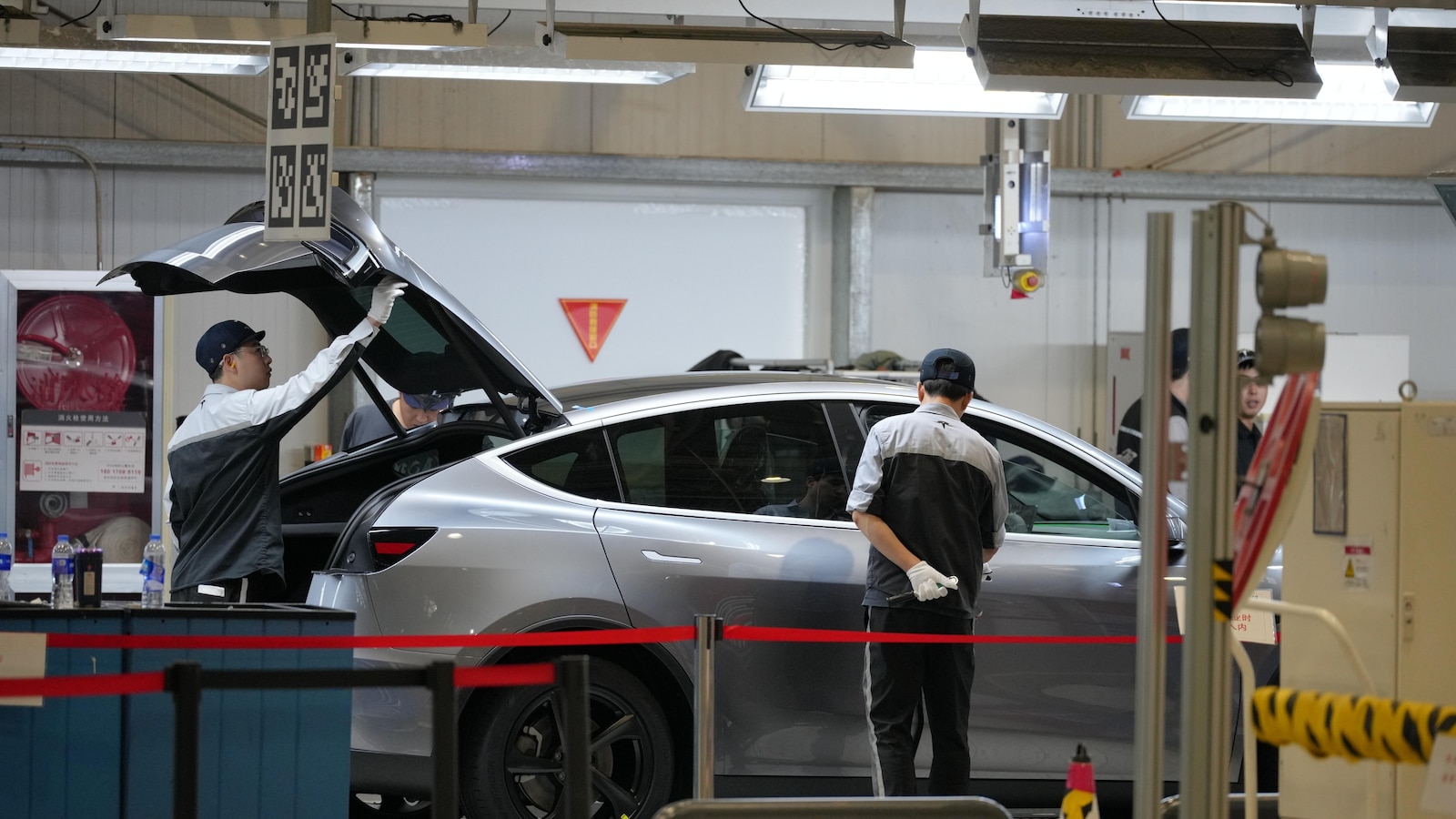
Tesla Inc. is making a bold pivot from being primarily an electric vehicle manufacturer to becoming a robotics powerhouse, and the company believes its Shanghai operations hold the secret to success. In a revealing statement made during a government-organized factory tour, Wang Hao, who serves dual roles as Tesla’s vice president and president of Tesla China, expressed confidence that the company’s Shanghai manufacturing facilities will be instrumental in overcoming one of the biggest hurdles facing the robotics industry: achieving mass production of humanoid robots at scale. This announcement signals a significant strategic shift for the American automotive giant, as it increasingly directs investor attention away from traditional car sales and toward what CEO Elon Musk envisions as an artificial intelligence-driven future. The Shanghai factory, which has been a manufacturing success story for Tesla since it began delivering China-made vehicles in late 2019, is now being positioned as what Wang calls “a golden key” to solving the complex challenges of producing humanoid robots in large quantities—a challenge that Musk himself has identified as critical to the company’s robotics ambitions.
The Shanghai Advantage and Tesla’s Manufacturing Expertise
While Wang Hao didn’t provide specific details about exactly how the Shanghai operations would support Tesla’s robotic business, the factory’s track record speaks volumes about its capabilities and potential. The Shanghai facility has become Tesla’s manufacturing crown jewel, delivering an impressive 851,000 electric vehicles in 2025 alone—a figure that represents more than half of Tesla’s total global deliveries for that year. This production volume demonstrates the facility’s ability to handle large-scale manufacturing with efficiency and precision, qualities that will be essential when transitioning to the even more complex task of producing humanoid robots. The factory’s success isn’t just about numbers; it represents Tesla’s ability to navigate the Chinese market, work with local suppliers, establish robust supply chains, and maintain quality control at unprecedented scales. These same capabilities—refined over years of electric vehicle production—will presumably be adapted and applied to the manufacturing of Optimus robots, Tesla’s humanoid robot line. Additionally, Tesla expanded its Shanghai presence in 2025 with a separate factory that began producing commercial energy storage systems, further demonstrating the company’s commitment to diversifying its manufacturing capabilities in China and leveraging the region’s industrial ecosystem.
Musk’s Vision: From Cars to Caretakers
Elon Musk has been increasingly vocal about steering Tesla—and by extension, investor expectations—away from traditional automotive metrics and toward a future dominated by artificial intelligence applications. His vision encompasses robotaxis that would ferry millions of passengers in fully autonomous vehicles without drivers or even steering wheels, fundamentally transforming urban transportation. But perhaps even more ambitious is his vision for humanoid robots that could perform everyday tasks like watering plants, caring for elderly parents, and handling various household or commercial duties. This isn’t merely aspirational thinking; Musk has backed up this vision with concrete action. He recently announced that Tesla would discontinue production of its older Model S and Model X vehicles in the second quarter, converting the Fremont, California factory to instead produce Optimus robots. This decision represents a significant bet on the robotics future, as it means sacrificing established, revenue-generating product lines to make room for an emerging technology that hasn’t yet proven its commercial viability at scale. For Musk, however, the potential of humanoid robots and AI-driven services represents a far more valuable long-term opportunity than continuing to incrementally improve older vehicle models.
Current Position in the Humanoid Robot Market
Despite Tesla’s ambitious plans and bold statements about the future, the company’s current position in the humanoid robot market is still in its early stages. According to research from Omdia, a London-based technology research and advisory group, Tesla shipped fewer than 500 general-purpose embodied, intelligent robots in 2025. While this number might seem modest, especially compared to the hundreds of thousands of vehicles the company produces, it’s important to view it in context. The humanoid robot industry itself is nascent, with few companies anywhere in the world achieving significant commercial production volumes. What matters more at this stage isn’t necessarily the quantity shipped but the quality and capabilities demonstrated. On this front, Omdia’s report offered encouraging news for Tesla, noting that the company is among the vendors showcasing “industry-leading advancements in AI capabilities.” This suggests that while Tesla may not yet have solved the mass production challenge, it has made significant progress in developing the underlying artificial intelligence, machine learning, sensors, and control systems that make humanoid robots functional and useful. These technological foundations are critical prerequisites for any eventual mass production effort, and Tesla’s experience integrating complex AI systems into its vehicles has apparently translated well into the robotics domain.
China’s Role in Tesla’s Global Strategy
Tesla’s relationship with China has been transformative for the company, and this latest development regarding humanoid robot production is just the newest chapter in that ongoing story. Tesla entered the mainland Chinese market in 2013, but the real game-changer came when the company established its manufacturing presence in Shanghai. The factory that Wang Hao spoke at during the recent tour delivered Tesla’s first made-in-China vehicles in late 2019, and since then, China has evolved from being simply a market for Tesla products to becoming an essential manufacturing hub that drives the company’s global production capacity. The Shanghai facility’s ability to produce more than half of Tesla’s global vehicle deliveries demonstrates both the scale of Chinese manufacturing capabilities and the success of Tesla’s strategy to localize production close to one of its largest markets. This Chinese connection offers several advantages for Tesla’s robotics ambitions: access to an extensive supply chain for electronic components and mechanical parts, a large pool of engineering talent experienced in manufacturing automation, and government support for advanced manufacturing initiatives. China has made robotics and artificial intelligence national priorities, which could mean favorable policies, potential subsidies, and infrastructure support for Tesla’s manufacturing expansion in this direction.
The Road Ahead: Challenges and Opportunities
As Tesla charts this new course from electric vehicles to humanoid robots, the company faces both enormous challenges and unprecedented opportunities. The challenge that Wang Hao and Elon Musk have both identified—achieving mass production at scale—is not merely a manufacturing problem but a multifaceted challenge involving supply chain coordination, quality control, cost management, and technological refinement. Humanoid robots are vastly more complex than even the most sophisticated vehicles, with numerous moving parts, advanced sensors, powerful computing systems, and intricate AI software all needing to work together seamlessly. Manufacturing such products at the scale needed to make them affordable and widely available will require innovations in production techniques, possibly entirely new manufacturing paradigms. However, if any company has demonstrated the ability to revolutionize manufacturing processes, it’s Tesla. The company has consistently pushed boundaries in automotive production, introducing techniques like the massive casting machines that create large vehicle components in single pieces rather than welding together multiple parts. These same innovative approaches could be adapted for robot production. Furthermore, Tesla’s vertical integration strategy—where it controls much of its supply chain and produces many components in-house—could prove advantageous in maintaining quality and managing costs for complex robotic systems. The Shanghai factory, with its proven track record, experienced workforce, and established supplier relationships, provides an ideal testing ground for scaling up humanoid robot production. If Tesla can successfully leverage its Shanghai operations to crack the code on mass-producing affordable, capable humanoid robots, it could trigger a transformation as significant as the smartphone revolution, bringing AI-powered robotic assistants from the realm of science fiction into everyday reality for millions of people worldwide.