



CBS Sunday Morning: A Window into America’s Stories
Remembering Desert Storm: A Memorial Long Overdue
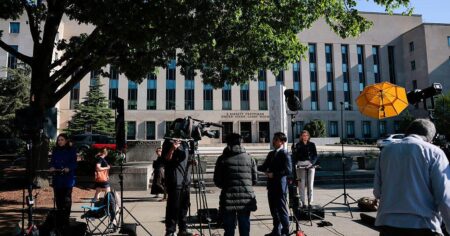
More than three decades have passed since Operation Desert Storm liberated Kuwait from Saddam Hussein’s grip in 1991, yet for many Americans, this significant military campaign has faded into the recesses of history. Over half a million American service members deployed to the Middle East during this operation, and 148 made the ultimate sacrifice. Marine veteran Scott Stump refused to let their service be forgotten. His mission to build a memorial on the National Mall in Washington, D.C., became a years-long obsession filled with bureaucratic hurdles and unexpected opposition. The memorial, now finally under construction and scheduled to open in October, stands as a testament not only to those who served but also to Stump’s unwavering determination. In his conversation with CBS News national security correspondent David Martin, Stump reflects on why memorializing this particular moment in American military history became his life’s work and the battles he fought—not with weapons, but with red tape and skepticism—to ensure these veterans would never be forgotten.
Coyotes Among Us: Nature’s Urban Survivors
The American coyote has accomplished what few wild animals have managed: thriving alongside humans in an increasingly urbanized landscape. Once confined to the western regions of the United States, coyotes have expanded their range to every state except Hawaii, establishing themselves as permanent residents of cities like Chicago, Los Angeles, and New York. This remarkable adaptation tells a larger story about resilience, ecosystem balance, and humanity’s complex relationship with wildlife. Correspondent Conor Knighton explores how these intelligent predators have woven themselves into the fabric of urban and suburban life, playing crucial roles in controlling rodent populations and maintaining ecological balance. The segment also examines the coyote’s significant place in Native American storytelling and mythology, where they often appear as trickster figures embodying both wisdom and foolishness. Artists have long been fascinated by coyotes as symbols of the wild West and the untamed frontier. Today’s challenge isn’t whether coyotes belong in our cities—they’re already here—but rather how we learn to coexist with these adaptable creatures who’ve claimed their place in America’s changing landscape.
Jack Schlossberg: A Kennedy for a New Generation
Politics runs in Jack Schlossberg’s veins, but the 33-year-old grandson of President John F. Kennedy is determined to forge his own path while honoring his family’s legendary legacy. Having announced his candidacy for Congress in New York’s 12th District, Schlossberg represents a new generation of Kennedys entering public service, though his approach differs markedly from the measured diplomacy often associated with political dynasties. In a frank conversation with Mo Rocca, Schlossberg explains his decision to take off the gloves when it comes to his political opponents, believing that the current political climate demands directness rather than restraint. “The time is not now to hold back,” he insists, signaling a fighting spirit that echoes his grandfather’s vigor while acknowledging today’s more contentious political landscape. Beyond politics, Schlossberg opens up about his close relationship with his parents—Caroline Kennedy, the former U.S. Ambassador to Australia and Japan, and artist and designer Ed Schlossberg. He speaks warmly of his sister Rose and shares poignant memories of his late sister Tatiana, revealing the personal foundations that ground his public ambitions. The Kennedy name carries tremendous weight in American politics, bringing both advantages and burdens, but Schlossberg seems ready to shoulder both as he works to make his own mark on the family’s storied political tradition.
Where Art Meets Data: The Sonoran Desert Reimagined
In an age where technology and art increasingly intersect, “Desert Pulse” at Phoenix’s Desert Botanical Garden represents a stunning fusion of scientific precision and creative vision. British architects Matt Shaw and Will Trossell of ScanLAB Projects brought an unconventional tool to Arizona’s Sonoran Desert: a 3-D LIDAR scanner typically used in surveying and mapping. Over countless hours, they captured tens of millions of data points from the desert landscape, documenting every contour, plant, and subtle variation in this seemingly barren yet remarkably vibrant ecosystem. The real magic happened when they transformed this raw data into an immersive, multi-sensory art installation that reveals the desert as a living, breathing entity—pulsing with life that often escapes the casual observer’s notice. Correspondent Lee Cowan guides viewers through this experience where visitors don’t just look at art but step inside it, surrounded by vibrant digital evocations that show the desert ecosystem growing, retreating, and constantly changing. The installation challenges our perceptions of what constitutes a “dead” landscape, revealing instead a world teeming with resilience and adaptation. By merging cutting-edge scanning technology with artistic interpretation, “Desert Pulse” offers a new way of seeing and understanding one of America’s most distinctive natural environments, proving that sometimes the best way to appreciate nature is through the lens of innovation.
Dana White and the UFC: From Underground to the White House Lawn
Few people have transformed a sport as dramatically as Dana White has changed mixed martial arts through his leadership of the Ultimate Fighting Championship. When White became UFC’s president and CEO, the organization was struggling, banned in many states, and dismissed by mainstream sports media as little more than brutal, unregulated fighting. Today, the UFC stands as a global empire, and this summer will reach its highest-profile moment yet: hosting a match on the South Lawn of the White House. In conversation with Luke Burbank, White traces this remarkable journey, discussing how he took MMA from obscurity to respectability, building a business model that now rivals traditional major sports leagues. Central to White’s story is his long relationship with President Donald Trump, which began in 2001 when Trump’s Atlantic City casino hosted UFC events at a time when few venues would. White credits this early support as crucial to UFC’s survival and growth, and he’s candid about how their friendship benefited both their careers. Despite the polarized political climate, White insists that sports should unite rather than divide people: “We can all still just get along,” he says, arguing that the shared experience of athletic competition transcends political differences. Whether you love or hate the raw intensity of mixed martial arts, there’s no denying that White’s vision has created a cultural phenomenon that has changed how millions of people around the world think about combat sports.
Marc Shaiman: Broadway’s “Sore Winner” Tells His Story
Seven Oscar nominations, a Tony Award for “Hairspray,” and nearly fifty years creating music that has shaped American entertainment—Marc Shaiman’s career reads like a Hollywood fairy tale, yet his new memoir bears a decidedly un-fairy-tale title: “Never Mind the Happy: Showbiz Stories From a Sore Winner.” In conversation with Tracy Smith, Shaiman explains the seemingly contradictory title, revealing that even tremendous success hasn’t made him complacent or satisfied. Beginning as a piano prodigy at just sixteen years old, Shaiman knew early that “there was no stopping me,” and he’s spent decades proving it. His collaborations with Billy Crystal on Oscar parody songs became highlights of Academy Awards broadcasts, demonstrating Shaiman’s gift for combining musical sophistication with sharp comedy. His work composing scores for Rob Reiner’s films, including “When Harry Met Sally” and “The American President,” helped define the sound of romantic comedy in the late twentieth century. Shaiman’s memoir offers readers an insider’s view of Broadway and Hollywood, filled with the kind of behind-the-scenes stories that only someone who’s worked at the highest levels can tell. His journey from talented teenager to industry legend illuminates both the opportunities and obstacles that creative people face, and his “sore winner” attitude—never quite satisfied, always pushing for better—explains how he’s remained relevant and innovative across changing entertainment landscapes. For anyone interested in the craft of musical composition or the inner workings of show business, Shaiman’s story offers valuable insights wrapped in the entertaining package you’d expect from someone who’s spent a lifetime making audiences smile.