
Chaos in the Skies: How Middle East Conflict Grounded Thousands of Flights
Massive Flight Disruptions Hit Regional Hubs
The escalating military tensions between the United States, Israel, and Iran have created unprecedented chaos for air travelers across the Middle East and around the world. On Sunday alone, more than 2,400 flights were canceled across Middle Eastern airports, leaving tens of thousands of passengers stranded far from home. Major aviation hubs that typically serve as vital connection points between East and West found themselves suddenly closed to air traffic. Dubai and Abu Dhabi in the United Arab Emirates, Doha in Qatar, and Manama in Bahrain—airports that on any normal day handle hundreds of thousands of passengers—were forced to shut down operations as missiles streaked through the skies above. The ripple effects of these closures extended far beyond the immediate region, disrupting travel plans for people across the globe and highlighting just how vulnerable our interconnected air travel system can be when conflict erupts.
Major Carriers Suspend Operations
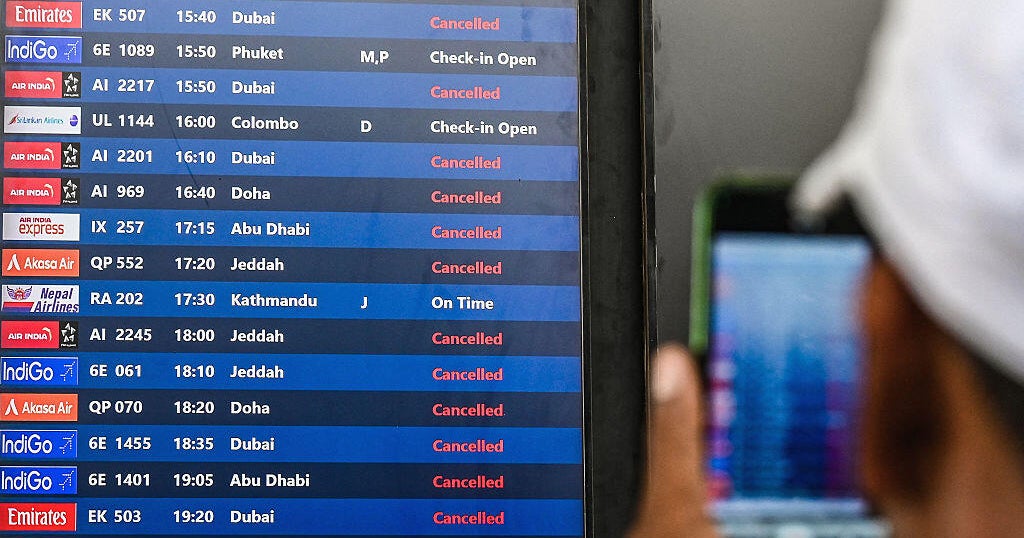
The region’s flagship airlines, known for their luxury service and extensive global networks, had no choice but to ground their fleets. Emirates Airlines, one of the world’s largest international carriers, suspended all flights to and from Dubai until at least Sunday afternoon, though the closure extended longer as the situation remained volatile. Qatar Airways announced that Doha’s airport would remain closed until at least Monday morning, leaving countless travelers in limbo. Israeli airspace also remained shut down throughout Sunday, with Israeli carrier El Al scrambling to organize what they called a “recovery effort” to bring home Israeli citizens stranded in airports around the world once it became safe to fly again. These weren’t minor inconveniences—we’re talking about complete shutdowns of some of the world’s busiest airports, the kind of disruption that hasn’t been seen in this region since the early days of the COVID-19 pandemic. The human cost was visible in airports from Mumbai to London, where passengers stared at departure boards filled with cancellations, many unsure when they’d be able to reach their destinations or return home.
American Airlines Adjust Routes and Schedules
The impact wasn’t limited to Middle Eastern carriers. United Airlines, one of America’s major carriers, canceled all flights departing the United States to Tel Aviv through March 6, along with the corresponding return flights, citing “the closure of the airspace in the region.” Flights to and from Dubai were also canceled through March 4. For Americans traveling to Israel to visit family, conduct business, or make religious pilgrimages, these cancellations represented not just inconvenience but genuine hardship and anxiety. According to aviation analytics firm Cirium, Emirates, Qatar Airways, and Etihad typically transport about 90,000 passengers per day through their airport hubs, with even more travelers headed to various destinations throughout the Middle East. That’s nearly 100,000 people whose daily travel plans depend on these routes functioning normally—a number that represents real people with real plans, from businesspeople with crucial meetings to families trying to reunite, from students returning to universities to medical patients seeking treatment.
The Ripple Effects on Global Air Travel
Aviation industry experts were blunt about what travelers should expect. “For travelers, there’s no way to sugarcoat this,” said Henry Harteveldt, an airline industry analyst and president of Atmosphere Research Group. “You should prepare for delays or cancellations for the next few days as these attacks evolve and hopefully end.” Even flights not directly serving the Middle East faced complications. Airlines that normally route flights over the region to connect Europe with Asia, or North America with India and Southeast Asia, suddenly had to chart new courses. These rerouted flights typically head south over Saudi Arabia, adding hours to journey times and consuming substantially more fuel. For passengers, this means longer time in the air, more fatigue, and potentially missed connections on the other end. For airlines, the financial impact is immediate and painful—extra fuel costs, compensation for delayed passengers, rebooking fees, and crew scheduling nightmares all adding up to millions in losses. And industry watchers warned that if the conflict continues, those costs will eventually be passed on to consumers through higher ticket prices.
Navigating the Uncertainty
The former head of air traffic control for the Federal Aviation Administration, Mike McCormick, offered some hope that the situation might improve incrementally over the coming days. He explained that as American and Israeli officials share information with airlines about where military flights are operating and assess Iran’s remaining capability to fire missiles, countries in the region might be able to reopen portions of their airspace while keeping other areas restricted. “Those countries then will be able to go through and say, OK, we can reopen this portion of our space but we’ll keep this portion of our airspace closed,” McCormick explained. “So I think what we’ll see in the next 24 to 36 hours is how the use of airspace evolves as the kinetic activity gets more well-defined and as the capability of Iran to actually shoot missiles and create additional risk is diminished due to the attacks.” This gradual reopening process reflects the delicate balance between resuming normal operations and ensuring passenger safety—a calculation that airlines and aviation authorities take extremely seriously.
What This Means for Travelers
For the thousands of people caught up in this crisis, the advice from airlines was straightforward: check your flight status online before heading to the airport, as the situation was changing rapidly by the hour. Many airlines issued waivers to affected travelers, allowing them to rebook their flight plans without paying the extra fees or higher fares that would normally apply to last-minute changes—a small mercy for people already stressed by the uncertainty. Scenes from airports told the human story behind the statistics: passengers sleeping on terminal floors in Male, travelers photographing cancellation boards in Mumbai, families huddled together trying to figure out alternative routes home. Some people found themselves stuck in layover cities they’d never intended to visit for more than a few hours, suddenly needing to arrange hotels and meals while waiting for airspace to reopen. Others missed critical events—weddings, funerals, business deals—because they simply couldn’t get where they needed to go. The crisis served as a stark reminder that in our globalized world, regional conflicts can have immediate and personal impacts on ordinary people thousands of miles away, and that the freedom to travel we often take for granted can disappear in an instant when tensions escalate to violence. As the situation continues to develop, travelers worldwide are watching nervously, hoping for de-escalation and a return to normal operations, while learning once again that international travel, for all its modern conveniences, still depends on something we can’t control: peace.