
Eric Holder Defends Democratic Redistricting Push as Response to Republican Gerrymandering
The National Battle Over Congressional Maps
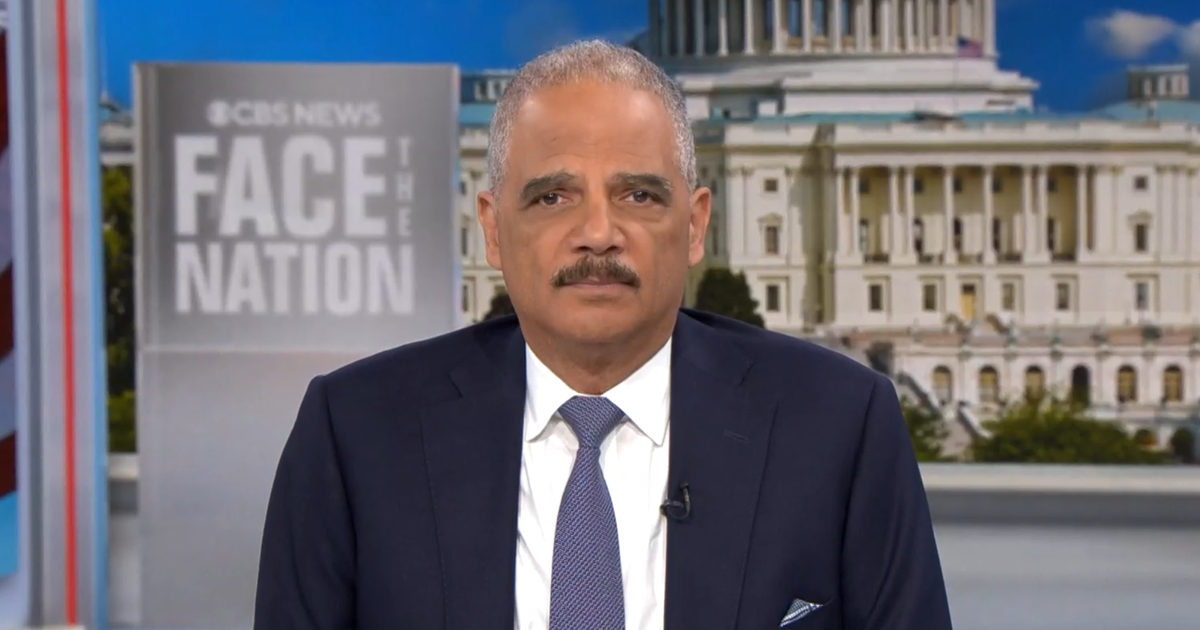
In a revealing interview on “Face the Nation,” former Attorney General Eric Holder found himself defending a controversial Democratic strategy that seems to contradict his long-standing opposition to gerrymandering. As chairman of the National Democratic Redistricting Committee, Holder is now actively promoting redistricting efforts in states like Virginia and California that would redraw congressional maps to favor Democratic candidates. His central argument? This isn’t about advancing partisan interests—it’s about responding to what Republicans have already done in states like Texas, Missouri, and North Carolina. Holder insists that when the president reportedly told Texas Governor Abbott that he needed five additional House seats, Democrats had no choice but to fight back using the same tools. What makes Virginia’s situation particularly notable is that voters themselves will decide through a referendum whether to approve these new maps, which Holder presents as more democratic than the Republican-drawn maps imposed in conservative states without public input.
The Fairness Paradox and Temporary Measures
Margaret Brennan pressed Holder on an uncomfortable truth: Virginia already had a bipartisan commission established specifically to handle redistricting in a fair, non-partisan manner. So why circumvent that process? Holder’s response reveals the political calculation at play. He acknowledges that what Democrats are proposing is technically gerrymandering, but characterizes it as a temporary, defensive measure—limited to just this election cycle and one more before reverting to the commission-based approach after the next census. The problem with this “temporary” framing, as Brennan points out, is that temporary measures in politics have a way of becoming permanent. Once you open the door to partisan map-drawing, what’s to stop the next party in power from doing the same thing and calling it temporary? Holder insists this won’t happen because the measure itself is time-limited by design, but he can’t offer guarantees beyond saying that Democrats won’t push to extend it. His argument essentially boils down to this: we’re facing a crisis right now that requires extraordinary measures, and once that crisis passes, we can return to principled approaches to redistricting.
Acknowledging Democratic Vulnerability
One of the most pointed moments in the interview came when Brennan suggested that this redistricting push might actually signal Democratic weakness rather than strength. After all, the president’s party historically performs poorly in midterm elections, and with war-related concerns and rising energy costs dominating headlines, Democrats should theoretically have natural advantages heading into these races. So why resort to redrawing maps if you’re confident in your ability to win on the issues? Holder’s response was telling: “The Democrats can certainly win if it’s a fair fight.” This statement reveals the underlying anxiety driving Democratic strategy—a belief that without intervention, the playing field won’t be level enough for them to maintain meaningful power in the House of Representatives. He repeatedly frames the Republican redistricting in Texas, North Carolina, and Missouri as “stealing seats” and “stacking the deck,” which necessitates a Democratic response. His rhetorical question—”what were we supposed to do? Nothing?”—captures the defensive posture of someone who recognizes the ethical compromises involved but sees no alternative path forward.
The Weight of Past Principles
The most uncomfortable part of the interview for Holder came when Brennan confronted him with his own previous statements condemning gerrymandering in all its forms. The quotes are damning in their clarity and conviction. Holder had previously said gerrymandering “puts in place governments that don’t reflect the policy desires of the American people,” that it “leads to gridlock” and “lack of compromise because it caters to the extremes of the party.” Perhaps most importantly, he had explicitly stated: “I don’t stand for gerrymandering for Democrats.” These aren’t vague policy positions or carefully hedged political statements—they’re clear moral declarations about what’s right and wrong in a democracy. Now, just a few years later, Holder is actively championing the very practice he condemned. His defense relies on the concept of crisis: we’re facing an existential threat to democracy itself, he argues, which justifies setting aside principles temporarily to prevent something worse. It’s a version of the “ends justify the means” argument, wrapped in the language of democratic preservation. Whether voters find this reasoning persuasive likely depends on whether they share Holder’s assessment of the threat level and whether they believe the measures will truly remain temporary.
Concerns from Within the Democratic Coalition
The interview also touched on internal Democratic tensions, specifically concerns from African American political organizations about how the Virginia redistricting might affect Black political power. Philip Thompson of the National Black Nonpartisan Redistricting Organization wrote that the proposed Virginia map “fails to consolidate black political influence despite the fact that black voters form a critical component of the Democratic leadership and voting bloc in Virginia.” This criticism highlights a crucial question: if you’re going to abandon principles about fair redistricting, shouldn’t the new maps at least maximize representation for your core constituencies? Holder’s response to this concern was notably dismissive—he simply called it “untrue” without providing details about how the maps actually would benefit Black political representation. Instead, he pivoted to a broader argument: whatever the specific details of Virginia’s map, surely two more years of “unchecked Trump power” would be worse for African Americans than any concerns about how congressional districts are drawn. This appeal to the greater threat is consistent with his overall framing, but it sidesteps legitimate questions about whose interests are actually being served by these redistricting efforts.
The Long-Term Vision and Democratic Norms
Despite defending partisan gerrymandering in the present moment, Holder maintains that his ultimate goal remains eliminating the practice entirely through federal legislation. He expressed hope that when Democrats next control the presidency and both chambers of Congress, they’ll pass laws banning partisan gerrymandering outright. This creates an interesting political paradox: use gerrymandering now to gain power, then use that power to ban gerrymandering forever. There’s a certain logic to it—if you believe Republicans have poisoned the well, you might need to drink from it one last time before you can purify it for everyone. But this approach carries significant risks to democratic norms and public trust. When political leaders openly embrace tactics they’ve long condemned, even with explanations about temporary necessity and existential crisis, it reinforces public cynicism about whether anyone in politics actually operates from principle rather than pure power calculations. The Supreme Court has already upheld the legality of these redistricting efforts in both Texas and California, but as Holder acknowledges, legal doesn’t necessarily mean appropriate or good for democracy. The question facing voters in Virginia and observers nationwide is whether fighting gerrymandering with more gerrymandering leads to a better system or simply accelerates the decay of fair representation in American politics.