
Israel and U.S. Navigate Delicate Diplomacy Amid Iran Crisis
The Diplomatic Tightrope Between Military Action and Peace Talks
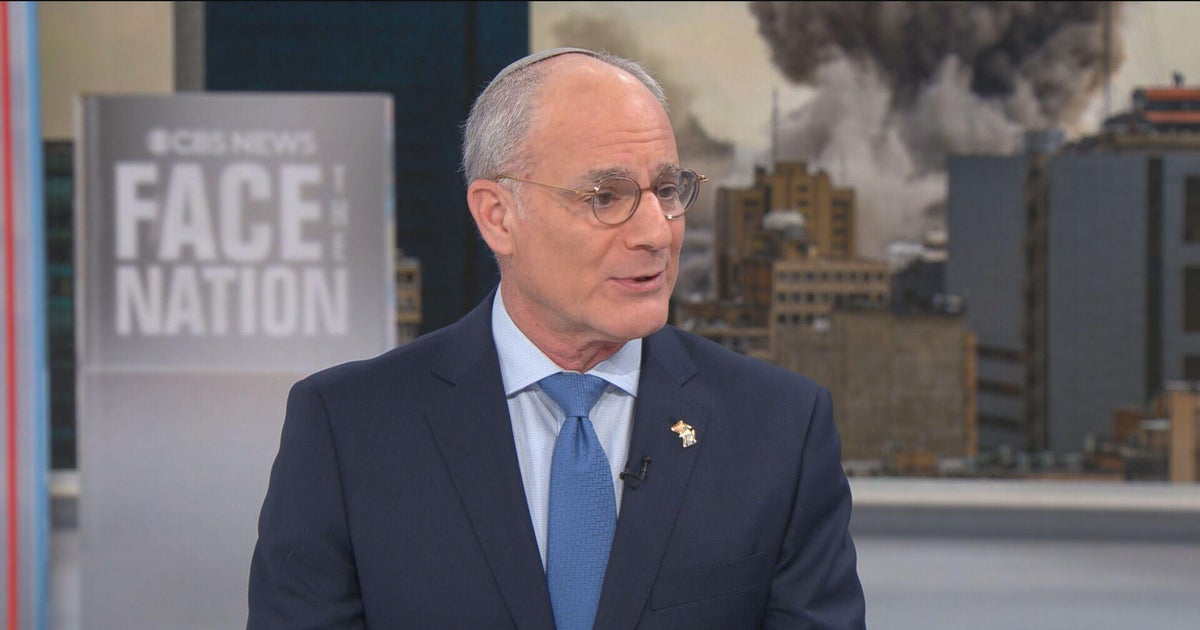
In a revealing interview on CBS’s “Face the Nation,” Israeli Ambassador to the United States Dr. Michael Leiter provided insight into the complex relationship between military operations and diplomatic efforts currently unfolding in the Middle East. The conversation, conducted by Margaret Brennan, offered a window into how Israel and the United States are attempting to navigate what both nations view as an existential threat from Iran while simultaneously leaving room for a peaceful resolution. The ambassador emphasized that President Trump has been “relentless in pursuing an end to this crisis through talks,” even as both nations remain prepared for military action. This delicate balance reflects the reality facing both governments: the desire to avoid further military escalation while confronting what they perceive as Iran’s unyielding pursuit of nuclear weapons capability.
The interview revealed the deep frustration within Israeli leadership regarding Iran’s nuclear ambitions and what they view as the regime’s fundamental dishonesty. Ambassador Leiter painted a picture of a regime that has consistently misled the international community, noting that Vice President Vance recently sat face-to-face with Iranian officials who are “directly responsible for the murder of their own people.” The two-week ceasefire currently in place represents a critical window for diplomacy, though Leiter expressed skepticism about Iran’s willingness to genuinely change course. His characterization of the Iranian regime as “tyrannical” and his reminder that they have chanted “death to America, death to Israel” for 47 years underscored the deep mistrust that shapes Israeli policy. Yet paradoxically, this same regime is the one both nations must negotiate with if a peaceful resolution is to be found.
Nuclear Enrichment and the Red Lines
A significant portion of the discussion centered on what constitutes an acceptable nuclear program for Iran. Ambassador Leiter drew a clear red line: Iran should have zero enrichment capability. When pressed on whether the U.S. might accept some level of enrichment for civilian purposes, such as medical applications, Leiter firmly rejected this notion. He pointed out that 57 countries maintain civilian nuclear programs without domestic enrichment capabilities, establishing that Iran’s insistence on enrichment is unnecessary for peaceful purposes. The ambassador’s reasoning was straightforward and compelling: if Iran can enrich uranium to 60 percent, the jump to 90 percent weapons-grade material becomes trivially easy—a matter of weeks rather than years. The fact that Iran has built production facilities deep underground further undermines any claim that their program is purely peaceful.
The intelligence picture painted by Leiter directly contradicted some U.S. assessments, particularly regarding Iran’s timeline to develop intercontinental ballistic missiles capable of reaching the American mainland. While U.S. intelligence suggested a nine-year timeline, Israeli intelligence believes the threat is more immediate. Leiter emphasized that Israeli intelligence has been accurate from the beginning of this crisis, and he noted with concern that Iran has already demonstrated missiles capable of reaching 4,000 kilometers—double what they had previously claimed as their limit. The strike on Diego Garcia proved Iran had exceeded its stated capabilities, and Leiter argued it’s merely “a sprint” to developing missiles that could reach Chicago or New Jersey. This disagreement over intelligence assessments reveals the different threat perceptions that can exist even between close allies.
The Reality Check on Regime Change
One of the interview’s most illuminating moments came when Brennan questioned Leiter about a detailed New York Times report describing Israel’s original war aims, which reportedly included killing Iran’s supreme leader, crippling the nation’s military capabilities, and facilitating regime change through popular uprising. Leiter, who claimed to have been present at the February meeting in question, pushed back against the report’s characterization while simultaneously acknowledging that not all objectives had been achieved “yet.” His insistence that “this is a process, not instant soup” reflected a more realistic assessment of how regime change actually unfolds. The ambassador maintained that the potential for popular uprising remains strong, pointing to massive protests that occurred in January, but he was careful not to guarantee any specific outcome.
This discussion highlighted a fundamental tension in the current strategy: how can you simultaneously negotiate with a regime while hoping that same regime will be overthrown by its own people? When Brennan pressed this point, Leiter emphasized Israel’s complete support for President Trump’s approach, both diplomatic and military. He rejected any suggestion that Israel had “dragged” the United States into military action, characterizing the relationship as one of true partnership where both nations have been “in lockstep from the beginning in the planning, in the implementation.” However, the underlying question remained: if the ultimate goal is regime change, can negotiations with the existing regime ever succeed? The ambassador’s response suggested that diplomacy serves multiple purposes—it demonstrates good faith, it buys time for other developments, and it keeps pressure on the Iranian government even while maintaining hope that internal forces might ultimately bring about transformation.
The Hezbollah Challenge and Lebanon Negotiations
The conversation then shifted to Israel’s complicated relationship with Lebanon and the ongoing military operations against Hezbollah. Ambassador Leiter was insistent on proper framing: Hezbollah is fundamentally “a terrorist organization which is also a political party,” not the reverse. This distinction matters enormously in how Israel views its military operations in Lebanon and its diplomatic efforts with the Lebanese government. Leiter expressed genuine optimism about the potential for Israeli-Lebanese peace, suggesting that without Hezbollah’s influence, the two nations could reach a comprehensive peace agreement within two or three months. He described an initial conference call between himself, the Lebanese ambassador, and U.S. officials as a “great conversation” where all parties recognized that bilateral peace was achievable if Hezbollah could be sidelined.
However, the reality on the ground told a more complicated story. Just days before the interview, Israeli airstrikes killed more than 350 people in Lebanon in a single day, with Lebanese health ministry figures indicating that a third of the casualties were women, children, and elderly civilians. When confronted with these numbers and President Trump’s statement that Prime Minister Netanyahu had agreed to “low-key it,” Leiter declined to discuss specific operational details but disputed the casualty figures entirely. He drew parallels to Hamas’s reporting from Gaza, suggesting that numbers coming from Hezbollah-influenced sources cannot be trusted. The ambassador maintained that Israel targets terrorist infrastructure specifically and takes measures to warn civilians, but he acknowledged that Hezbollah deliberately positions its operations within civilian areas—a practice he characterized as “a crime against humanity.”
The Divergence Between Military Victory and Political Resolution
Throughout the interview, a fundamental question kept surfacing: what does victory actually look like, and have these goals been achieved? President Trump had declared “the war is won,” yet Prime Minister Netanyahu stated “the work is not yet complete.” Ambassador Leiter outlined three continuing concerns that prevent Israel from considering the matter closed: Iran’s potential return to nuclear weapons development, the threat posed by Iran’s expanding ballistic missile capabilities, and the ongoing problem of Iranian proxy forces throughout the region. His framework suggested that military operations may have degraded Iran’s conventional forces—its navy and air force have been largely eliminated, according to Leiter—but the broader strategic threats remain unresolved. The hope, as he expressed it, was that Iran would “come to their knees and say, we’re surrendering,” but there was no indication this had happened or was imminent.
This gap between declared victory and continuing operations creates challenges for both Israeli and American policymakers. If the war is truly won, what justifies continued military action? If significant threats remain, how can victory be claimed? Leiter’s responses suggested that Israel views this as an ongoing campaign with multiple phases rather than a discrete conflict with a clear endpoint. The complete “de-linkage between Iran and its proxies” that he cited as necessary would represent a fundamental restructuring of Middle Eastern power dynamics—an objective far more ambitious than any single military campaign could accomplish. The ambassador’s willingness to negotiate with Lebanon while simultaneously conducting major military operations there illustrated how Israel is attempting to pursue military and diplomatic tracks simultaneously, hoping that pressure in one realm will create opportunities in the other.
The interview ultimately revealed a Middle East in transition, where old certainties have been shattered but new arrangements have yet to emerge. Israel and the United States find themselves managing multiple parallel efforts: maintaining military pressure while exploring diplomatic openings, supporting potential regime change while negotiating with existing governments, and trying to balance their own security imperatives against the humanitarian costs of military operations. Ambassador Leiter’s appearance provided valuable insight into Israeli thinking during this critical period, even as it raised as many questions as it answered about where this complex crisis is headed and what an actual resolution might look like.