
Iran in Crisis: Understanding the Unfolding Conflict and Its Implications
A Nation Without Clear Leadership
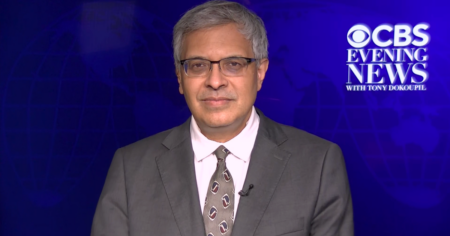
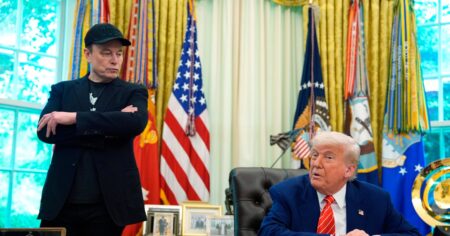
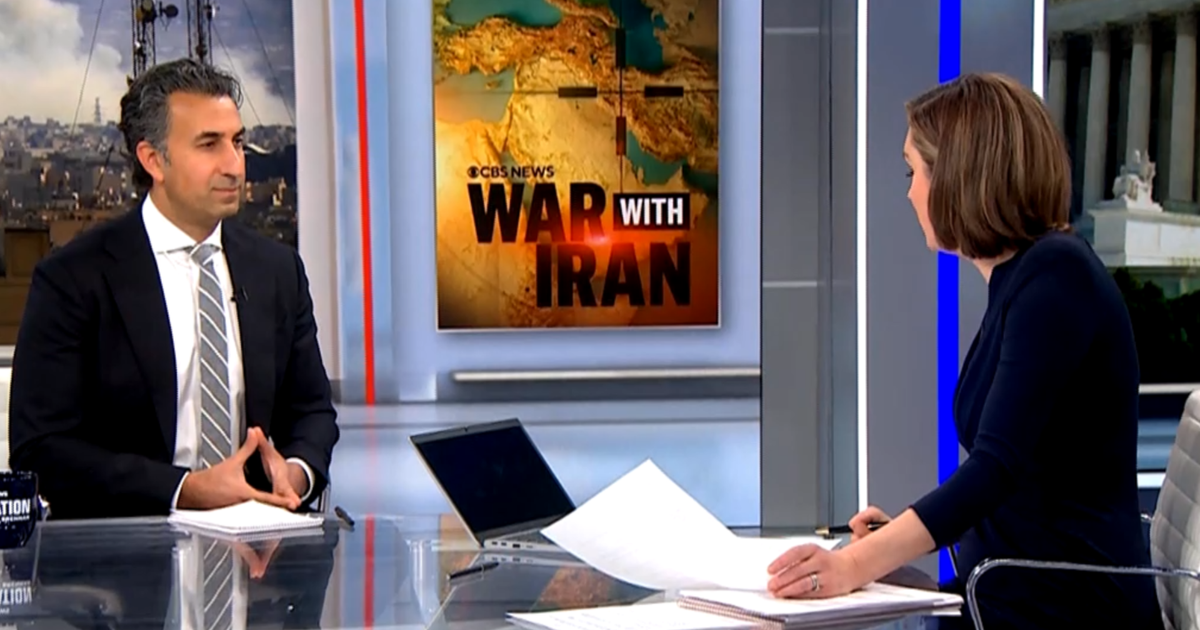
The death of Ayatollah Khamenei has left Iran in a state of unprecedented uncertainty, with even those inside Tehran unable to identify who will emerge as the country’s next leader. According to Karim Sadjadpour, a senior Iran policy analyst at the Carnegie Endowment for International Peace, this leadership vacuum presents an almost impossible challenge. Iran’s government is widely considered one of the most unpopular regimes in the world, with an estimated support level of just 15 percent among its own population. The gap between the Iranian government and its 90 million citizens may be the widest of any nation on Earth, making it extremely difficult to find a single figure who could simultaneously satisfy the senior clergy, the powerful Revolutionary Guards, and the Iranian people themselves. President Trump has indicated willingness to engage with Iran’s new leadership, but the question remains: who exactly will that be? The situation is further complicated by the fact that Khamenei was the world’s longest-serving dictator, ruling Iran for four decades—the only leader three-quarters of Iranians, those born after the 1979 revolution, have ever known.
The Military Situation and American Casualties
Retired General Frank McKenzie, former CENTCOM commander and CBS News contributor, provided a sobering assessment of the military confrontation currently unfolding. In the opening hours of this conflict, the United States has already suffered at least three deaths and five serious casualties among American service members. General McKenzie cautioned that the American people should prepare themselves for several more days of intense exchanges involving long-range rocket attacks. The immediate military objective for U.S. and Israeli forces is to systematically reduce Iran’s capability to launch volleys of missiles—coordinated groups of projectiles fired simultaneously at American bases throughout the region, including critical installations like Al Udeid Air Base and Al Dhafra Air Base, as well as cities in allied Gulf states. CENTCOM has been planning for this scenario for years, and while commanders are doing everything possible to minimize casualties, General McKenzie acknowledged that more American deaths are likely before the situation stabilizes. The critical 72 to 96-hour window will determine whether coalition forces can successfully degrade Iran’s missile-launching capabilities enough to protect both military installations and civilian populations in friendly nations that have already experienced incoming fire.
Iran’s Decades of Malicious Activity
In an eight-minute video address, President Trump outlined what he characterized as fifty years of Iranian malicious activities against American interests and regional stability. The recitation included the 1983 bombing of the Marine barracks in Beirut by Hezbollah, the 1979 takeover of the American embassy in Tehran, and numerous other incidents spanning half a century. The president even linked the attack on a U.S. naval destroyer in Yemen to Iranian influence, though some analysts have traditionally attributed that attack to al-Qaeda. While critics noted that the address was essentially an extended argument demonstrating “Iran is bad” without providing detailed information about the immediate threat that precipitated the current military action, the historical context underscores the long-standing adversarial relationship between the United States and the Islamic Republic. This decades-long pattern of hostility has created deep-seated distrust on both sides and makes any potential diplomatic resolution considerably more challenging. The question of what specific immediate threat justified the current level of military response remains somewhat unclear to observers, though administration officials and Republican lawmakers have insisted the president laid out the rationale clearly.
Can the Iranian People Rise Up?
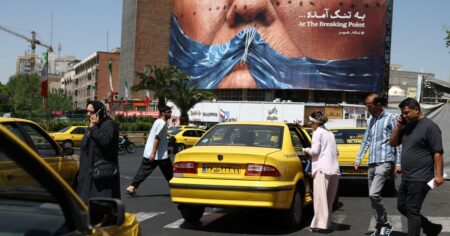
One of the most provocative elements of President Trump’s address was his direct appeal to the Iranian people to rise up against their government. Karim Sadjadpour believes this possibility cannot be dismissed entirely, given the regime’s extraordinary unpopularity. However, he noted that Iranian citizens are currently spectators rather than participants in the unfolding events. The president’s message contained somewhat contradictory instructions—first telling Iranians to stay home for their own safety during the dangerous period of military strikes, then urging them to seize control of their institutions. The Iranian people are watching carefully to see if cracks develop within the regime itself, particularly whether the security forces that have kept the government in power might fracture or lose cohesion. This is especially relevant given that the regime reportedly massacred potentially tens of thousands of people just last month during protests. There’s a saying about dictatorships being most murderous at two points: at the beginning of their reign when establishing control, and at the end when desperately clinging to power. The question now is whether Iran’s security apparatus still possesses the unity and willingness to continue brutal suppression of any popular uprising, or whether the death of Khamenei might create opportunities for meaningful change.
The Death of a Dictator and What It Means
The passing of Ayatollah Khamenei represents a watershed moment for Iran and the entire Middle East region. As Sadjadpour eloquently noted, Khamenei lived by the slogans “death to America” and “death to Israel,” and he ultimately died by death from America and Israel. This symbolism is not lost on observers of the region. For the vast majority of Iranians, who comprise what may be the most secular society in the Muslim Middle East and perhaps the most pro-American population in the region, Khamenei’s death offers a potential turning point. Many Iranians recognize that their nation will never fulfill its enormous potential—whether in economic development, technological advancement, or international standing—as long as their government’s foundational ethos remains dedicated to revolutionary ideology and hostility toward the West rather than pragmatic pursuit of national interests. There is substantial demand among the Iranian population for a government that, even if not fully democratic, would at least prioritize the welfare and prosperity of Iranian citizens over the export of revolutionary fervor. The celebrations that erupted in some quarters following news of Khamenei’s death demonstrate this sentiment, though whether it can translate into actual political change remains uncertain.
Searching for an Endgame
When asked about how America would declare victory in this conflict, General McKenzie emphasized that while an endgame must be kept in view, this is not the time to be thinking about off-ramps or premature de-escalation. The immediate priority is continuing to impose American and allied will on Iranian military capabilities and maintaining pressure at a high level. Looking further ahead, McKenzie outlined two potential endgame scenarios. The first would be the emergence of a new Iranian regime willing to engage in genuine negotiations—though he acknowledged this may be unlikely. The second possibility is some form of successor state or fragmented governing arrangement that, while potentially unpalatable in some respects, might nonetheless be willing to discuss critical issues like Iran’s nuclear program and ballistic missile development. McKenzie candidly admitted that Western powers have a uniformly poor track record when it comes to predicting regime changes in Middle Eastern totalitarian states, suggesting humility about what will emerge from the current chaos. The situation could potentially devolve into civil war or result in a fractured state, though McKenzie noted it’s hard to imagine outcomes worse than the status quo that existed before. The coming days and weeks will be critical in determining whether this military confrontation leads to a strategic breakthrough or simply creates new and unpredictable dangers in an already volatile region.