



Ukraine’s Fight for Survival: Ambassador Stefanishyna on Air Defense, Allies, and the Path to Peace
The Critical Need for Air Defense Systems
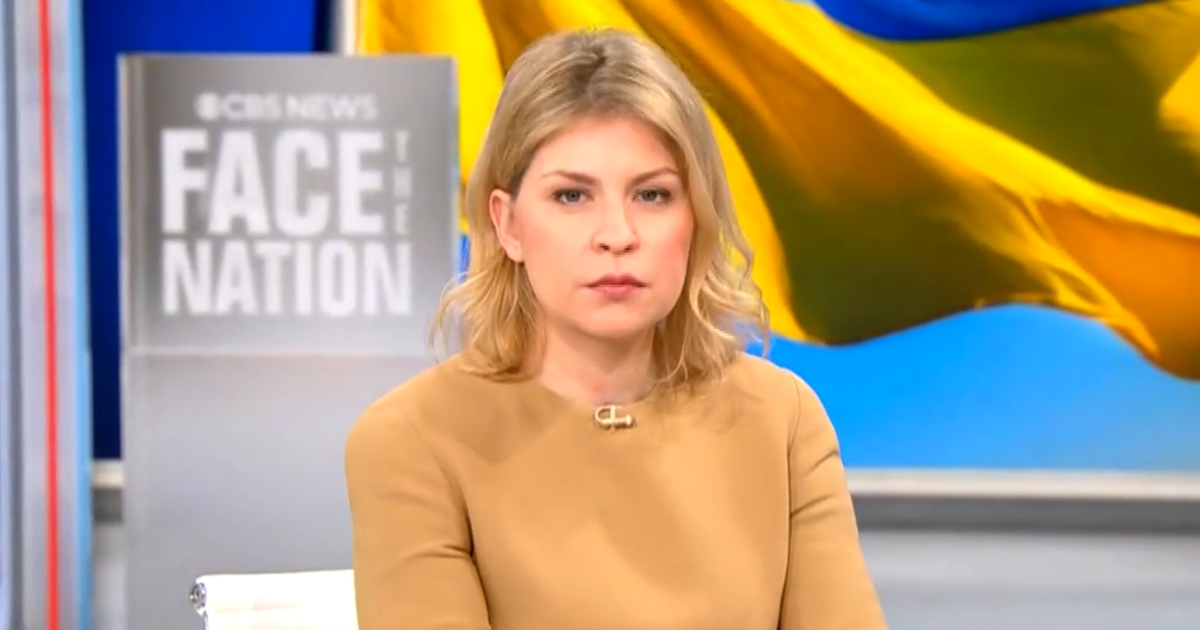
Ukraine finds itself at a crossroads in its ongoing struggle against Russian aggression, with one of the most pressing concerns being the depletion of crucial air defense systems. In a revealing interview on “Face the Nation,” Ukraine’s Ambassador to the United States, Olga Stefanishyna, addressed the increasingly complicated situation surrounding American Patriot missile systems. These sophisticated interceptors have been Ukraine’s primary shield against relentless Russian ballistic missile attacks that have terrorized Ukrainian cities for years. However, with the recent escalation of conflict in the Middle East involving Iran, America’s Gulf allies are now competing for the same limited supply of defensive weapons. President Zelensky has expressed deep concern that American support might wane as resources are diverted elsewhere, leaving Ukraine vulnerable at a critical moment in the war.
Despite these challenges, Ambassador Stefanishyna expressed confidence in American industrial capacity, asserting that the defense industry should be capable of meeting the needs of all fronts simultaneously. She emphasized that Ukraine has both the resources and willingness to procure additional systems and is actively exploring options to do so. The ambassador made a compelling connection between the current Iranian crisis and Ukraine’s own struggle, pointing out that Iran has been a “strategic enabler” of Russian aggression for three years through the provision of cheap drone technology. The Shahed drones, which have killed hundreds of Ukrainian children and devastated civilian populations, represent the deadly fruit of the Russia-Iran partnership—a partnership that is now showing its true face as Iran wages war against American allies in the Gulf.
The Russia-Iran Connection: A Partnership Built on Aggression
The alliance between Russia and Iran has proven to be more than just diplomatic coordination—it’s a technological and strategic partnership with deadly consequences for innocent civilians. Ambassador Stefanishyna didn’t mince words when describing how Iranian Shahed drone technology was specifically developed to attack people, demoralize populations, and cause civilian casualties. These weapons have become instruments of terror over Ukrainian skies, killing hundreds of children and destroying countless families. When asked about Energy Secretary Chris Wright’s seeming dismissal of Russia as a major factor in the Iranian conflict, Stefanishyna firmly contradicted that assessment, stating that Russia is “absolutely a factor” in the current Middle Eastern crisis.
She explained that Russia has systematically invested not in bilateral development or peaceful cooperation, but in supporting regimes like Iran, Venezuela, and Syria—countries that shared Russia’s worldview and methods. Moscow calculated that the international community would never take the kind of resolute action we’re now seeing against Iran, just as they didn’t believe such action was possible years ago in Syria or Venezuela. By supporting these authoritarian regimes, Russia built a network of allies who share military technology and strategic resources. Now that these regimes are being confronted, Russia finds itself weakened and deprived of crucial means of influence. The ambassador suggested that Russia’s leadership is genuinely afraid of the new reality being shaped by President Trump’s administration—a reality where aggression has consequences and where authoritarian partnerships are being dismantled one by one.
Ukraine’s Expertise: Helping Defend American Allies
In a striking reversal of the usual direction of military assistance, Ukraine is now positioned to help defend American interests and allies. President Zelensky was asked by the United States to provide anti-drone technology to help protect American forces and Gulf allies from Iranian drone attacks. This request underscores a remarkable truth: after years of defending against constant drone warfare, Ukraine has developed unparalleled expertise in countering these threats. Ambassador Stefanishyna explained that Ukraine understands better than anyone in the world what’s needed in a crisis when people are dying across multiple cities. Having lived through this nightmare themselves, Ukrainians know the pain of watching civilians targeted by drones, and they refuse to stand aside while others suffer the same fate.
The Ukrainian response has been immediate and comprehensive, offering not just hardware but the entire spectrum of capabilities needed to defend against evolving drone threats. As the ambassador explained, it’s not just about sending drones or personnel—it’s about providing the complete system of actions and responses that Ukraine has developed through bitter experience. The situation changes week by week, requiring people and mechanisms that can react immediately. This adaptive capability is something that only Ukraine possesses on the entire planet, born from the necessity of three years of constant aerial bombardment. Ukraine is sending advisors, sharing technology, and providing the operational knowledge that can save lives. This contribution demonstrates that even while fighting for its own survival, Ukraine remains committed to standing with its allies and helping defend innocent people wherever they’re threatened.
The Complicated Dance: Trump, Putin, and the Path to Peace
The relationship between President Trump and President Zelensky remains complex and, at times, publicly tense. Just days before the interview, President Trump suggested that Vladimir Putin was ready to make a deal and criticized Zelensky, saying he needed to “get on the ball” and make a deal happen. Trump even referred to the Ukrainian president as the “P.T. Barnum of Ukraine”—a reference to the famous showman, which could be interpreted as either complimentary or critical. When asked about this apparent tension, Ambassador Stefanishyna acknowledged that the relationship has its difficult moments but insisted that actions matter more than words. She pointed to several positive developments: Ukraine still has access to American military equipment through established mechanisms, President Trump has released significant sanctions against Russia in recent months, and—perhaps most importantly—trilateral dialogue involving Ukraine, the United States, and Russia has begun on ending the war.
These substantive actions, the ambassador argued, are more significant than any rhetorical flourishes or uncomfortable public comments. Ukraine has been through so much that a few harsh words aren’t enough to distract or discourage them from their ultimate goal. As a tough country filled with resilient people, Ukrainians remain focused on what truly matters: their ability to defend themselves and secure their cities. They continue to do this to the extent possible with American support, and they’ve consistently given credit to President Trump for important actions he’s taken on their behalf. While acknowledging that some of the rhetoric coming from Washington isn’t always clear or positive, Stefanishyna emphasized that Ukraine remains the country in the world that wants the war to end more than anyone else. They’re not interested in perpetual conflict—they want peace, but peace that preserves their sovereignty, security, and future as an independent nation.
Intelligence Sharing and the Evidence Against Russia
When pressed about evidence of Russian support for Iran in its current conflict with American allies, Ambassador Stefanishyna was careful but clear. While declining to share specific classified information in a public forum, she assured viewers that substantial evidence exists and has been shared with appropriate intelligence communities. The information isn’t ambiguous or uncertain—as she put it, it’s “black and white,” not gray. This intelligence has been made available to all NATO allies and partners, including the United States, through well-developed intelligence-sharing formats. The evidence reportedly goes beyond simple targeting information, though the ambassador declined to elaborate on specific details for security reasons.
She contextualized this current Russian support for Iran within a broader pattern of behavior spanning years. Russia has systematically supported regimes in Venezuela, Syria, and Iran, building partnerships that evolved into joint production facilities within the Russian Federation itself. These aren’t casual diplomatic relationships—they represent deep strategic alliances built on shared interests in challenging the international order and resisting Western influence. The military-industrial cooperation between these countries has produced the weapons now being used against civilians in Ukraine and against American allies in the Gulf. This network of authoritarian cooperation represents one of the most significant challenges to international security, and Ukraine’s experience fighting against it has provided invaluable lessons for the broader struggle against this axis of aggression.
Looking Forward: Ukraine’s Role in Global Security
As the interview concluded, a picture emerged of Ukraine not just as a recipient of aid, but as an active and valuable partner in addressing global security challenges. The country’s unique experience defending against modern warfare—particularly drone attacks and ballistic missile threats—has positioned it as an expert resource that can help protect others facing similar dangers. Ukraine’s willingness to share its hard-won knowledge and capabilities with American forces and Gulf allies demonstrates a commitment to collective security that transcends its own immediate needs. Even while fighting for survival, Ukraine recognizes that its struggle is part of a larger confrontation between democratic nations and authoritarian regimes that threaten stability worldwide.
The path forward remains uncertain and fraught with challenges. The shortage of air defense systems continues to threaten Ukrainian cities, the diplomatic relationship with the Trump administration has its tense moments, and the outcome of trilateral negotiations with Russia remains unknown. Yet Ambassador Stefanishyna’s message carried a thread of determined optimism. Ukraine has proven more resilient than anyone expected, has developed capabilities that now benefit its allies, and remains committed to achieving a just peace. The country that was expected to fall within days of the Russian invasion has instead become a crucial partner in addressing threats from Iran to the Gulf states. As the international community confronts the Russia-Iran axis and its network of authoritarian allies, Ukraine’s experience, expertise, and commitment to defending innocent civilians wherever they’re threatened may prove as valuable as any weapons system in the ongoing struggle for a more secure world.