


U.S. Military Operations in Iran: An Analysis of Recent Developments
The Successful Rescue Mission and What It Reveals
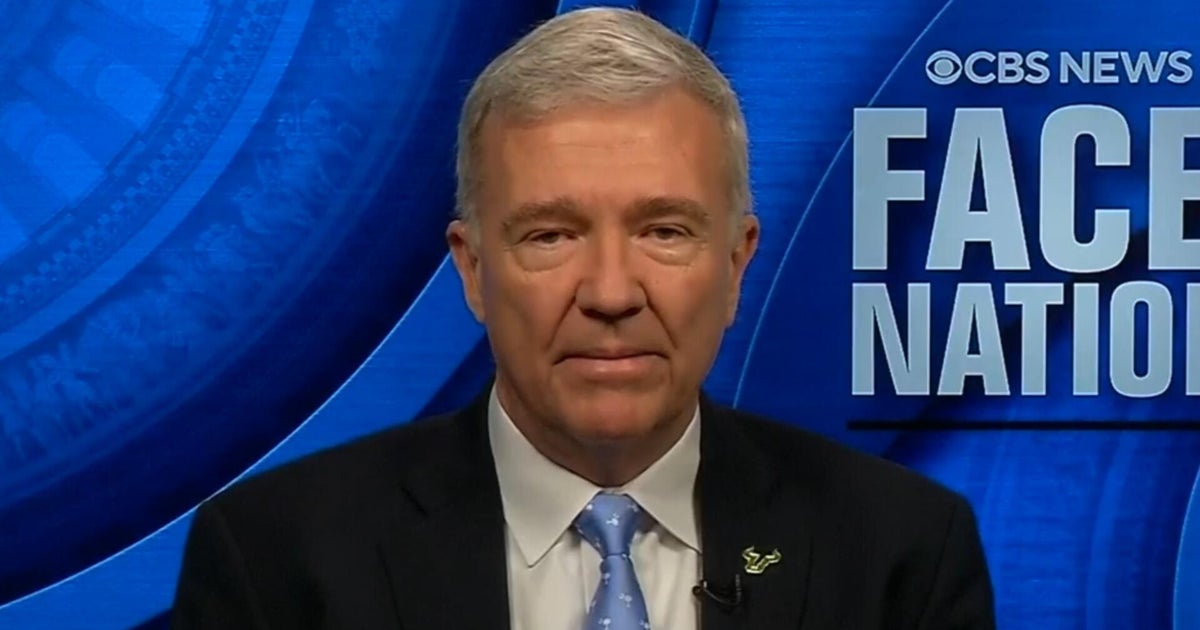
The recent rescue of a downed U.S. weapons systems officer in southwestern Iran has become a defining moment in the ongoing military campaign, demonstrating both American military capabilities and potential weaknesses in Iranian control. Retired General Frank McKenzie, who previously commanded U.S. Central Command, emphasized two crucial takeaways from the 48-hour search and rescue operation. First, he highlighted the exceptional readiness and training of American forces, noting that detailed plans for recovering downed aircrew are integral to every mission over hostile territory. “It takes a year to build an aircraft,” McKenzie explained, “but it takes 200 years to build a military tradition where you don’t leave anybody behind.” This philosophy drove the mission forward, even at the cost of losing additional aircraft during the rescue attempt—a trade-off the general considers worthwhile every time.
Perhaps equally significant was what the incident revealed about Iran’s current situation. Despite the weapons officer hiding in Iranian territory for two days, Tehran’s forces failed to locate him. Even more telling, Iranian authorities’ public appeals to citizens for information about the missing American, complete with reward offers, apparently yielded no results. General McKenzie suggested this lack of cooperation from the Iranian population might indicate growing dissatisfaction with the regime, though he cautioned against drawing definitive conclusions. Nevertheless, for Iranian leadership, the inability to find a foreign military member on their own soil, despite mobilizing both military and civilian resources, represents an embarrassing failure that likely has them concerned about their grip on power and the loyalty of their people.
Iran’s Diminished Capacity to Strike Back
Iran’s Revolutionary Guards have claimed responsibility for recent attacks on petrochemical facilities in the United Arab Emirates, Kuwait, and Bahrain, threatening to intensify strikes against U.S. economic interests if attacks on Iranian civilian targets continue. However, General McKenzie assessed that while Iran and its proxy forces retain some ability to inflict damage, they have lost the capacity to achieve what he calls “mass effects”—the ability to launch large-scale coordinated attacks involving dozens of missiles, rockets, or drones simultaneously. According to McKenzie, this capability has been “steadily eroded” since the campaign began approximately 30 days ago. In fact, the general stated that if someone had predicted this level of success at the one-month mark when he was CENTCOM commander, he would have dismissed it as “too optimistic by far.”
The assessment suggests the U.S. military campaign has been remarkably effective in degrading Iranian offensive capabilities. McKenzie acknowledged that reaching “zero” threat from Iranian missiles and rockets might take additional time, and sporadic attacks will likely continue. However, he expressed confidence that Iran’s ability to launch such attacks will become “increasingly harder” with each passing day, and that the campaign’s pace and effectiveness will continue to accelerate. This represents a significant strategic achievement for U.S. forces, as limiting Iran’s ability to project power beyond its borders has been a central objective of the military operation. The pressure on Iranian leadership continues to mount as their options for meaningful retaliation narrow.
The Controversial Arms Supply to Kurdish Protesters
In a revelation that raised eyebrows about the administration’s true objectives, President Trump disclosed that earlier this year, the United States sent what he described as “a lot of guns” to Kurdish populations in northern Iraq and Iran, intended for use by protesters against the Iranian regime. This admission created tension with the president’s previous statements that the campaign is not aimed at regime change—a claim he reiterated in a major speech just days before. When asked about this apparent contradiction, General McKenzie explained that arming the Kurds should be understood as part of a comprehensive pressure campaign rather than necessarily an outright attempt to topple the government in Tehran.
The general argued that applying pressure on the Iranian regime through multiple channels, including supporting internal resistance movements, serves the ultimate strategic goal even if regime change isn’t the stated objective. Historical precedent shows that Iranian leadership responds when facing existential threats, McKenzie noted. By increasing pressure through various means—including supporting armed Kurdish resistance—the United States moves closer to creating conditions where Tehran might agree to terms favorable to American interests. “Getting the regime in Tehran to a place where they’ll make a deal that’s to our liking is going to be the inevitable byproduct of intolerable pressure,” McKenzie explained. This suggests a strategy of making the status quo so painful for Iranian leaders that they have no choice but to negotiate on U.S. terms, stopping short of actually forcing them from power but fundamentally altering their calculus and behavior.
The Strategic Challenge of Reopening the Strait of Hormuz
The Strait of Hormuz, one of the world’s most vital maritime chokepoints through which roughly a fifth of global oil supplies pass, remains effectively closed—representing perhaps the most significant unresolved challenge of the campaign. President Trump has issued threats demanding Iran reopen the strait, using characteristically colorful language on Easter morning to drive home his point. General McKenzie confirmed that the United States possesses the military capability to forcibly reopen the waterway, and noted that current operations represent “the precursor of the initial steps” in such a campaign. The multi-layered approach involves first degrading Iran’s ability to threaten any reopening operation.
The preparatory phase includes destroying Iran’s capacity to fire short-range missiles and rockets into the strait that could target U.S. warships, eliminating Iran’s fleet of fast attack craft (essentially militarized speedboats that could swarm and damage vessels), and neutralizing Iran’s mine stockpiles. McKenzie noted that while Iran possessed thousands of mines at the war’s outset, U.S. operations have significantly reduced that number, though even a small number of mines can effectively block commercial shipping. Attack aircraft, helicopters, and other low-altitude platforms have proven especially effective at these tasks. Only after sufficiently reducing these threats would the U.S. Navy feel confident sending warships through the strait to “test the waters,” McKenzie explained. The timeline for completing these preparatory steps remains uncertain, but the general expressed confidence that progress toward these goals is proceeding well.
The Potential Ground Operations and the Significance of Kharg Island
While General McKenzie believes the Strait of Hormuz can be reopened primarily through air and naval operations, he didn’t rule out limited ground operations in the form of raids—defined as attacks with planned withdrawals rather than permanent occupation. However, one location stands out as potentially worthy of a more sustained ground presence: Kharg Island. The president has mentioned this strategic location, and McKenzie explained why it occupies such unique importance in military planning. Located in the northern Persian Gulf, Kharg Island serves as the transit point for virtually all Iranian oil exports, making it the jugular vein of Iran’s economy.
Seizing Kharg Island would offer multiple strategic advantages, according to McKenzie. First, it would represent the capture of actual Iranian sovereign territory, creating enormous psychological and political pressure on the regime. Second, controlling the island would allow the United States to completely cut off Iranian oil exports, delivering a devastating blow to Tehran’s economy and its ability to fund military operations and maintain domestic stability. Third, unlike permanently destroying oil infrastructure—which could harm the global economy for years—a temporary seizure creates leverage that can be returned as part of negotiations. This makes Kharg Island what McKenzie called “a very lucrative target” that military planners are almost certainly evaluating closely, even if no final decision has been made about whether to proceed with such an operation. The island represents the perfect pressure point: reversible enough to serve as a bargaining chip, but painful enough to potentially force Iranian capitulation.
Timeline and the Credibility of Presidential Threats
As the campaign approaches its second month, questions about duration and ultimate success remain paramount. President Trump has stated that the operation will take just two to three more weeks to achieve its objectives. General McKenzie, with the caution born of decades of military experience, hesitated to put a definitive timeline on such a complex operation. However, he emphasized one crucial lesson that Iranian leadership should absorb: when President Trump says he’s going to do something, he typically follows through. This track record of matching words with actions, demonstrated repeatedly throughout the current campaign, should serve as a warning to Tehran that presidential threats should be taken seriously.
The general’s assessment suggests that while the specific timeline might prove optimistic, the trajectory of the campaign favors continued American success. The combination of degraded Iranian capabilities, successful operations including the dramatic rescue mission, progress toward reopening the Strait of Hormuz, internal pressure from armed resistance movements, and the potential for operations like seizing Kharg Island all point toward an environment of increasing pressure on the Iranian regime. Whether that pressure translates into capitulation within Trump’s stated timeframe remains uncertain, but McKenzie’s overall message was clear: the United States is winning this campaign, Iranian options are narrowing, and Tehran would be wise to recognize these realities and come to the negotiating table before their situation deteriorates further. The question now is whether Iranian leadership will read the situation accurately and act accordingly, or whether pride and miscalculation will lead them to endure additional military pressure before finally agreeing to terms that the United States finds acceptable.