
Senator Murphy Condemns Military Action Against Iran as Illegal and Disastrous
Calls for Congressional War Powers Vote Amid Growing Crisis
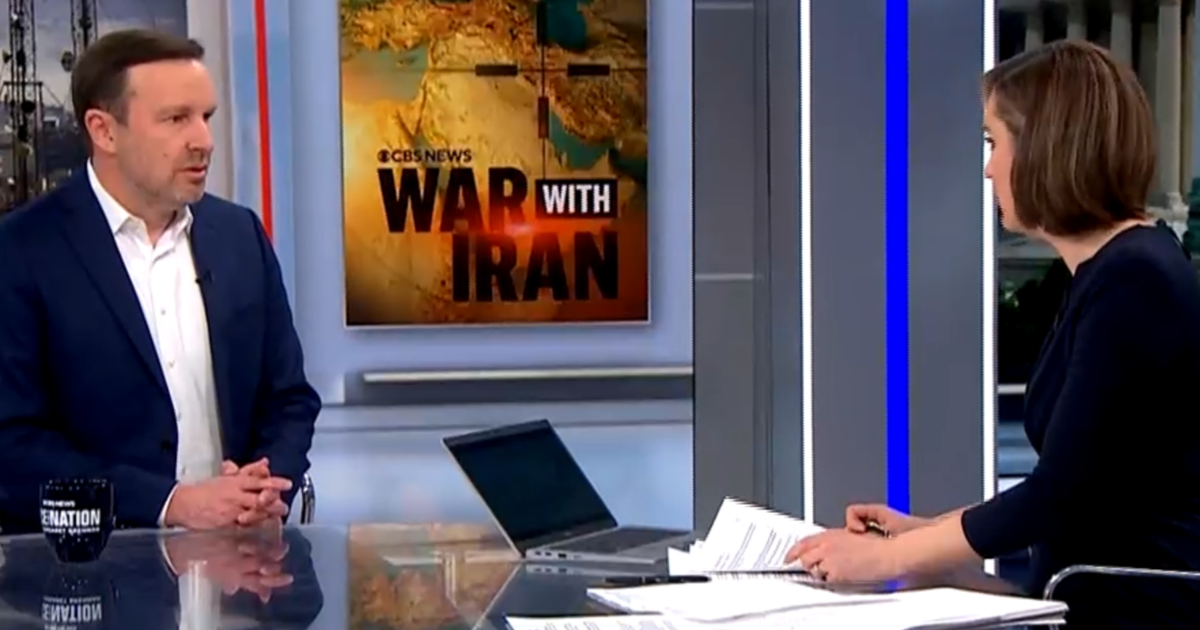
In a tense appearance on “Face the Nation,” Connecticut Democratic Senator Chris Murphy delivered a scathing critique of the current administration’s military engagement with Iran, calling it an illegal war that is needlessly endangering American lives. The Senator demanded that Congress return to Washington to vote on halting the military action, emphasizing that the American people never asked for another Middle Eastern conflict. Murphy characterized the situation as a “disaster” that represents a fundamental violation of the Constitution, which requires the President to seek congressional authorization before committing to military force. He expressed confidence that if such authorization were requested, Congress would refuse to grant it, underscoring the lack of political support for the conflict. The Senator painted a picture of an administration more focused on foreign military adventures than addressing domestic crises, arguing that the President is “intentionally tanking our economy” while being “the most corrupt president in the history of our nation.”
Military Strikes Constitute Full-Scale War, Not Limited Operation
When pressed by host Margaret Brennan on whether the situation truly constitutes a war, Senator Murphy was unequivocal in his assessment. He pointed to the ongoing nature of the military strikes, the American casualties already suffered, and the administration’s stated goal of regime change as clear evidence that this is indeed a war. The Senator dismissed administration characterizations of the Venezuela operation as “limited,” noting that the President himself has described the Iran conflict as open-ended “until peace is achieved.” Murphy outlined the administration’s objectives as regime change and the elimination of Iran’s missile and nuclear programs—goals he believes are fundamentally unachievable through the current military approach. He cited intelligence assessments suggesting that the most likely outcome would be hardline members of Iran’s Islamic Revolutionary Guard Corps replacing current leadership, meaning Americans would die to install an even more hostile government. The Senator also highlighted the futility of attempting to bomb Iran’s nuclear program out of existence, noting that previous claims of having “obliterated the program” were followed by Iran reconstituting its capabilities within a year.
Americans Trapped Worldwide as Violence Spreads Beyond Middle East
The conversation turned to the immediate humanitarian crisis facing American citizens abroad, with Senator Murphy addressing the State Department’s worldwide caution alert and the closure of the U.S. embassy in Israel. He acknowledged the frightening reality that Americans are now trapped in various locations around the world, with limited official assistance available. Murphy advised concerned family members to contact their congressional representatives for help, while sharply criticizing the administration for having “no plan for the chaos that is unfolding right now in the Middle East.” The Senator noted that violence is not contained to the region but is spilling over into Pakistan and other areas, creating a potentially global security crisis. He emphasized that U.S. regional allies, with the exception of Israel’s right-wing government, had strongly opposed the military action precisely because they anticipated this kind of regional spillover. Murphy framed the human cost in stark class terms, arguing that it won’t be the children of billionaires who die in this conflict, but rather the sons and daughters of middle-class and working-class families across America—all for what he termed “a war of choice, a war of vanity, an illegal war.”
Democrats Maintain Stand Against Homeland Security Funding
Despite concerns about cybersecurity threats and potential attacks on American infrastructure following the Iran conflict, Senator Murphy firmly rejected Republican calls for Democrats to abandon their position blocking certain Department of Homeland Security funding. He refused to accept the Republican argument that the war with Iran necessitates full support for DHS operations, particularly those involving Immigration and Customs Enforcement (ICE). The Senator detailed allegations of ICE brutality, including what he characterized as the “murder” of American citizens and the terrorizing of children and families through tactics like tear-gassing schools. Murphy specifically referenced a recent incident involving a blind and disabled Burmese immigrant who was allegedly left “for dead” five miles from his home. He insisted that Democrats can and should demand two things simultaneously: that ICE stop what he called illegal brutality against American citizens, and that the administration cease sending American soldiers to die in an unnecessary war. When Brennan questioned whether the current DHS funding was adequate to protect the homeland, Murphy maintained that he has no obligation to fund a department that he believes is “violating the law every day.”
Trump Administration Precipitated Nuclear Crisis
Addressing questions about whether military confrontation with Iran was inevitable regardless of which administration was in power, Senator Murphy squarely placed responsibility on the current President. He reminded viewers that Donald Trump “inherited a nuclear agreement that was working” —the Joint Comprehensive Plan of Action (JCPOA)—which had successfully kept Iran more than a year away from developing a nuclear weapon. Against the advice of his own advisers, Trump withdrew from this agreement, a decision Murphy identified as the direct cause of the current crisis. When Brennan noted that the JCPOA would have expired by now anyway, the Senator countered that Iran would likely have been willing to extend its provisions if the United States had remained committed to the agreement. Murphy also challenged the administration’s strategic approach on fundamental military grounds, noting that there is no historical precedent for successful regime change achieved through air campaigns alone. He emphasized that throughout American history, air strikes without at least the threat of ground invasion have never resulted in democratic transitions in authoritarian countries. Since the administration has publicly ruled out a ground invasion, Murphy argued their strategy is “destined to fail,” likely resulting in hardline leaders restarting both missile and nuclear programs, creating a cycle of violence that will put American and regional lives at risk for years to come.
Standoff Continues with No End in Sight
The interview concluded with a stark assessment of the political stalemate gripping Washington. When asked if the three-week standoff would end anytime soon, Senator Murphy indicated it would continue unless the administration commits to legally prosecuting immigration enforcement. He framed the Democratic position as aligned with what “the people want”—legal behavior from ICE and no overseas wars—suggesting that Democrats are standing with the American public on both domestic and international crises. The Senator expressed willingness to immediately provide votes for DHS funding if the administration agrees to adhere to the law, but showed no indication of backing down from his position. Murphy’s appearance painted a picture of deepening divisions in Washington at a moment of genuine national security crisis, with Americans trapped abroad, regional violence spreading, and fundamental disagreements about both the legality and wisdom of military action. The constitutional showdown over war powers, combined with the domestic standoff over immigration enforcement, suggests that the political paralysis may continue even as international events escalate, leaving critical questions about American strategy and the safety of citizens both at home and abroad unresolved.