
Senator Tim Kaine Sounds Alarm on Middle East Crisis and Homeland Security Standoff
Growing Threats to American Diplomats and Citizens Abroad
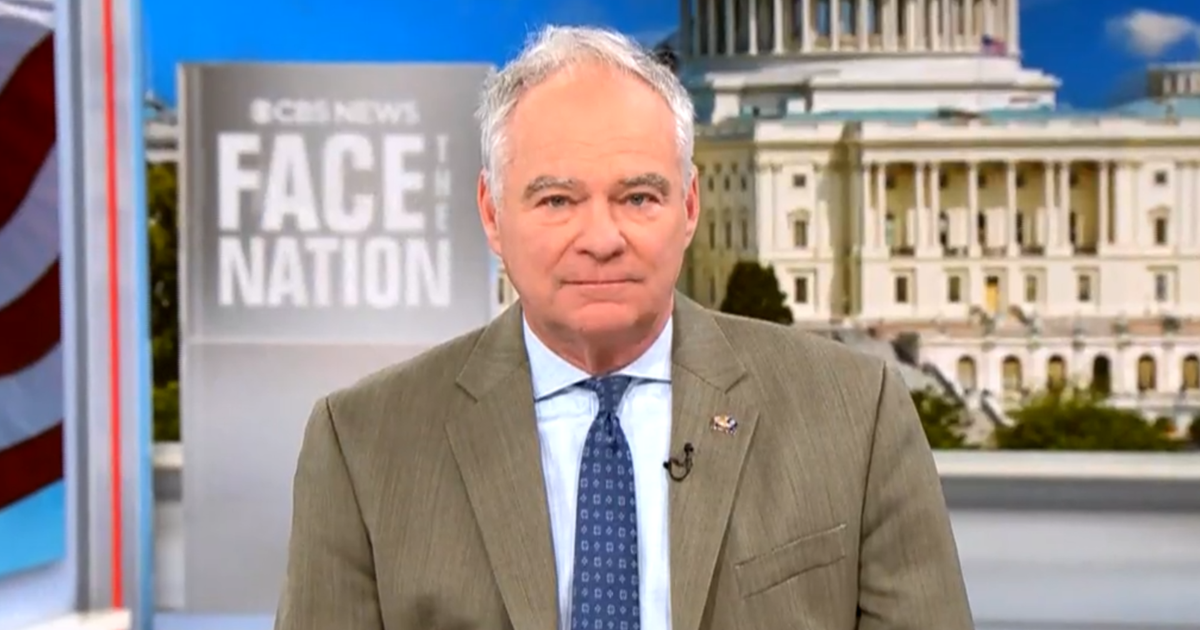
In a revealing interview on “Face the Nation,” Virginia Democratic Senator Tim Kaine painted a troubling picture of the escalating dangers facing Americans overseas. The senator disclosed that an explosion near the U.S. Embassy in Oslo, which Norwegian authorities believe may have been a deliberate attack related to current security tensions, represents just one incident in a broader pattern of threats against American diplomatic posts worldwide. Through his work on the Foreign Relations Committee, Kaine has been in constant communication with State Department personnel who report increased security measures at embassies and consulates, with some locations experiencing protests that have turned violent or at least created frightening situations for American diplomats. Perhaps most concerning, thousands of American citizens remain stranded throughout the Middle East region. The senator expressed frustration that these citizens were advised to return home only after commercial flights had already ceased operations, leaving them with limited options for evacuation. His office has been working throughout the week to help Virginians find ways to return safely, including successfully facilitating the return of one Richmond-area resident from Dubai. The situation became even more poignant with the return of the first American casualties from the conflict, including a fellow Virginian, prompting Kaine to ask a haunting question: “Have we learned nothing from 25 years of war in the Middle East?”
Concerns About Diplomatic Staff Safety and Inadequate Security
Beyond the stranded civilians, Senator Kaine expressed deep concern about the professional diplomatic staff who continue to serve at various embassies and consulates throughout the region. Unlike American tourists or business travelers who have at least been advised to leave, many State Department employees have not received instructions to evacuate, leaving them in potentially dangerous positions with what Kaine described as inadequate security presence. The senator emphasized the nation’s obligation to protect these brave professionals who continue to represent American interests abroad, often under increasingly perilous circumstances. This vulnerability has been underscored by security incidents like the Oslo explosion and the general deterioration of safety conditions across the region. Kaine’s comments highlight a concerning gap in the government’s response—while acknowledging the danger enough to advise civilians to leave, officials haven’t extended the same protective measures to the diplomats who must remain at their posts. This disconnect raises questions about whether the administration has fully grasped the scope of the threat or whether diplomatic considerations are being prioritized over personnel safety in a rapidly evolving crisis situation.
The Homeland Security Funding Impasse and Its Consequences
Back on American soil, a separate but equally serious crisis has been unfolding for four weeks: a partial shutdown of the Department of Homeland Security that has left thousands of essential workers without paychecks. Senator Kaine addressed the uncomfortable reality that Coast Guard personnel, Secret Service agents, and TSA officers are working without pay while the agencies at the center of the political dispute—Immigration and Customs Enforcement (ICE) and Customs and Border Protection (CBP)—remain fully funded. When pressed on whether this Democratic strategy is effective given that it doesn’t apply pressure to the agencies where Democrats want to see policy changes, Kaine explained that his party has actually proposed a solution: pass the already-negotiated funding bills for the agencies not in dispute, such as TSA, FEMA, Coast Guard, and the Cybersecurity and Infrastructure Security Agency (CISA), while continuing discussions about reforms to ICE and CBP separately. According to the senator, Republicans have thus far blocked these efforts, insisting on an all-or-nothing approach. Kaine pointed out that ICE and CBP aren’t facing immediate funding crises anyway, since Republicans provided them with money last summer through a reconciliation bill, giving lawmakers more time to work out the necessary reforms without holding other critical agencies hostage.
Urgent Security Threats Demand Resolution
The urgency of resolving the homeland security funding standoff became even more apparent when Margaret Brennan referenced a critical incident note obtained by CBS News. According to the Department of Homeland Security document, Iranian religious leaders have issued fatwas calling on Muslims to avenge the death of their supreme leader. While DHS noted that similar religious edicts haven’t necessarily inspired attacks in the past, the current volatile situation raises the stakes considerably. Senator Kaine readily acknowledged that this development is cause for serious concern and agreed that it provides another compelling argument for ending the standoff immediately. He reiterated his position: fund all the agencies that currently lack appropriations and confine the contentious discussions about operational reforms to ICE and CBP specifically. When asked why this common-sense solution hasn’t been implemented, Kaine explained that Democrats have offered this approach on the Senate floor, but Republicans have consistently rejected it, maintaining their position that everything must be funded together or nothing gets funded at all. Meanwhile, Democrats have made their position equally clear: ICE and CBP need significant reforms, a view they believe is shared by the American public, and they won’t budge on this fundamental issue.
Leadership Crisis at Homeland Security and the Stephen Miller Shadow
The conversation then turned to the leadership vacuum at the Department of Homeland Security following Secretary Kristi Noem’s departure. Senator Kaine admitted that he regrets having voted to confirm Noem, calling it a “big mistake.” He explained that his initial support was based on the traditional assumption that governors often make effective cabinet secretaries due to their executive experience managing large state bureaucracies. However, what became clear during Noem’s brief tenure was that she wasn’t actually making the key decisions—that power rested with senior White House advisor Stephen Miller. This revelation has significant implications for considering her potential replacement, Senator Markwayne Mullin. Kaine expressed concern that Mullin might similarly serve as merely a figurehead while Miller continues to control policy and operations from behind the scenes. The Virginia senator emphasized that what Democrats are seeking isn’t simply a different name on the office door, but fundamental reforms to how ICE and CBP operate. He advocated for basic standards that local law enforcement agencies routinely follow: obtaining judicial warrants before entering private homes, wearing body cameras to ensure accountability, and not concealing identities behind masks. Kaine drew a direct comparison to small-town police departments like the one in Ashland, Virginia, arguing that if local officers can operate under these constraints, there’s no reason federal agencies shouldn’t be held to the same standards of transparency and constitutional compliance.
The Costs of Conflict and Congressional Oversight
As a member of the Senate Armed Services Committee, Senator Kaine also addressed the financial and human costs of the expanding Middle East conflict. Reports suggest the Pentagon may request a supplemental budget to fund military operations, with the Center for Strategic and International Studies estimating that just the first 100 hours of combat cost nearly $4 billion. However, Kaine revealed that during a recent classified briefing, administration officials stated they haven’t yet decided whether to submit such a request. The senator outlined his two primary objectives regarding any potential supplemental funding: stopping what he considers an illegal and unwise war, and protecting American troops who he believes have been exposed to unnecessary risk by President Trump’s decisions. Kaine acknowledged that the administration might be deliberately delaying a supplemental request to avoid Congressional debates and votes about the Iran war, particularly after he lost a war powers resolution vote earlier in the week. Despite that setback, he made clear his intention to continue pushing for Congressional oversight and debate about whether this conflict serves American interests after a quarter-century of Middle Eastern military engagements. The interview concluded with Kaine expressing grave concern about Americans being held in Iranian prisons, including journalist Reza Valizadeh and 70-year-old Kamran Hekmati, particularly given reports of civilian casualties from what may be U.S. bombing operations. His worry was straightforward and chilling: if schoolchildren are being killed in airstrikes, what fate might await American prisoners held by an increasingly antagonized Iranian government?