
Intelligence Briefings Contradict White House Claims on Iran Threat Assessment
Conflicting Messages on Iranian Threat Levels
In a significant development that raises questions about the justification for military action against Iran, Trump administration officials provided congressional staff with intelligence briefings on Sunday that painted a different picture than what the White House had been publicly claiming. According to four sources familiar with these closed-door sessions, U.S. intelligence agencies did not have information suggesting that Iran was actively preparing to launch an immediate, preemptive strike against American interests. Instead, officials described a more general threat environment in the region, one characterized by Iran’s missile capabilities and the activities of its proxy forces throughout the Middle East. This characterization stands in stark contrast to the imminent threat narrative that President Donald Trump and his administration had been presenting to the American public as the primary rationale for conducting military strikes against Iranian targets. The discrepancy between the private briefings and public statements has sparked concern among lawmakers and raises important questions about the decision-making process that led to what has now escalated into major combat operations.
Presidential Statements and Justifications for Military Action
The contradiction between intelligence assessments and official White House communications became particularly apparent when examining President Trump’s own words in the days surrounding the strikes. In his video address announcing the military operation, Trump explicitly stated that “our objective is to defend the American people by eliminating imminent threats from the Iranian regime.” This language of imminent danger was echoed by senior administration officials who, during weekend calls with reporters, indicated they had intelligence showing potential Iranian preparations for a preemptive attack against U.S. forces and allies stationed throughout the region. The president further elaborated on what he perceived as the Iranian threat during conversations with ABC News while meeting with military leaders over the weekend. Trump suggested that without Operation Midnight Hammer—which he described as “one of the greatest things [this] country has ever done”—the United States would have faced an Iranian nuclear weapon within a month. He went on to claim that despite negotiations that “at some points were going very well,” intelligence showed Iran was working on developing nuclear capacity at alternative sites, which the administration was “not going to put up with.” These statements painted a picture of urgent, immediate danger that appears inconsistent with what congressional staffers were being told in classified briefings.
Defense Department’s Broader Historical Justification
As questions began to emerge about the specific intelligence that prompted the strikes, Defense Secretary Pete Hegseth offered a somewhat different framework for understanding the military action during a Monday press briefing. Rather than focusing exclusively on imminent threats, Hegseth characterized the strikes as a response to decades of Iranian aggression against American interests. “We didn’t start this war, but under President Trump, we are finishing it,” Hegseth declared. “Their war on Americans has become our retribution against their Ayatollah and his death cult.” He went further, suggesting that it required “the 47th president, a fighter who always puts America first, to finally draw the line after 47 years of Iranian belligerence.” This rhetorical shift—from preventing an imminent attack to settling a decades-long conflict—represented yet another variation in how the administration was framing its justification for military action. By positioning the strikes within this broader historical context, Hegsent appeared to be acknowledging that the operation wasn’t solely about preventing an immediate threat, but rather about addressing what the administration viewed as a pattern of Iranian hostility stretching back to the 1979 Islamic Revolution.
The Military Operation and Its Escalating Consequences
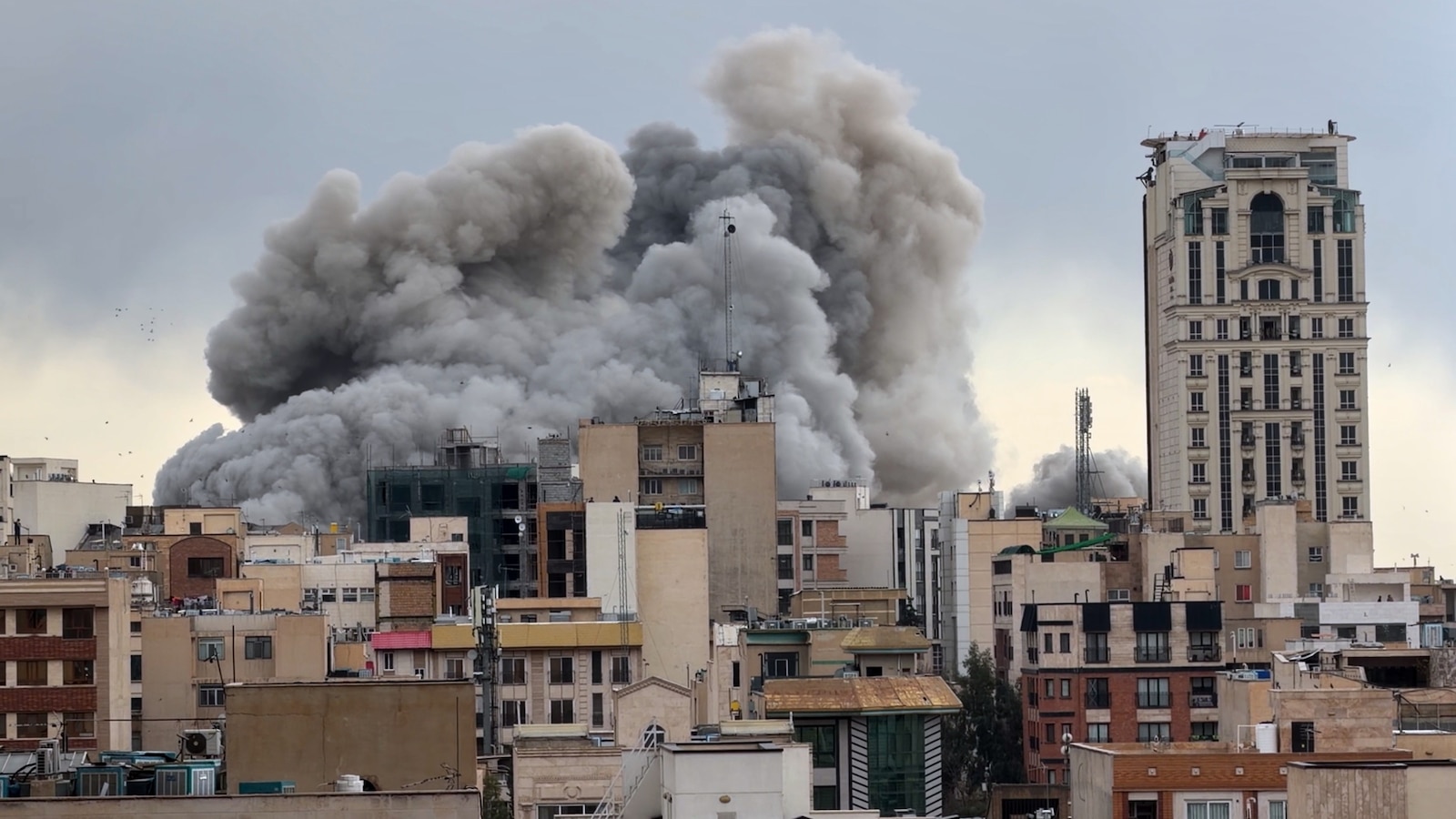
The military action itself has proven to be far more extensive and consequential than initial reports suggested. Working in coordination with Israel, the United States launched strikes on Saturday that resulted in the death of Iranian Supreme Leader Ayatollah Ali Khamenei in Tehran—a development of enormous historical significance. President Trump later revealed to Fox News that the initial strikes killed 49 senior Iranian leaders, representing a devastating blow to the country’s leadership structure. However, these strikes did not occur in a vacuum, and Iran’s response has been swift and forceful. Following the U.S.-Israel operation, Iran launched retaliatory strikes involving both missiles and drones, targeting not only Israel but also regional U.S. military bases and American allies in the Gulf nations. The conflict has already resulted in the deaths of at least six U.S. servicemembers, with military officials warning that more casualties are expected. During a Monday briefing, General Dan Caine, chairman of the Joint Chiefs of Staff, soberly acknowledged that “we expect to take additional losses” while emphasizing that efforts would be made to minimize American casualties. Caine characterized the ongoing operations as “major combat operations” and made clear that “this is not a single overnight operation,” indicating that achieving the military objectives would “take some time.”
Promises of Further Escalation
Perhaps most concerning for those hoping for a quick resolution to the conflict, President Trump has made it abundantly clear that the military campaign is far from over. In characteristically blunt language, Trump told CNN’s Jake Tapper that the U.S. military is “knocking the crap” out of Iran but that what has occurred so far is merely a prelude to something much larger. “We haven’t even started hitting them hard. The big wave hasn’t even happened. The big one is coming soon,” the president stated Monday morning. These comments suggest that despite the already significant military action that has killed dozens of Iranian leaders including the Supreme Leader, claimed American lives, and triggered retaliatory strikes across the region, the administration is planning an even more intensive phase of military operations. This promise of escalation raises profound questions about the scope and objectives of the campaign, the potential for further casualties on all sides, and the risk of drawing other regional or global powers into a wider conflict. The threat of a “big wave” also complicates the already murky question of what exactly the administration’s endgame looks like and what conditions might lead to a cessation of hostilities.
Questions About Transparency and Congressional Oversight
The revelation that congressional staff received intelligence briefings substantially different from the public justifications offered by the White House raises serious questions about transparency, the war powers process, and the relationship between the executive branch and Congress when it comes to matters of war and peace. While presidents of both parties have historically guarded their prerogatives when it comes to military action, the apparent disconnect between classified intelligence assessments and public statements is particularly troubling to lawmakers who bear constitutional responsibility for declarations of war and funding for military operations. The fact that intelligence officials told congressional staff there was no indication Iran was preparing an imminent preemptive strike—while the president and his team publicly emphasized exactly such a threat—suggests either a fundamental disagreement about threat assessment between the intelligence community and political leadership, or a deliberate choice to emphasize certain aspects of the threat picture while downplaying others. As the conflict continues to escalate, with promises of even more intensive military action to come and American servicemembers already killed in action, the question of whether Congress and the American people received an accurate picture of the intelligence and the decision-making process will likely remain a subject of intense scrutiny and debate for years to come.