


Trump Administration Exempts Gulf Oil Drilling from Endangered Species Protections
National Security Claims Drive Controversial Environmental Rollback
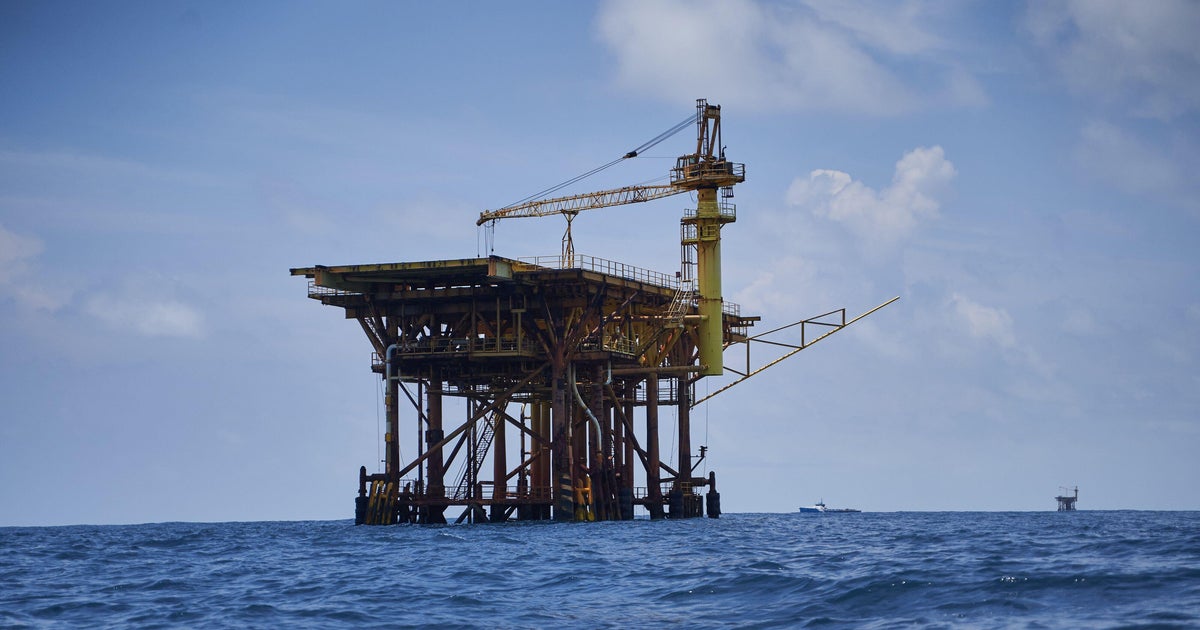
In a dramatic move that environmental advocates are calling unprecedented and potentially catastrophic for marine life, the Trump administration has granted oil and gas drilling operations in the Gulf of Mexico an exemption from the Endangered Species Act. The decision came Tuesday from a rarely convened government panel known informally as the “God Squad” – the Endangered Species Committee – which met for the first time in over thirty years. Defense Secretary Pete Hegseth justified the exemption by citing national security concerns, arguing that ongoing lawsuits from environmental groups threatened to disrupt domestic energy production at a critical time when the United States is engaged in military conflict with Iran. The committee, chaired by Interior Secretary Doug Burgum and comprising several high-ranking Trump administration officials, voted unanimously to approve the exemption despite fierce opposition from conservation groups who warn the decision could drive at least one whale species to complete extinction.
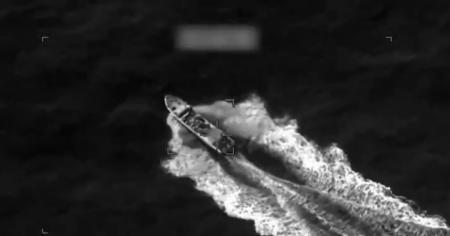
The timing of this decision coincides with significant volatility in global energy markets. As the U.S. confronts Iran militarily, oil prices have surged dramatically, with the national average for gasoline exceeding $4 per gallon for the first time since 2022. Secretary Hegseth emphasized that disruptions to Gulf oil production would not only harm American interests but would simultaneously benefit adversarial nations. “We cannot allow our own rules to weaken our standing and strengthen those who wish to harm us,” Hegseth told committee members, framing environmental protections as potential obstacles to national security. He specifically cited Iran’s attempts to block shipping through the Strait of Hormuz – the world’s busiest oil transit route – as evidence that robust domestic oil production represents a national security imperative. According to Hegseth, pending litigation from environmental organizations “threatened to halt” oil production in the Gulf, creating an unacceptable vulnerability in America’s energy supply during wartime. This marks the first time national security justifications have been invoked to obtain an Endangered Species Committee exemption, setting a precedent that could have far-reaching implications for future environmental policy decisions.
The Rice’s Whale: A Species on the Brink of Extinction
Environmental scientists and legal experts have responded to the exemption with alarm, particularly regarding its potential impact on the Rice’s whale, one of the world’s rarest marine mammals. This whale species is found exclusively in the Gulf of Mexico, and government biologists estimate that only approximately 50 individuals remain in existence. Patrick Parenteau, an emeritus professor of law at Vermont Law School, described the precarious situation bluntly: “If Trump is successful here, he could be the first person in history to knowingly extirpate a species from the face of the earth. That’s how precarious the condition of the Rice’s whale is.” The species has already suffered devastating losses in recent decades, with scientists documenting a 22% population decline following BP’s catastrophic Deepwater Horizon blowout in 2010, which killed eleven workers and released 134 million gallons of oil into Gulf waters. Researchers indicate that the whale population could require decades to recover from that single disaster, making any additional threats particularly dangerous for the species’ survival.
Beyond the Rice’s whale, a 2025 analysis by the National Marine Fisheries Service determined that Gulf oil and gas operations are likely to harm several other protected species, including multiple whale species, various sea turtles, and the Gulf sturgeon. These animals face multiple threats from drilling activities, including ship strikes, oil spills, noise pollution, and habitat degradation. The exemption effectively removes legal protections that would have required oil companies to take measures to avoid harming these species during their operations. Recent events underscore the ongoing risks: earlier this month, an oil spill off the Mexican coast in the Gulf spread across 373 miles of ocean, contaminating at least six species and polluting seven protected natural reserves. Critics of the exemption point to such incidents as evidence that expanded drilling without environmental safeguards could trigger ecological disasters with consequences extending far beyond any single species. Former federal disaster response specialists have also raised concerns that personnel and funding cuts implemented during the early months of Trump’s second term could hamper the government’s ability to respond effectively to future oil spills and environmental emergencies in the region.
Industry Benefits and Streamlined Approval Processes
For the oil and gas industry, the exemption represents a significant victory that could fundamentally transform how drilling projects are approved and implemented. The Gulf of Mexico ranks among the nation’s most productive oil regions, generating approximately 2 million barrels of crude oil daily and accounting for nearly 15% of all oil pumped annually in the United States, along with a modest portion of domestic natural gas production. Industry representatives have long complained that environmental litigation creates costly delays and uncertainty for drilling projects. Erik Milito, speaking for the National Ocean Industries Association, which represents offshore developers, welcomed the exemption: “Serial litigation from activist groups targeting a lawful, well-regulated industry should not be allowed to indefinitely obstruct projects of clear national importance.” The exemption is expected to streamline the approval process for new drilling projects significantly while simultaneously limiting the ability of environmental groups to challenge or delay operations through legal action.
The decision fits within President Trump’s broader energy agenda, which has made increased fossil fuel production a centerpiece of his second term. The administration has moved aggressively to reverse environmental policies implemented by former President Joe Biden, who, during his final days in office, sought to ban new offshore oil and gas drilling in most U.S. coastal waters, citing climate change concerns. Trump has not only reversed these protections but has also proposed opening new areas of the Gulf off Florida’s coast to drilling – regions that have been off-limits to drilling in federal waters since 1995 due to oil spill concerns. In mid-March, the administration approved BP’s new $5 billion ultra-deepwater drilling project in the Gulf, signaling its commitment to expanded production. Trump has publicly expressed frustration with the 1973 Endangered Species Act and similar environmental regulations, characterizing them as impediments to economic growth. His administration is pursuing additional plans to overhaul the Endangered Species Act more comprehensively, making it easier to build and develop in areas where endangered species live, potentially affecting protected species across the entire country, not just in the Gulf.
Legal Challenges and the “God Squad’s” Controversial History
The Endangered Species Committee, nicknamed the “God Squad” by conservation groups who say it possesses the power to decide a species’ fate, was established in 1978 as a mechanism to exempt specific projects from Endangered Species Act protections under extraordinary circumstances. The committee’s authority can be exercised when no alternative would provide comparable economic benefits in a region or when exemption serves the nation’s best interest. However, this power has been invoked sparingly throughout its history. Before this week’s decision, the panel had convened only three times and issued merely two exemptions over more than four decades. The first exemption, granted in 1979, allowed construction of a dam on Wyoming’s Platte River despite the presence of whooping cranes. The committee’s most recent prior meeting occurred in 1992, when it permitted logging in Oregon’s northern spotted owl habitats, though that exemption was subsequently withdrawn before implementation. The extreme rarity of the committee’s meetings underscores the exceptional nature of this week’s action and explains why environmental groups view it as such a dramatic departure from established precedent.
Environmental organizations attempted unsuccessfully to block Tuesday’s meeting through legal channels and have pledged to mount court challenges against the exemption. Andrew Bowman, President of Defenders of Wildlife, condemned the action in strong terms: “The Endangered Species Act has not slowed an iota of oil from being extracted from the Gulf. I cannot stress enough how unprecedented and unlawful this action is.” Conservation groups argue that the exemption was granted through an illegally rushed process that failed to adequately consider alternatives or assess the full environmental consequences. Professor Parenteau dismissed Hegseth’s national security claims as pretextual, noting that oil companies have continued exploring for and extracting oil in the Gulf despite legal challenges related to the Rice’s whale, suggesting that litigation has not actually prevented production as the administration claimed. The legal battle over this exemption follows closely on the heels of another judicial setback for Trump’s environmental policies: on Monday, just one day before the committee met, a federal judge struck down attempts from Trump’s first term to weaken endangered species regulations, suggesting that courts may view the administration’s broader deregulatory agenda with skepticism.
Broader Implications for Environmental Policy and Species Protection
This exemption represents potentially the most significant weakening of Endangered Species Act protections since the law’s passage in 1973, which made it illegal to harm or kill species on the protected list. The decision sets a troubling precedent by establishing that national security claims can override protections for species on the verge of extinction, even when the security justifications are disputed and the species’ survival hangs by a thread. Environmental legal experts worry that this reasoning could be extended to other contexts, allowing future administrations to circumvent environmental laws whenever economic or security arguments can be constructed, no matter how tenuous. The composition of the committee – including the secretaries of agriculture, interior, and the Army, the chairperson of the Council of Economic Advisers, and the administrators of both the Environmental Protection Agency and the National Oceanic and Atmospheric Administration – means that Trump-appointed officials controlled all votes, raising concerns about the independence and scientific rigor of the decision-making process.
The outcome of this controversy will likely shape environmental policy and species protection efforts for years to come. If courts uphold the exemption, it could effectively create a blueprint for evading endangered species protections whenever economic interests clash with conservation priorities. Conservation organizations argue that the Endangered Species Act has been remarkably successful at preventing extinctions over its five-decade history, and that weakening it now, particularly for a species as critically endangered as the Rice’s whale, represents an abandonment of America’s commitment to preserving biodiversity for future generations. The broader context of climate change makes these decisions even more consequential, as expanded fossil fuel production contributes to environmental conditions that threaten species worldwide, creating a feedback loop where regulatory rollbacks enable activities that generate further ecological harm. As legal challenges move forward and the Rice’s whale population continues its precarious existence in Gulf waters increasingly dominated by drilling operations, the “God Squad’s” decision will test whether America’s foundational environmental protections can withstand pressure from powerful economic and political forces, or whether rare species will become acceptable casualties in pursuit of energy independence and national security objectives.