


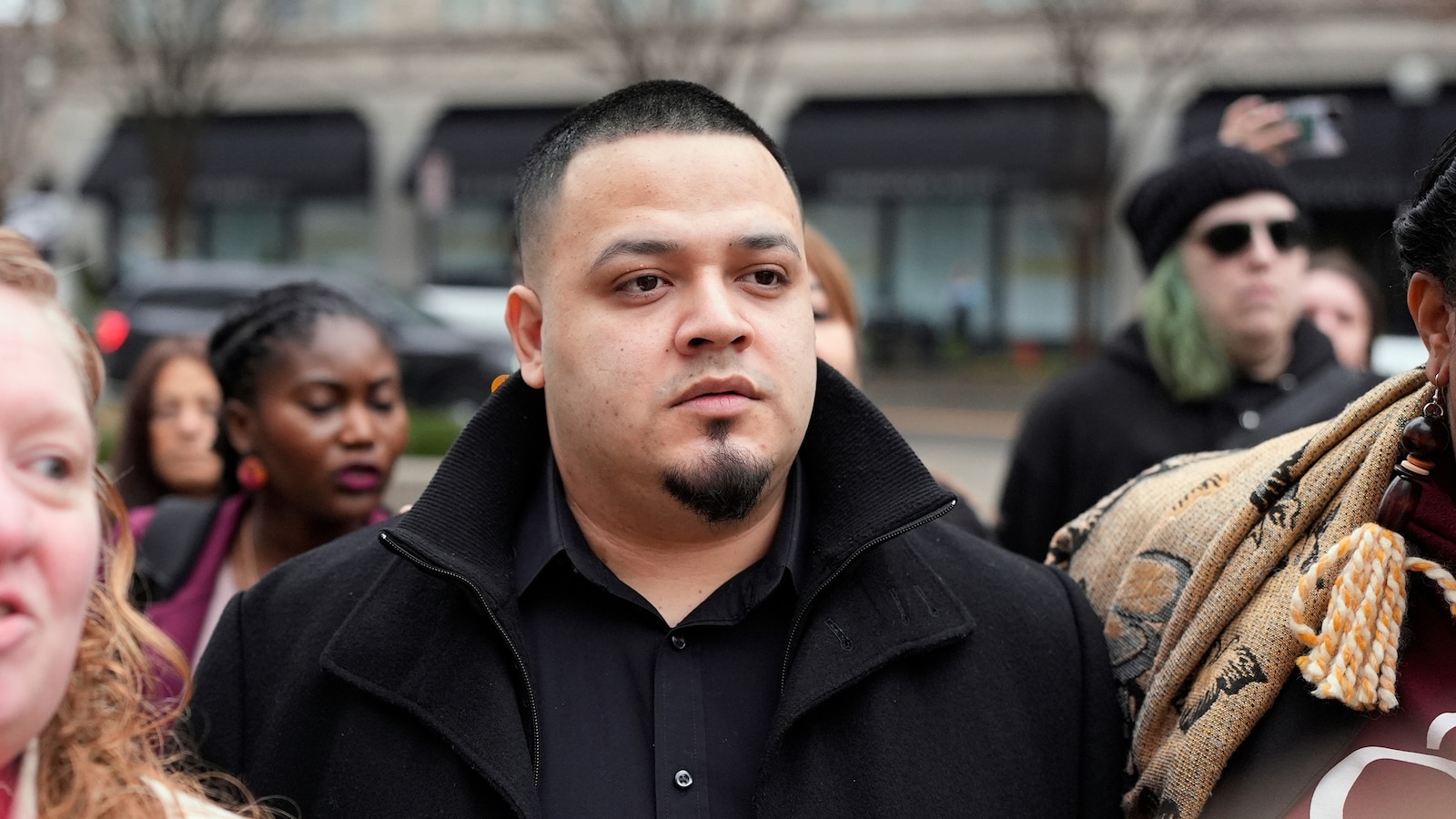

Trump Administration Pushes Forward with Controversial Deportation to Liberia
A Case That Challenges Immigration Law and Human Rights
The Trump administration is advancing its controversial plan to deport Kilmar Abrego Garcia to Liberia, a country with which he has no apparent connection, marking a dramatic escalation in immigration enforcement that legal experts say tests the boundaries of executive power. On Friday, administration officials filed multiple court documents requesting that a federal judge dissolve a preliminary injunction currently protecting Abrego Garcia from re-detention and deportation. The case has become a flashpoint in debates over immigration policy, with the administration’s choice of Liberia as a destination raising questions about the limits of governmental discretion in removal proceedings and the treatment of individuals caught in the immigration system.
Abrego Garcia’s story is both complex and troubling. A native of El Salvador who had been living peacefully in Maryland with his wife and children, his life was upended last March when he was deported to El Salvador’s notorious CECOT mega-prison. This detention occurred despite a 2019 court order that specifically barred his deportation to El Salvador due to legitimate fears of persecution he would face there. The Trump administration justified this action by claiming Abrego Garcia was a member of MS-13, one of Central America’s most dangerous criminal gangs—an allegation he and his legal team have consistently and vehemently denied. The situation became even more complicated when he was returned to the United States in June to face human smuggling charges, to which he has pleaded not guilty. Now, rather than being sent to a country he has requested or one with which he has cultural ties, the administration has selected Liberia, a West African nation, as his destination.
The Administration’s Justification and Legal Arguments
Acting Immigration and Customs Enforcement Director Todd Lyons has made the administration’s position clear in a memo filed with the court: he has “decided to disregard” Abrego Garcia’s request to be sent to Costa Rica and fully intends to deport him to Liberia if a removal order is issued. The reasoning behind this decision reveals the administration’s interpretation of immigration law and its view of executive discretion. Lyons pointed out that during Abrego Garcia’s initial removal proceedings in 2019, he had designated his home country of El Salvador as his preferred destination before a judge determined that sending him there would put his life at risk. Only six years later did he attempt to designate Costa Rica as an alternative country of removal. According to Lyons, immigration statutes and regulations don’t permit individuals to designate a removal country beyond the initial opportunity provided during removal proceedings. The administration argues that allowing such changes would create a system where individuals could indefinitely avoid deportation by continuously naming new countries, essentially gaming the system to remain in the United States.
Beyond the legal technicalities, the administration has also emphasized diplomatic considerations in its decision-making. Lyons revealed that officials had already negotiated Abrego Garcia’s removal with the Liberian government, and abandoning that agreement now “could cast doubt on the diplomatic reliability of the United States.” This argument suggests that once the government has made arrangements with a foreign country to accept a deportee, backing out would damage America’s credibility in international negotiations. In his memo, Lyons concluded that “after careful consideration, I have decided that Mr. Abrego Garcia’s removal to Costa Rica at this time would be ‘prejudicial to the United States.'” This phrase carries significant legal weight in immigration law, as it invokes the government’s broad authority to determine what serves the national interest in removal cases.
The Logistics and Timeline of Removal
The administration’s preparations reveal just how seriously it is taking this case and how quickly it wants to move forward. In a sworn declaration submitted to the court, a senior ICE Enforcement and Removal Operations official disclosed that the government has already coordinated with the contractor responsible for handling deportations to Liberia. This contractor has prepared a “mock itinerary” demonstrating that Abrego Garcia could be placed on a flight to Liberia within just five days of the government making the official request. This level of advance planning shows that the administration is not merely threatening deportation as a negotiating tactic but has concrete plans ready to execute immediately upon receiving judicial approval. The government has specifically asked the federal judge overseeing the case to rule on its motion to dissolve the protective order by April 17, creating a tight timeline that could see Abrego Garcia on a plane to West Africa within weeks if the judge rules in the administration’s favor.
In their court filings, government attorneys adopted a forceful tone that underscores their view of the case. They wrote that “any attempt by this Court to permanently enjoin the government from exercising its authority to remove the Petitioner from this country is in direct contradiction to established judicial norms, and a clear error of law.” This language suggests the administration views the case not merely as a dispute over one individual’s deportation but as a fundamental question about the separation of powers and whether courts can interfere with executive branch decisions on immigration enforcement. The argument essentially positions the judiciary as overstepping its bounds if it continues to block the removal, framing the issue as one of constitutional authority rather than simply the merits of this particular case.
The Human Cost and Broader Implications
At the heart of this legal battle is a human being whose fate hangs in the balance. Kilmar Abrego Garcia had built a life in Maryland with his wife and children before being swept up in immigration enforcement actions. His experience illustrates the precarious position of many immigrants in the United States, where years of establishing roots and family connections can be suddenly disrupted by deportation proceedings. His initial deportation to El Salvador’s CECOT mega-prison—despite a court order protecting him from exactly that outcome—raises serious questions about whether immigration enforcement agencies are respecting judicial authority and the rule of law. The conditions at CECOT are known to be harsh, with reports of human rights concerns, making his detention there particularly troubling given that a court had previously determined he faced persecution risks in his home country.
The decision to send Abrego Garcia to Liberia, a country with which he appears to have no connection whatsoever, represents a particularly unusual aspect of this case. Typically, deportations are to an individual’s country of origin or to a country where they have significant ties—family, language, cultural connections, or previous residence. Liberia, located thousands of miles from El Salvador in West Africa, shares neither Abrego Garcia’s language nor culture. The choice seems driven entirely by which country was willing to accept him and by the administration’s determination not to honor his preference for Costa Rica. This approach to deportation raises ethical questions about whether the government is using deportation not merely to remove someone from the United States but as a form of punishment by deliberately choosing the most disruptive destination possible. Critics of the administration’s immigration policies are likely to point to this case as an example of cruelty in enforcement, while supporters may argue it demonstrates a commitment to removing individuals regardless of obstacles or appeals to sympathy.
The case also illuminates larger tensions in American immigration policy between humanitarian considerations and enforcement priorities. Abrego Garcia’s denial of MS-13 membership, his family ties in the United States, the previous court finding that his life would be at risk in El Salvador, and his willingness to go to Costa Rica all point toward outcomes that might balance enforcement with compassion. Yet the administration’s position appears to prioritize showing that it cannot be deterred from removals once decided upon, even when alternative solutions might achieve the same enforcement goal with less disruption to the individual and his family. As this case moves forward, it will be watched closely by immigration advocates, legal scholars, and enforcement officials as a potential precedent for how much discretion the executive branch has in determining not just whether someone should be deported, but where they will be sent—and whether that discretion extends to choosing destinations that seem designed more to demonstrate governmental authority than to serve any obvious practical purpose. The federal judge’s decision on whether to maintain or dissolve the protective injunction will determine Abrego Garcia’s immediate fate and may influence how similar cases are handled in the future.