


Trump Defends Commerce Secretary Amid Epstein Controversy
President Stands by Lutnick as Democrats Demand Answers
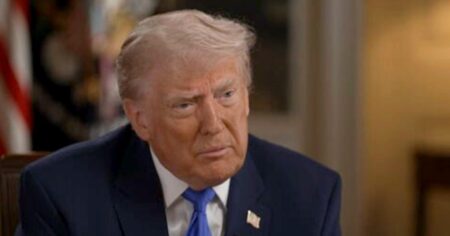
President Donald Trump has publicly defended his Commerce Secretary Howard Lutnick, characterizing him as a “very innocent guy” while Democratic lawmakers intensify their scrutiny of Lutnick’s past connections to convicted sex offender Jeffrey Epstein. The controversy has escalated following the recent release of documents known as the Epstein files, which contain multiple references to Lutnick and raise questions about the nature and extent of his relationship with the disgraced financier. When reporters asked Trump about Democratic demands for Lutnick to provide sworn testimony regarding his Epstein connections, the President appeared unfazed, suggesting that his Commerce Secretary would comply with any such requests. “Well, Howard would go in and do whatever he has to say,” Trump stated matter-of-factly. “He’s a very innocent guy, doing a good job.” This presidential vote of confidence came at a critical moment as lawmakers from both parties raised concerns about transparency and accountability regarding associations with Epstein, whose network of powerful connections has remained a subject of intense public interest even after his death in 2019.
Democrats Demand Comprehensive Documentation
The pressure on Lutnick significantly increased when senior Democratic senators formally requested extensive documentation of his interactions with Epstein. Senator Chris Van Hollen, who serves as the ranking Democrat on the Senate Appropriations subcommittee, joined forces with Senator Jeff Merkley, a member of the same subcommittee and the lead sponsor of the Epstein Files Transparency Act, to send a detailed letter to the Commerce Secretary. In their correspondence, the senators didn’t mince words, demanding all records of Lutnick’s meetings, phone calls, and any form of correspondence with Epstein or his known associates during the period of their acquaintance. Beyond simple meeting logs, the senators requested a comprehensive timeline documenting every interaction Lutnick had with the convicted sex offender, as well as specific “answers to questions regarding his nanny,” a reference that suggests there may be additional concerning details that have emerged from the released documents. This formal request represents a significant escalation from general questions to a demand for full transparency and accountability. The timing of this letter is particularly noteworthy, as it follows what was described as a contentious Senate Appropriations subcommittee hearing earlier in the month where Lutnick faced tough questioning about his past association with Epstein.
Controversial Photo Restoration Fuels the Fire
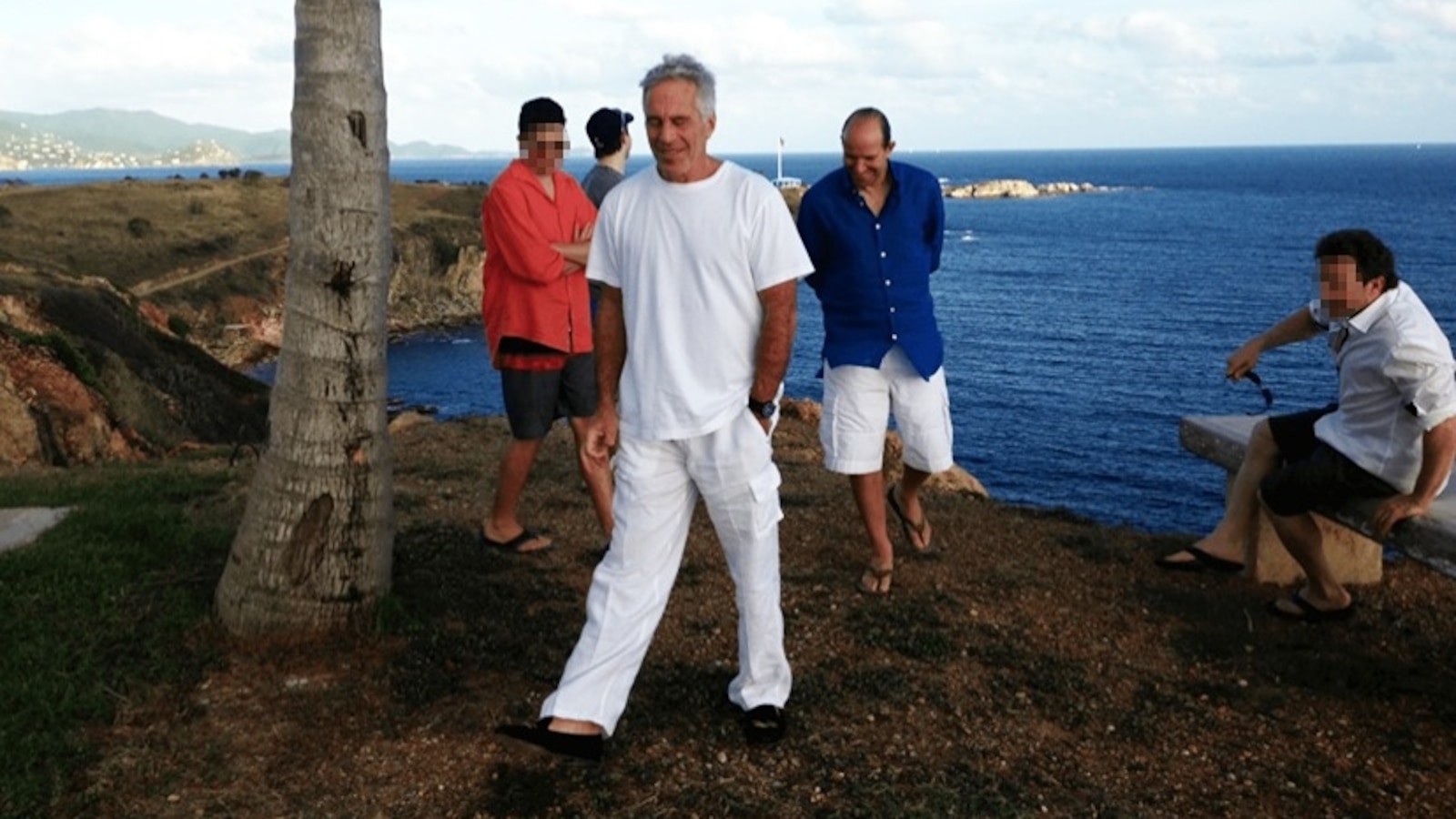
The controversy took another turn when the Department of Justice restored a photograph that had been temporarily removed from its public archive of Epstein-related documents. The image purportedly shows Lutnick on Epstein’s notorious private island, known as Little Saint James in the U.S. Virgin Islands. According to a Department of Justice official, the photo was initially taken down as part of a “batch of files that were flagged for nudity” during the recent release of thousands of Epstein-related documents. However, the explanation raised eyebrows since the image itself contained no nudity. The restored version of the photo appeared without any new redactions, leading to questions about why it was removed in the first place. The photograph appears to show Epstein standing alongside Lutnick, who is dressed casually in a blue shirt and white shorts, along with three other unidentified individuals. The location is believed to be near the southwest corner of Little Saint James, the private island that became synonymous with Epstein’s criminal activities. The temporary removal of this image sparked immediate criticism from lawmakers across the political spectrum, demonstrating that concerns about Epstein-related transparency extend beyond partisan lines. Evidence from the Wayback Machine, a nonprofit website that archives internet content, suggests the Department of Justice withdrew the image from public view sometime earlier this month, though the exact timing remains unclear.
Bipartisan Concerns About Transparency
The photograph’s temporary disappearance prompted swift and pointed criticism from lawmakers representing both major political parties, underscoring the bipartisan nature of concerns surrounding the Epstein files and their handling by federal authorities. Representative Ted Lieu took to social media platform X to directly challenge Attorney General Pam Bondi, writing pointedly: “Dear @AGPamBondi: Why are you covering up this picture of Epstein’s friend Lutnick? And are you really so stupid you think deleting a picture after you’ve posted it on the internet will make it go away?” His blunt language reflected the frustration many felt about what appeared to be an attempt to bury evidence, however temporary. Even more significantly, Republican Representative Thomas Massie of Kentucky, who notably broke from his party to advocate for the release of the Epstein files, demanded explanations from the Department of Justice. “I’m sure there’s a good reason for this. DOJ needs to tell Congress who pulled this file down so we can ask them,” Massie wrote, his statement dripping with sarcasm about whether there could actually be a legitimate justification. Representative Jimmy Gomez also joined the chorus of critics questioning the timing and rationale for the photo’s removal. The DOJ maintained that they were pulling batches of documents on a rolling basis to make necessary redactions for nudity or personally identifiable information, explaining that sometimes multiple photos are batched together in single documents, which can lead to entire batches being temporarily removed during the review process.
Lutnick’s Evolving Account of His Epstein Connection
During his testimony before the Senate Appropriations subcommittee, Lutnick acknowledged visiting Epstein’s Caribbean island in 2012 but characterized it as an innocent family outing during a vacation. “I did have lunch with him, as I was on a boat going across on a family vacation. My wife was with me, as were my four children and nannies,” Lutnick explained to the subcommittee members. However, this admission came only after evidence emerged that contradicted his initial claims about when he last had contact with Epstein. Lutnick had initially testified that he distanced himself from the convicted sex offender in 2005, well before Epstein’s criminal activities became widely known and prosecuted. This timeline was called into question when emails released by the Department of Justice showed Lutnick’s wife coordinating with Epstein’s assistant to arrange a visit to the island for lunch in December 2012—seven years after Lutnick claimed to have cut ties. The contradiction between Lutnick’s initial statement and the documentary evidence revealed in the emails has fueled skepticism about the completeness and accuracy of his account. Democratic senators have seized on this inconsistency as justification for their demands for comprehensive documentation of all Lutnick’s interactions with Epstein. The fact that the 2012 visit was described as including not just Lutnick’s wife and four children but also “nannies” has raised additional questions, particularly given the senators’ specific request for “answers to questions regarding his nanny” in their formal letter to the Commerce Secretary.
Broader Implications and Ongoing Questions
The controversy surrounding Howard Lutnick’s connections to Jeffrey Epstein extends beyond questions about one Cabinet member’s past associations. It touches on broader issues of transparency in government, the thoroughness of vetting processes for high-level appointees, and the public’s right to know about the relationships that influential officials maintained with convicted criminals. The Department of Justice’s handling of the document release has also come under scrutiny, with critics questioning whether proper protocols are being followed or whether there are attempts to shield politically connected individuals from embarrassment or worse. Neither the Commerce Department nor the White House provided immediate responses to requests for comment on the latest developments, a silence that has allowed speculation and criticism to fill the void. As this situation continues to develop, it remains to be seen whether Lutnick will comply with the senators’ request for comprehensive documentation, whether he will ultimately be deposed as Democrats are requesting, and whether any information that emerges might affect his position in the Trump administration. The President’s characterization of Lutnick as “doing a good job” suggests that Trump has no intention of removing him from his Cabinet position based on the current allegations, but the political pressure may continue to build as more information potentially comes to light. The intersection of the Epstein scandal with current government officials serves as a reminder that the full scope of the disgraced financier’s network of powerful connections continues to unfold, years after his death in federal custody.