
Trump Voices Displeasure Over Iran’s New Supreme Leader
Presidential Concerns About Iranian Leadership Transition
President Trump has publicly expressed his dissatisfaction with Iran’s selection of Ayatollah Mojtaba Khamenei as the country’s new supreme leader. Speaking with Fox News over the weekend, the president made his position clear when he stated simply, “I am not happy” about the development. This reaction came shortly after Iranian state media announced that Mojtaba Khamenei would be taking over the highest position of religious and political authority in Iran, succeeding his father, Ali Khamenei, who was killed on the opening day of recent military conflicts between the United States and Iran. The presidential response signals a continuation of the administration’s assertive stance toward Iranian affairs and demonstrates the United States’ intention to play an active role in shaping the future political landscape of the Middle Eastern nation.
The announcement was shared through a phone conversation between President Trump and Brian Kilmeade, host of the popular Fox News morning show “Fox and Friends.” The president’s terse statement reflects a broader concern within the administration about the direction Iran might take under new leadership. This isn’t merely a matter of diplomatic preference but represents what the White House views as a critical juncture in U.S.-Iran relations following significant military action that fundamentally altered the power structure in Tehran. The president’s willingness to publicly criticize Iran’s choice of leadership demonstrates both the leverage the United States believes it holds in the current situation and the administration’s determination to influence outcomes in a country that has long been considered a primary adversary in the region.
Trump’s Previous Criticisms and Demands for Approval
This weekend’s expression of displeasure wasn’t the first time President Trump has weighed in on Iran’s leadership succession. In fact, the president had already gone on record with strong opinions about Mojtaba Khamenei even before his formal appointment was announced. Speaking with Axios just last Thursday, President Trump dismissed the younger Khamenei as a “lightweight,” suggesting that he lacked the gravitas, experience, or qualities necessary to lead one of the Middle East’s most influential nations. More significantly, the president declared that Khamenei would be “unacceptable” as Iran’s leader, a remarkably direct intervention into another nation’s internal political processes, even in the context of ongoing conflict.
What makes President Trump’s statements particularly striking is his assertion that the United States should have direct approval authority over who leads Iran. “I have to be involved in the appointment,” the president told reporters, drawing a direct parallel to the situation in Venezuela where the administration has also taken an interventionist approach to leadership questions. He specifically referenced Delcy Rodriguez, who assumed power as Venezuela’s interim president after the United States captured and arrested Nicolás Maduro, the country’s former leader. This comparison suggests that the Trump administration views the situations in Iran and Venezuela through a similar lens—as opportunities for the United States to directly shape governance in countries it has long opposed. The president’s insistence on having a say in Iran’s leadership selection represents an extraordinarily bold assertion of American influence, one that extends well beyond traditional diplomatic engagement or even the typical outcomes of military conflict.
Fears About Iran’s Future Direction
Underlying President Trump’s public statements is a deeper concern about what kind of government might emerge in Iran following the dramatic change in leadership brought about by recent military action. The president has been candid about what he considers the worst-case scenario: that after all the conflict and upheaval, Iran could end up with a leader who is just as hostile to American interests as the previous regime, or potentially even worse. “I guess the worst case would be we do this and then somebody takes over who’s as bad as the previous person, right?” President Trump mused in comments last week. “That could happen. We don’t want that to happen. That would probably be the worst.”
This concern reveals an important dimension of the administration’s thinking about its Iran policy. Military action and regime change, while achieving the immediate objective of removing hostile leadership, don’t automatically guarantee outcomes favorable to American interests. The history of U.S. military interventions in the Middle East and elsewhere is filled with examples where the removal of one unfriendly government led to chaos, power vacuums, or the eventual rise of leaders who proved equally or even more problematic than their predecessors. President Trump appears keenly aware of this pattern and is attempting to avoid repeating it by asserting American influence over the succession process. His public warnings to potential Iranian leaders represent an attempt to shape expectations and establish parameters for what the United States will and won’t accept in Tehran’s new government.
Setting Terms for Iran’s Next Leader
The president has been remarkably explicit about the conditions any Iranian leader must meet to have legitimacy in American eyes and, by extension, to ensure their own survival in power. “He’s going to have to get approval from us,” President Trump told ABC News on Sunday, speaking about Iran’s next leader shortly before Khamenei’s appointment was officially announced. The president didn’t leave much room for interpretation about what would happen to a leader who didn’t secure American backing: “If he doesn’t get approval from us, he’s not going to last long.” This statement functions both as a warning to Iranian power brokers making succession decisions and as a signal to potential leaders about the realities of their position. The implication is clear—the United States maintains the capability and willingness to remove Iranian leaders who don’t meet American standards or who refuse to acknowledge U.S. influence in the appointment process.
These statements represent a dramatic assertion of American power in the region and suggest that the administration views the current situation as an opportunity to fundamentally reshape the U.S.-Iran relationship on American terms. Rather than simply seeking diplomatic accommodation with whatever government emerges in Iran, President Trump is attempting to exercise something approaching veto power over Iranian leadership selection. Whether this approach proves sustainable or effective remains to be seen, but it certainly represents one of the most direct American interventions in Iranian internal politics in decades. The president’s comments suggest he views the current moment as a unique window of opportunity to establish a new framework for Iranian governance, one in which American approval is a prerequisite for political survival at the highest levels of the Iranian state.
Profile of the New Iranian Leader
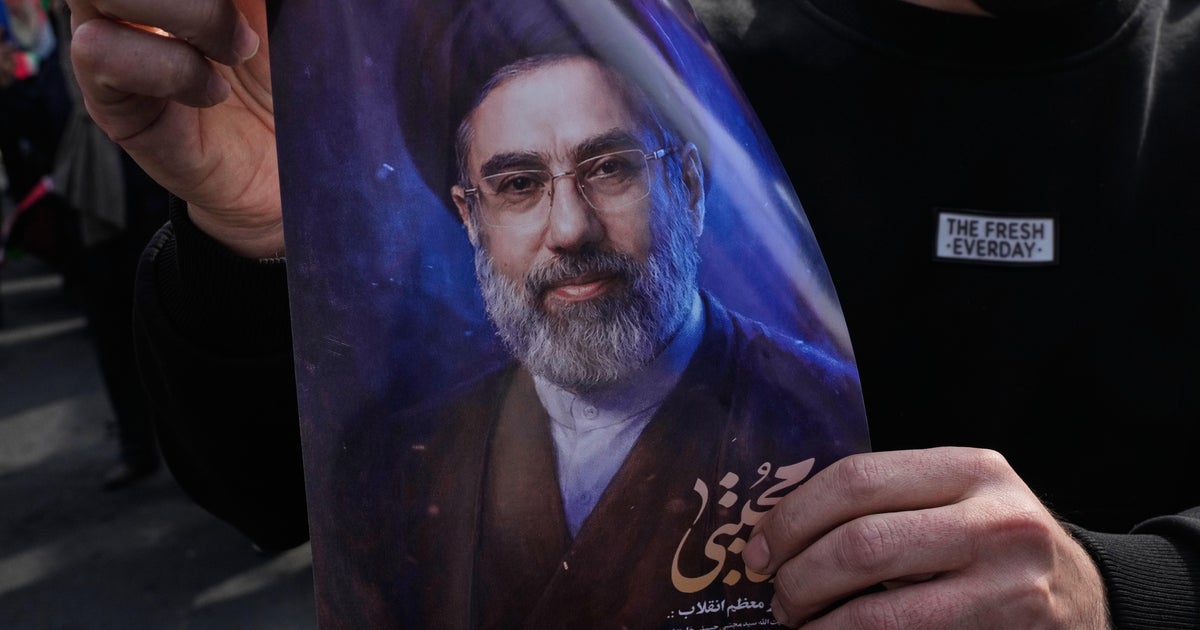
Despite President Trump’s objections, Ayatollah Mojtaba Khamenei has now been formally named as Iran’s supreme leader, the highest position of authority in the country’s theocratic political system. At 57 years old, Khamenei represents a somewhat younger generation of Iranian leadership, though he is hardly a newcomer to the centers of power in Tehran. Throughout his father’s long tenure as supreme leader, Mojtaba Khamenei worked largely behind the scenes, avoiding the spotlight while building influence and relationships within Iran’s complex power structure. This lower profile may be part of what led President Trump to dismiss him as a “lightweight,” though those familiar with Iranian politics suggest that Khamenei’s quiet approach shouldn’t be mistaken for lack of power or capability.
Most significantly, Mojtaba Khamenei has cultivated deep and extensive ties to the Islamic Revolutionary Guard Corps (IRGC), the powerful military and political organization that has been central to Iran’s regional influence and domestic control for decades. These connections to the IRGC could cut both ways from an American perspective. On one hand, they suggest that Khamenei has the backing of Iran’s most powerful institutional force, which could make him a more formidable and entrenched leader than his father. On the other hand, the IRGC has been designated as a terrorist organization by the United States and has been responsible for activities throughout the Middle East that have directly challenged American interests and allies. A supreme leader with strong IRGC ties might be particularly unlikely to pursue the kind of accommodating relationship with the United States that President Trump seems to be demanding, setting the stage for continued confrontation between Washington and Tehran under the new Iranian leadership.