
Israel and Hezbollah Exchange Fire as Regional Tensions Escalate
The volatile situation in the Middle East took another dramatic turn as Israeli forces conducted airstrikes south of Beirut while Hezbollah militants fired rockets into northern Israel. These attacks came just hours after a historic moment—direct negotiations between Lebanese and Israeli ambassadors in Washington, marking the first such talks in decades. The timing of these strikes underscores the complex and fragile nature of peace efforts in the region, where diplomatic progress can be quickly overshadowed by military action.
The Israeli strikes targeted two vehicles in areas south of the Lebanese capital, specifically in the coastal town of Saadiyat and along a highway in neighboring Jiyeh, approximately twelve miles from Beirut. What makes these strikes particularly noteworthy is their location—outside of Hezbollah’s traditional strongholds in southern Lebanon. This represents a continuation of Israeli military operations against the Iran-backed militant group, though Israel had refrained from striking near the capital since a devastating series of attacks on April 8 that claimed more than 350 lives across Lebanon. Meanwhile, the Israeli military detected around thirty rocket launches from Hezbollah targeting northern Israeli communities, with the militant group claiming responsibility for attacks on ten different Israeli locations. The human cost of this conflict has been staggering, with Lebanese authorities reporting over 2,000 deaths and more than a million people displaced since early March. Despite the previous day’s diplomatic breakthrough in Washington, where both nations agreed to continue direct negotiations and Lebanon’s envoy called for a ceasefire, Hezbollah strongly rejected the talks, demonstrating the disconnect between state-level diplomacy and the actions of non-state actors operating within Lebanon’s borders.
President Trump Intensifies Criticism of Pope and NATO Allies
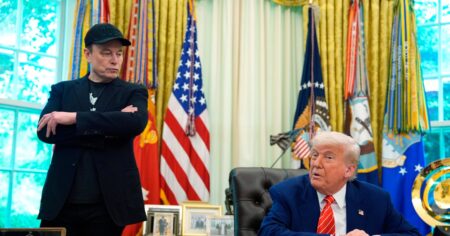
In a series of overnight posts on his Truth Social platform, President Trump escalated his public criticism of both Pope Leo XIV and NATO alliance members, revealing deep frustrations with international responses to his administration’s Middle East policies. The president’s comments about the pontiff centered on Iran’s brutal crackdown on domestic protesters, with Trump claiming that the Iranian regime has killed at least 42,000 unarmed demonstrators over the past two months. He expressed frustration that Pope Leo XIV has criticized his administration’s actions in Iran while, in Trump’s view, not adequately condemning Tehran’s human rights abuses.
The president’s statement that “Iran having a nuclear bomb is absolutely unacceptable” reinforces his administration’s stated goal of preventing Tehran from developing nuclear weapons—a key objective in the ongoing conflict. Human rights organizations have confirmed that tens of thousands of Iranians who took to the streets earlier this year to protest against their government were met with deadly force by regime security forces. Trump’s criticism of the Pope reflects a broader tension between his administration’s aggressive military approach to Iran and international voices, including the Vatican, calling for restraint and diplomatic solutions. Regarding NATO, the president repeated his frequent complaint that alliance members have failed to support the United States adequately, stating bluntly, “NATO wasn’t there for us, and they won’t be there for us in the future!” This criticism comes as the U.S. wages war against Iran largely without the active military participation of its traditional European allies, many of whom have expressed concern about the conflict’s escalation and humanitarian consequences. The president’s public frustration with both religious and political allies highlights the international isolation his Iran policy has generated, even as his administration pursues what it considers vital national security objectives.
Pakistan Leads Diplomatic Efforts to Restart U.S.-Iran Peace Talks
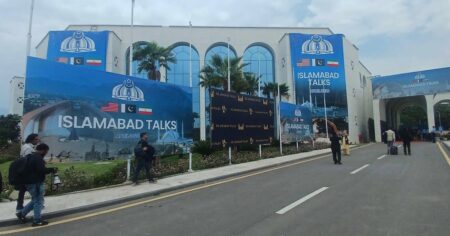
Pakistan has emerged as a crucial mediator in the conflict between the United States and Iran, with Prime Minister Shehbaz Sharif embarking on a multi-nation diplomatic tour aimed at securing a second round of peace negotiations. The Pakistani Foreign Ministry announced that Sharif would visit Saudi Arabia, Qatar, and Turkey between Wednesday and Saturday, consulting with regional powers to facilitate renewed talks. This diplomatic push comes on the heels of marathon negotiations hosted by Islamabad last weekend that, while substantive, ended without producing a formal agreement between the warring parties.
The urgency of Pakistan’s mediation efforts is underscored by the ticking clock—a fragile ceasefire between the U.S. and Iran is set to expire early next week, and all parties recognize that a return to full-scale hostilities could be catastrophic for the region. Prime Minister Sharif’s diplomatic offensive demonstrates Pakistan’s strategic importance as one of the few nations maintaining working relationships with both Washington and Tehran, positioning Islamabad as an essential bridge between the two adversaries. President Trump has offered cautiously optimistic assessments of the peace process, telling Fox News that the war “is very close to over” and informing the New York Post that a second round of talks “could be happening over the next two days,” again in the Pakistani capital. However, in comments to ABC News Chief Washington correspondent Jonathan Karl, the president suggested he isn’t considering extending the ceasefire because he doesn’t believe it will be necessary, telling the journalist, “I think you’re going to be watching an amazing two days ahead. I really do.” These statements suggest that Trump believes a breakthrough may be imminent, though whether this optimism is based on concrete progress or negotiating strategy remains unclear. Pakistan’s willingness to invest significant diplomatic capital in these mediation efforts reflects both its desire to prevent further regional instability and its interest in maintaining positive relations with both global superpowers. The success or failure of Sharif’s current tour could determine whether the fragile peace holds or whether the region returns to the devastating conflict that has already claimed countless lives.
U.S. Implements Comprehensive Naval Blockade of Iranian Ports
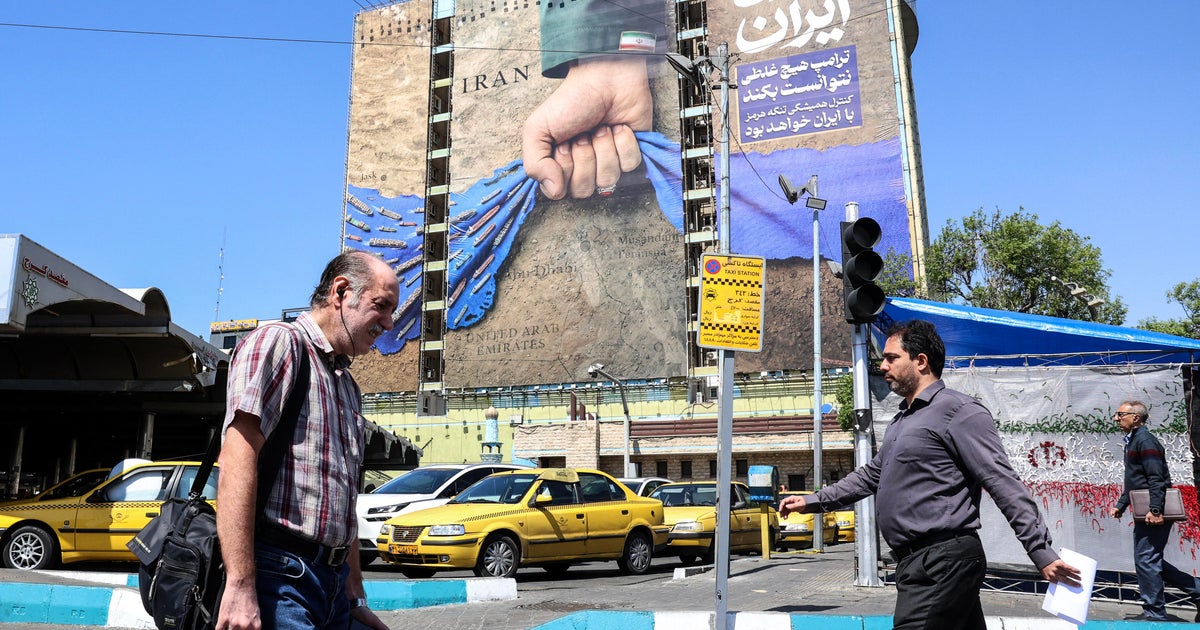
The United States Central Command announced that its naval blockade of Iranian ports has been “fully implemented,” marking a significant escalation in America’s economic warfare against Tehran. In a statement released Tuesday night, Admiral Brad Cooper, CENTCOM commander, emphasized that U.S. forces have established “maritime superiority in the Middle East” and have effectively shut down Iran’s seaborne trade. The blockade’s impact cannot be overstated—according to military estimates, approximately 90% of Iran’s economy depends on international trade conducted by sea, meaning this naval operation strikes at the heart of the country’s economic survival.
Admiral Cooper reported that in less than thirty-six hours since the blockade’s implementation, U.S. forces had “completely halted economic trade going into and out of Iran by sea.” This represents an unprecedented level of economic pressure on the Iranian regime, far exceeding previous sanctions regimes that allowed for certain exemptions and workarounds. The human implications of such a comprehensive blockade are profound, as it will inevitably affect not just the government but ordinary Iranian citizens who depend on imported food, medicine, and other essential goods. A U.S. official confirmed to CBS News that a U.S. destroyer interdicted two oil tankers in the strategically vital Strait of Hormuz on Tuesday, with these vessels being part of six merchant ships that U.S. forces ordered to return to an Iranian port on the Gulf of Oman during the blockade’s first twenty-four hours. The Strait of Hormuz, a narrow waterway between the Persian Gulf and the Gulf of Oman, serves as a critical chokepoint for global oil shipments, making American naval operations there particularly significant both economically and symbolically. During the same period, more than twenty ships from non-Iranian ports transited safely through the strait, demonstrating that U.S. forces are selectively enforcing the blockade rather than disrupting all maritime traffic in the region. The blockade represents a powerful tool of coercion designed to bring Iran back to negotiations from a position of weakness, though it also risks humanitarian consequences and potential military confrontation if Iranian forces attempt to break the blockade by force. As peace talks potentially resume in the coming days, this naval stranglehold on Iran’s economy will serve as constant pressure, reminding Tehran’s leadership that the cost of continued conflict grows more unbearable with each passing day.
The Humanitarian Crisis and Path Forward
As these multiple storylines unfold simultaneously—continued violence between Israel and Hezbollah, diplomatic tensions with international institutions, mediation efforts by regional powers, and aggressive U.S. naval operations—the human cost continues to mount. The over 2,000 deaths in Lebanon, the 42,000 protesters killed in Iran, and the million-plus displaced people represent individual tragedies that can be lost in discussions of military strategy and diplomatic maneuvering. Each statistic represents families destroyed, communities shattered, and futures uncertain.
The next several days will prove critical in determining whether this conflict moves toward resolution or deeper catastrophe. Pakistan’s diplomatic efforts, the approaching ceasefire deadline, President Trump’s optimistic statements, and the pressure of the naval blockade all suggest that a decisive moment is approaching. Whether the parties can bridge their differences and reach a sustainable agreement—one that addresses not just the immediate military conflict but the underlying issues of regional security, nuclear proliferation, and political legitimacy—remains to be seen. The involvement of multiple mediators, the evident war-weariness on all sides, and the staggering human and economic costs all create conditions where peace becomes not just desirable but necessary. Yet history teaches that necessity alone doesn’t guarantee peace, and the deep mistrust between the United States and Iran, accumulated over decades of hostility, cannot be easily overcome. As the world watches these “amazing two days” that President Trump referenced, the hope is that diplomacy will prevail over continued violence, and that the suffering of millions of ordinary people caught in this conflict will finally come to an end.