
Trump Declares U.S.-Iran Conflict Nearly Over Despite Ongoing Military Operations
Presidential Assessment from Florida Golf Club
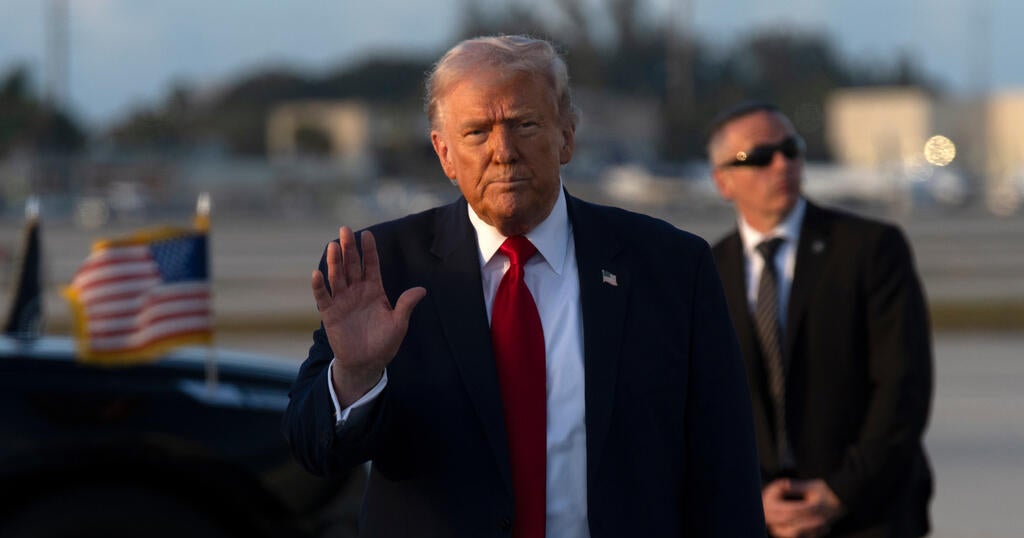
Speaking from his Doral, Florida golf resort during a phone interview with CBS News on Monday afternoon, President Trump made striking declarations about the state of conflict between the United States and Iran. With a tone of confidence, the president asserted that the military campaign has achieved nearly complete success, stating “I think the war is very complete, pretty much.” According to Trump’s assessment, Iran’s military capabilities have been decimated to the point of near-total collapse. He painted a picture of a nation stripped of its defensive and offensive capabilities, claiming that Iran’s navy has been neutralized, their communication systems destroyed, and their air force rendered inoperable. The president went further, describing Iran’s missile arsenal as reduced to scattered remnants and emphasizing that Iranian drone operations, including manufacturing facilities, have been systematically destroyed across multiple locations. This sweeping assessment came as the U.S. military reported conducting strikes against more than 3,000 Iranian targets during just the first week of operations—a massive military undertaking by any measure.
The Scale of Military Devastation and Leadership Transition
The president’s characterization of Iran’s current military state left little room for ambiguity. “If you look, they have nothing left. There’s nothing left in a military sense,” Trump declared, suggesting that Iran no longer possesses the fundamental military infrastructure necessary to defend itself or project power in the region. This assessment came at a particularly significant moment in Iranian politics, as the country announced a major leadership transition over the weekend. Late Sunday, Iranian officials revealed that Ayatollah Mojtaba Khamenei would be assuming the role of supreme leader, replacing his father in what represents one of the most significant political shifts in modern Iranian history. When asked about this development and whether he had any message for Iran’s new leader, President Trump was notably dismissive. “I have no message for him. None, whatsoever,” the president stated bluntly, before adding a detail that suggests the administration’s vision for Iran extends beyond accepting the country’s internal leadership decisions. Trump indicated that he has someone else in mind to lead Iran, though he did not elaborate on who this person might be or what mechanism might bring about such a leadership change.
Economic Impact and the Strait of Hormuz Crisis
The military conflict has created severe disruptions to global commerce, particularly in one of the world’s most strategically vital waterways. Commercial shipping through the Strait of Hormuz—a narrow passage through which approximately 20% of the world’s oil supply flows—has effectively come to a standstill. This development has enormous implications for global energy markets and the economies of nations dependent on Middle Eastern oil exports. The stoppage represents not just a regional crisis but a potential global economic emergency, as the strait has long been considered one of the world’s most critical maritime chokepoints. President Trump addressed this situation with characteristic bluntness, suggesting that the United States “could do a lot” about the strait while simultaneously issuing stark warnings to Iran about any attempts to further interfere with the waterway. “They’ve shot everything they have to shoot, and they better not try anything cute or it’s going to be the end of that country,” the president warned, leaving no doubt about the potential consequences of Iranian actions. He escalated his rhetoric even further by adding, “If they do anything bad, that would be the end of Iran and you’d never hear the name again”—a statement that suggests the potential for even more devastating military action.
Conflicting Signals on Maritime Access and Military Control
Interestingly, the president’s statements about the Strait of Hormuz contained some contradictions that reflect the complex and fluid situation on the ground. While acknowledging the effective shutdown of commercial shipping, Trump simultaneously claimed that the strait is currently open and that ships have been entering the waterway. This discrepancy between commercial reports of a shipping halt and the president’s assertion of access suggests either a disconnect between different aspects of the situation or perhaps a distinction between military and commercial vessel movements. Adding another layer of uncertainty to the situation, Trump revealed that he is “still thinking about taking it over”—a statement that raises profound questions about what exactly such an action would entail. Whether this means military control of the waterway, establishing a security corridor for commercial shipping, or some other arrangement remains unclear. What is clear is that the administration is considering extraordinary measures to address the maritime crisis, measures that could have far-reaching implications for international law, regional stability, and America’s relationships with allies and adversaries alike.
Timeline Compression and Messaging Contradictions
President Trump’s comments about the war’s timeline reveal a conflict that has progressed far more rapidly than initially anticipated. The president originally estimated that the military campaign would require approximately one month to complete. Given his current assessment that the operation is nearly finished, Trump told CBS News, “We’re very far ahead of schedule”—a claim that suggests either exceptionally effective military operations or perhaps an adjustment of what constitutes mission completion. However, the administration’s messaging showed some internal contradictions that same afternoon. While the president was telling CBS News that the war is “very complete, pretty much,” the Department of Defense was posting a notably different message on social media platform X. The Pentagon’s posts declared “We have Only Just Begun to Fight” and “no mercy”—statements that seem to contradict the president’s assessment of a nearly completed operation. This divergence between the commander-in-chief’s characterization and the military’s official messaging creates uncertainty about the actual status of operations and what objectives remain to be achieved.
Human Cost and Presidential Decision-Making Authority
Behind the strategic assessments and geopolitical maneuvering lies the sobering reality of American casualties. So far, seven Americans have lost their lives in combat operations—a reminder that even wars described as nearly complete come with tragic human costs. The human dimension of the conflict was underscored by Vice President JD Vance’s schedule for later that Monday, which included attending a dignified transfer ceremony for the remains of U.S. Army Sergeant Benjamin Pennington. Sergeant Pennington died from injuries sustained in an attack on Prince Sultan Air Base in Saudi Arabia on March 1st, representing one of the fallen service members whose sacrifice has enabled the military campaign the president describes as nearly successful. When pressed by reporters about whether he believed the war could conclude soon, President Trump’s response revealed much about his view of presidential authority and decision-making: “Wrapping up is all in my mind, nobody else’s.” This statement emphasized the president’s belief in his singular authority to determine when American objectives have been achieved and when military operations should conclude. It’s a perspective that places enormous weight on one individual’s assessment of complex military and geopolitical realities—and one that will likely face scrutiny from military analysts, congressional oversight committees, and international observers as the situation continues to develop.