

TSA Crisis: Government Shutdown Forces Homeland Security Deployment at Major U.S. Airports
Mass Call-Outs Create Airport Chaos
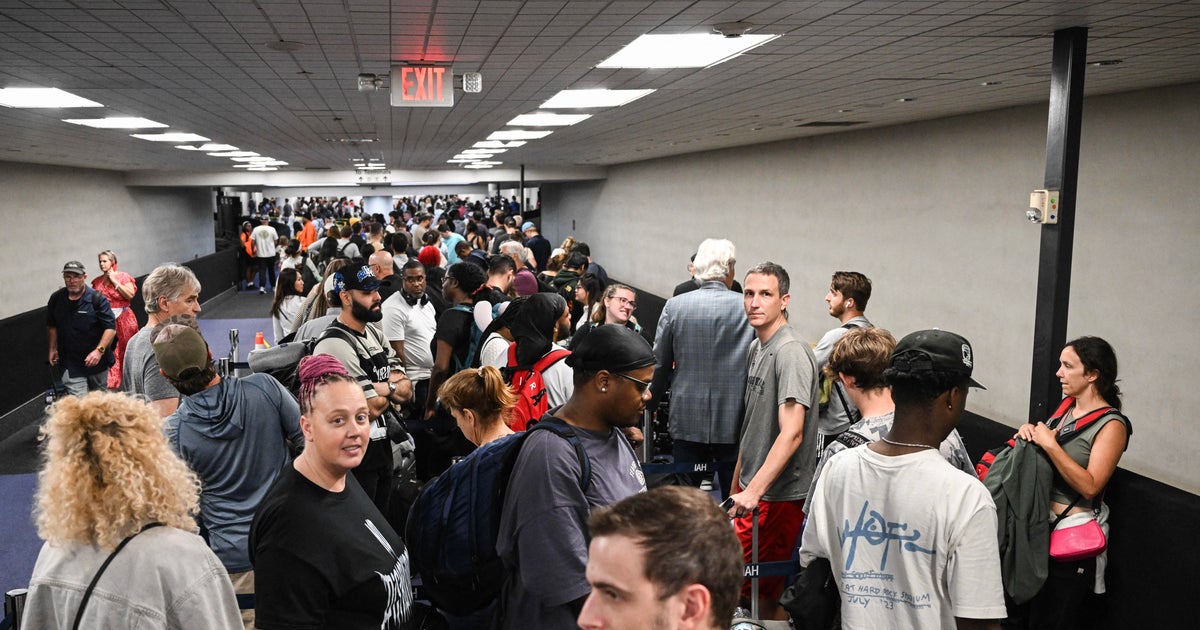
The ripple effects of the partial government shutdown have reached a critical point at America’s airports, where thousands of Transportation Security Administration (TSA) officers have been forced to work without paychecks. The situation escalated dramatically over the weekend when more than 3,400 TSA officers—representing nearly 12% of the scheduled workforce—called out sick on Sunday alone, marking the highest absence rate since the shutdown began. This unprecedented staffing crisis left travelers stranded in security lines that stretched for hours, with some passengers at Houston’s George Bush Intercontinental Airport facing waits of up to six hours just to pass through security checkpoints. The scenes were chaotic across the country, with lines at Atlanta’s Hartsfield-Jackson International Airport extending beyond the terminal building and out onto the sidewalk, while Houston’s lines snaked through three floors of the airport, beginning in the basement subway corridor and winding through the baggage claim area.
Emergency Deployment of Federal Agents
In response to the mounting crisis, the Trump administration made the decision on Monday to deploy Immigration and Customs Enforcement (ICE) agents and other Department of Homeland Security personnel to 14 major airports nationwide. These federal agents were tasked with helping to move passengers through the overwhelmed TSA checkpoints, though the effectiveness of this emergency measure remains questionable. The deployment represents an unusual use of ICE resources, as these agents are not typically trained in airport security screening procedures. Their presence at airports marks a significant escalation in the government’s response to the shutdown-related staffing emergency, though it also raises questions about proper training and the most effective use of federal law enforcement resources during this unprecedented situation.
Questions About Effectiveness and Training
Not everyone believes that deploying ICE agents and other Homeland Security personnel is the right solution to the TSA staffing crisis. Pascual Contreras, a TSA officer and union representative working on the front lines of this crisis, expressed serious doubts about whether these federal agents can truly help alleviate the backlog. “I don’t believe that they’re trained in a way that they can help us,” Contreras stated frankly, adding that he had observed some of the deployed agents “standing around” without appearing to contribute meaningfully to security operations. This skepticism highlights a fundamental problem with the emergency response: while having extra bodies at airports might seem helpful in theory, airport security screening requires specialized training and expertise that these agents may not possess. The concern isn’t just about efficiency—it’s also about maintaining the rigorous security standards that protect millions of travelers every day. Some passengers expressed cautious optimism that any additional help might ease the bottleneck, but many shared the concerns voiced by TSA officers about whether untrained personnel can effectively perform these critical security functions.
Presidential Directives and Future Escalation
Adding another layer of complexity to the situation, President Trump has issued specific instructions regarding how federal agents should conduct themselves while operating in airports. Most notably, he has directed these agents not to wear masks while performing their duties at airport checkpoints. The president has also indicated that if a deal to end the government shutdown cannot be reached soon, National Guard troops may be deployed to airports to provide additional support. This potential escalation would represent an even more dramatic use of military resources to address what is fundamentally a labor and funding crisis. The suggestion that National Guard deployment might become necessary underscores just how serious the situation has become and how far-reaching the consequences of the shutdown have grown. What began as a political standoff in Washington has transformed into a practical crisis affecting millions of American travelers and raising significant questions about airport security and the treatment of federal workers.
Political Deadlock Continues
Meanwhile, efforts to resolve the underlying cause of this crisis—the partial government shutdown—have encountered fresh obstacles in the Senate. President Trump complicated ongoing negotiations on Monday by calling on Republican senators to hold firm and refuse any deal that doesn’t include passage of a controversial elections bill that Democrats have strongly opposed. This new demand represents yet another roadblock in what was already proving to be a difficult negotiation process. However, not all hope is lost, as some key senators suggested Monday that a compromise deal to fund at least parts of the Department of Homeland Security might still be achievable, even if a comprehensive agreement remains elusive. The back-and-forth in Washington seems disconnected from the very real problems unfolding at airports across the country, where TSA officers are being asked to perform essential security functions without knowing when they’ll receive their next paycheck. The human cost of this political standoff is becoming increasingly visible in the faces of exhausted security officers and frustrated travelers dealing with unprecedented delays.
The Human Impact of Political Gridlock
This airport security crisis perfectly illustrates how political decisions in Washington have concrete, immediate impacts on everyday Americans. TSA officers, many of whom live paycheck to paycheck, are being forced to choose between going to work without pay or calling out sick to find temporary income elsewhere or simply because they can’t afford the gas to get to work. One TSA officer, speaking on condition of anonymity, told The Free Press that the situation “is not safe for anyone,” highlighting concerns that go beyond mere inconvenience. When security personnel are distracted by financial stress and when screening checkpoints are understaffed or staffed by personnel without proper training, the potential for security lapses increases. Travelers, too, are paying a price—not just in terms of time wasted in endless security lines, but also in missed flights, disrupted plans, and the general stress and uncertainty that comes with not knowing whether their airport experience will be routine or nightmarish. The deployment of ICE agents and the potential involvement of National Guard troops are emergency band-aids on a wound that requires proper treatment: ending the shutdown, paying federal workers, and ensuring that America’s critical transportation infrastructure continues to function safely and efficiently. Until political leaders in Washington can find common ground and end this impasse, airports will continue to struggle, workers will continue to face impossible choices, and travelers will continue to pay the price for political dysfunction.