
Rising Wave of Antisemitic Arson Attacks Rocks London’s Jewish Communities
Authorities Investigate Latest Fire-Bombing Incident in North London
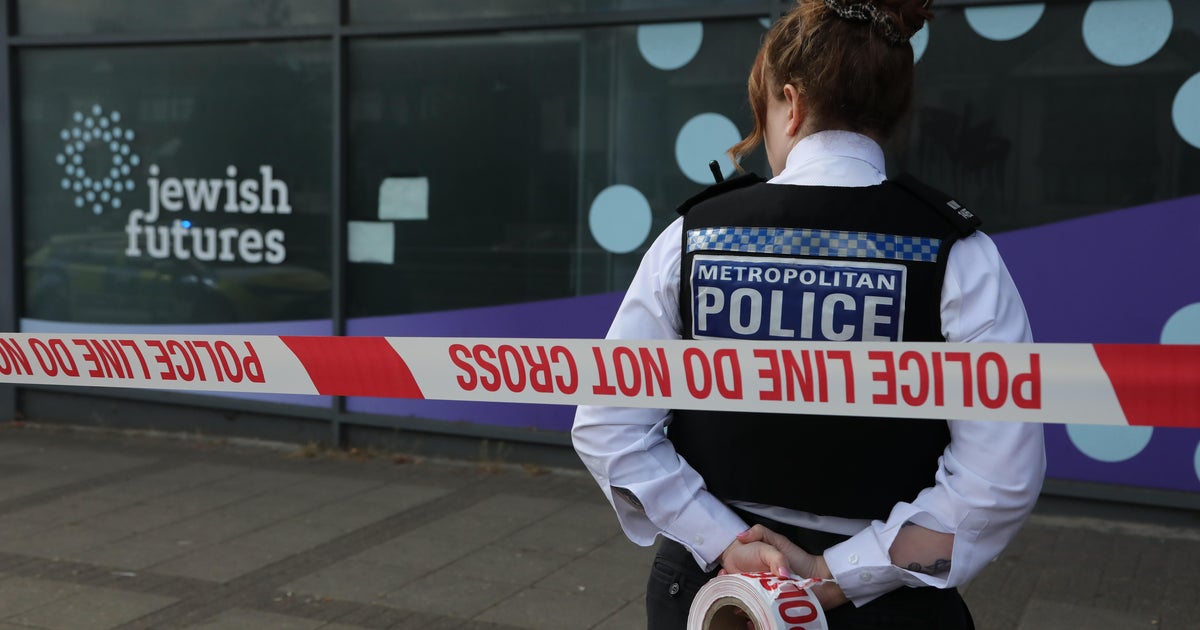
London’s counterterrorism police are now investigating yet another disturbing arson attack targeting Jewish community sites in the British capital. Late Friday evening in the northern Hendon neighborhood, a man approached a row of shops carrying what would later be identified as an improvised firebomb. Security footage and witnesses captured the suspect placing a plastic bag near a building that previously housed Jewish Futures, an educational organization serving the Jewish community. After lighting the contents of the bag, which police later discovered contained three bottles filled with flammable liquid, the individual quickly fled when the makeshift device failed to fully ignite. Fortunately, no one was injured in the incident, though photos from the scene show the Jewish Futures sign still clearly visible in the building’s window—a stark reminder of why this location may have been specifically targeted. The Community Security Trust, a charitable organization dedicated to providing safety guidance to Jewish groups throughout the UK, confirmed that while the attack caused minimal damage to a nearby doorway, the intent was unmistakably hostile and mirrors a deeply troubling pattern of similar attacks across London in recent weeks.
A Pattern of Hatred: Multiple Attacks Terrorize North London’s Jewish Community
This latest incident is far from isolated, but rather represents the most recent chapter in what appears to be an organized campaign of violence against Jewish institutions and organizations across north London. Just days before the Hendon attack, two individuals were arrested in connection with a separate arson attack on a synagogue, also located in North London. The situation escalated further in late March when four ambulances belonging to Jewish community emergency services were deliberately set ablaze in Golders Green, another predominantly Jewish neighborhood in north London. In that particularly brazen attack, authorities charged three individuals—Hamza Iqbal, 20, Rehan Khan, 19, and a 17-year-old of dual British-Pakistani nationality whose name cannot be legally disclosed due to his age—with arson. All three suspects are from east London and have been taken into custody as the investigation continues. The deliberate targeting of emergency medical vehicles represents an especially callous form of terrorism, as these ambulances serve vulnerable community members and could be critical in saving lives during medical emergencies. The frequency and similarity of these attacks have prompted Metropolitan Police to deploy additional officers throughout north London’s Jewish neighborhoods, providing a visible law enforcement presence meant to both deter further attacks and reassure frightened community members.
Counterterrorism Officials Examine Links Between Attacks While Investigating Each Independently
Helen Flanagan, a senior member of the Metropolitan Police’s specialized counterterrorism unit, addressed the growing concerns by explaining the department’s investigative approach. While officially stating that the Hendon attack is “not being linked to other incidents in north-west London,” she acknowledged that the counterterrorism unit has taken the lead in investigating all these cases specifically “due to the similarities of each attack.” This careful phrasing suggests that while investigators may not have established definitive connections between all the incidents through evidence or suspects, the tactical similarities—the use of bottles containing flammable liquids, the targeting of Jewish community buildings and assets, the geographic concentration in north London—are too striking to ignore. The involvement of the counterterrorism unit rather than standard criminal investigators signals that authorities are treating these incidents with the utmost seriousness and are exploring whether they represent coordinated terrorism rather than isolated hate crimes. Adding another layer of complexity to the investigation, Wednesday evening saw yet another firebombing when a burning object was hurled toward the offices of Iran International, a Persian-language media outlet known for its sharp criticism of Iran’s clerical leadership. That device landed in a car park without causing injuries, but its inclusion in this wave of attacks suggests the possible involvement of actors with broader political motivations beyond simple antisemitism.
Shadowy Group with Iranian Links Claims Responsibility for Attack Campaign
The investigation took an international dimension when a previously little-known organization called Harakat Ashab al-Yamin al-Islamiya claimed responsibility for multiple attacks, including those on the synagogue, the Jewish community ambulances, and the Iran International media offices. According to SITE Intelligence Group, a respected organization that monitors extremist activities online, this group has documented connections to Iran’s government or affiliated entities. The same organization has reportedly claimed responsibility for similar attacks targeting Jewish institutions in Belgium and the Netherlands, suggesting a coordinated transnational campaign rather than the actions of isolated local extremists. This international dimension significantly elevates the severity of the threat and explains why British counterterrorism officials have taken such a prominent role in the investigations. The targeting of Iran International alongside Jewish community sites provides further evidence of Iranian government involvement or influence, as the media outlet has been a persistent thorn in Tehran’s side, broadcasting content critical of the regime to Persian-speaking audiences worldwide. Iran has a documented history of transnational repression, targeting dissidents, journalists, and others deemed threats to the regime, even in Western countries. The combination of antisemitic violence with attacks on Iranian opposition media suggests that community members may be dealing with state-sponsored terrorism rather than merely domestic hate crimes, a distinction that carries profound implications for how authorities must respond and what resources they must deploy to protect vulnerable communities.
Antisemitic Incidents Surge to Near-Record Levels Across the United Kingdom
The recent spate of arson attacks occurs against a backdrop of dramatically rising antisemitism throughout the United Kingdom. The Community Security Trust, which meticulously tracks and documents antisemitic incidents reported by Jewish community members and organizations, has recorded an alarming 3,700 such incidents already in 2025—making this the second-highest total ever reported to the organization despite the year being only partially complete. These statistics represent not just abstract numbers but real experiences of intimidation, harassment, vandalism, assault, and now increasingly, organized violence targeting Jewish people simply for being Jewish. The incidents range from verbal abuse and online harassment to physical attacks and property damage, creating an atmosphere of fear and vulnerability for Jewish communities across Britain. Community leaders have expressed particular concern about the emboldening effect that each successful attack may have, potentially inspiring copycat violence or encouraging those with antisemitic beliefs to act on their hatred. The concentration of violent attacks in north London, home to some of Britain’s largest and most visible Jewish communities, suggests deliberate targeting of areas where the psychological impact would be greatest and where perpetrators might believe their actions would receive attention or inspire others. For Jewish families, the constant stream of incidents has fundamentally altered daily life, with many reporting increased anxiety about visibly displaying their Jewish identity through religious dress or symbols, concerns about their children’s safety traveling to and from Jewish schools, and worries about attending synagogue services or community events.
Community Resilience and Law Enforcement Response in Face of Growing Threat
In response to these escalating threats, both Jewish community organizations and law enforcement agencies have intensified their security measures and coordination efforts. The Metropolitan Police has committed to maintaining a heightened presence in areas with significant Jewish populations, deploying both uniformed officers to provide visible deterrence and plainclothes investigators to gather intelligence on potential threats. Community security volunteers, coordinated by organizations like the Community Security Trust, have increased patrols around synagogues, schools, and community centers, providing additional eyes and ears to supplement official law enforcement efforts. Many Jewish institutions have upgraded their physical security infrastructure, installing enhanced lighting, surveillance cameras, reinforced doors and windows, and implementing stricter access control measures—unfortunate necessities in an environment where simply gathering for worship or education can make one a target. Despite these challenges, Jewish community leaders have emphasized their determination not to be intimidated or driven from public life, viewing continued visible Jewish presence and practice as both a right and a form of resistance against those who would terrorize them into invisibility. The investigation into these attacks continues, with authorities urging anyone with information to come forward, emphasizing that protecting all communities from hate-motivated violence remains a paramount priority. As the Jewish community grapples with this new reality of heightened threat, the broader British society faces important questions about how to address the underlying antisemitism that enables such violence and what resources must be committed to ensuring that all citizens can live without fear of being targeted for their identity, faith, or heritage.