
U.S. Military Strikes Against Alleged Drug Smugglers Raise Serious Questions About Legal Authority and Human Rights
Latest Attacks Bring Death Toll to 168 in Controversial Campaign
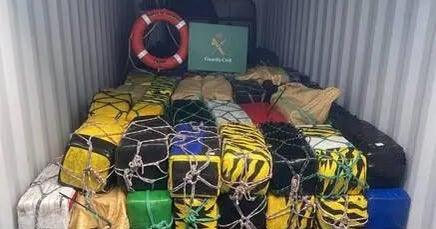
The United States military announced on Sunday that it had conducted two more deadly strikes against boats suspected of transporting illegal drugs in the eastern Pacific Ocean. These April 11 attacks resulted in the deaths of five individuals, with one person surviving the assault. According to U.S. Southern Command, which oversees military operations in Central and South America and the Caribbean, the strikes bring the total number of people killed in this contentious military campaign to at least 168 since operations began last September. The announcement, shared on social media platform X along with aerial footage of the attacks, stated that the targeted vessels were “transiting along known narco-trafficking routes.” However, the military provided no concrete evidence to support its claim that those killed were actually involved in drug trafficking, referring to them as “narco-terrorists” without substantiation. Following the strikes, Southern Command reported that it had alerted the U.S. Coast Guard to launch a search and rescue mission for the lone survivor, though no updates on that person’s status have been provided.
A Pattern of Deadly Force With Minimal Accountability
This latest incident represents just one chapter in an expanding military operation that began in the fall of 2025. Since September of that year, the U.S. military has been conducting strikes against suspected drug-running boats throughout the Caribbean Sea and Eastern Pacific Ocean. The operations have been deadly and, in many cases, final—with few survivors to tell their side of the story. In at least six documented instances, people have survived the initial attacks, which has prompted rescue efforts in most situations. However, authorities have called off several of these searches, leaving questions about the fate of those who managed to survive the strikes. In one notable case from October, two survivors were rescued by a Navy helicopter and subsequently returned to their home countries of Ecuador and Colombia. The military’s approach to handling survivors has become one of the most controversial aspects of this campaign, raising fundamental questions about the rules of engagement, international law, and basic humanity in what the Trump administration characterizes as a war against drug cartels.
The September 2 Incident: Potential War Crime Allegations
Perhaps no single incident has generated more controversy than the very first boat strike conducted on September 2, 2025. In that operation, two individuals survived an initial attack on their vessel. Rather than initiating immediate rescue operations, U.S. forces launched a second, follow-up strike that killed both survivors. This sequence of events prompted immediate accusations that the second attack may have constituted a war crime under international humanitarian law, which generally prohibits attacking individuals who are no longer capable of fighting or pose no immediate threat. Democratic lawmakers who were given access to video footage of the September 2 operation expressed strong criticism of the strike, questioning both its legality and morality. The images apparently showed people who had survived the first attack and were likely incapacitated or attempting to survive in the water before being targeted again. In response to these criticisms, the Defense Department and several Republican members of Congress have defended the operation, arguing that the survivors “may have still been in the fight,” which they claim justified the follow-up strike. However, this explanation has done little to satisfy critics who argue that the military’s rules of engagement in these operations are dangerously loose and potentially violate established laws of armed conflict.
Legal Justification: A Declared War on Drug Cartels
The Trump administration has framed these military strikes as a necessary component of America’s fight against narcotics trafficking, which continues to flood communities across the United States with deadly substances like fentanyl. To provide legal cover for what amounts to extrajudicial killings in international waters and near the shores of sovereign nations, the administration has taken the controversial step of labeling suspected drug smugglers as “unlawful combatants”—a designation that removes certain legal protections normally afforded to civilians or prisoners of war. Going even further, administration officials have informed Congress that the United States is now engaged in what they term a “non-international armed conflict” with drug cartels. This framing is significant because it invokes the language of warfare rather than law enforcement, suggesting that normal rules about due process, evidence, and judicial proceedings do not apply. By characterizing cartel members as combatants in an armed conflict rather than criminals to be arrested and prosecuted, the administration has created a legal framework that allows the military to use lethal force without the burden of proving guilt in a court of law. This represents a dramatic expansion of executive power and military authority that legal scholars and human rights advocates argue sets dangerous precedents for how the United States conducts operations abroad.
Families Seek Justice Through the Courts
The human cost of this policy has become painfully real for families who have lost loved ones to these strikes. Earlier this year, relatives of two men from Trinidad and Tobago who were killed when a U.S. missile struck their boat in the Caribbean filed a lawsuit against the Trump administration. Their legal complaint argues that these “premeditated and intentional killings lack any plausible legal justification,” challenging the government’s assertion that it has the authority to execute people without trial based solely on suspicion of drug trafficking. The lawsuit raises fundamental questions about constitutional limits on government power, international law, and human rights. The families argue that their loved ones were killed without any opportunity to defend themselves, present evidence, or face charges in a court of law—rights that are typically considered fundamental in democratic societies. The case also highlights the fact that the people being killed in these operations are often not high-level cartel leaders but rather low-level workers, fishermen, or even people who may have been coerced into transporting drugs. Without any judicial process to examine the evidence against those killed, there is no way to verify whether they were actually guilty of the crimes for which they were summarily executed. The outcome of this lawsuit could have significant implications for the future of the strike campaign and whether families of other victims might have legal recourse.
Growing Concerns About Precedent and International Law
As the death toll from these operations continues to climb, legal experts, human rights organizations, and international observers are expressing alarm about the precedents being set and the potential consequences for global order. If the United States can unilaterally declare a “non-international armed conflict” with drug cartels and then use military force to kill suspected traffickers in international waters or near other countries’ shores without meaningful evidence or judicial process, what prevents other nations from doing the same with groups they deem threatening? Critics argue that this approach undermines the international legal framework that has governed armed conflict since World War II and erodes the distinction between warfare and law enforcement. There are also practical concerns about whether these strikes are even effective in reducing drug trafficking. The April 11 attacks that killed five people represent a tiny fraction of the vast networks involved in moving drugs from South America to North American markets. Without addressing the economic conditions that drive people to participate in drug trafficking, the corruption that enables it, and the demand for drugs in consuming countries, simply killing suspected smugglers is unlikely to significantly disrupt the trade. Meanwhile, the lack of transparency surrounding these operations—including the absence of evidence that those killed were actually involved in drug trafficking—makes it impossible for the public, Congress, or international bodies to properly evaluate whether the strikes are justified, effective, or legal. As this controversial campaign continues with apparently no end in sight, the debate over its legitimacy, effectiveness, and compliance with domestic and international law is likely to intensify.