
Pakistan Works to Salvage Peace Talks as U.S.-Iran Tensions Reach Breaking Point
Pakistan Pushes for Continued Diplomacy After Historic Weekend Talks
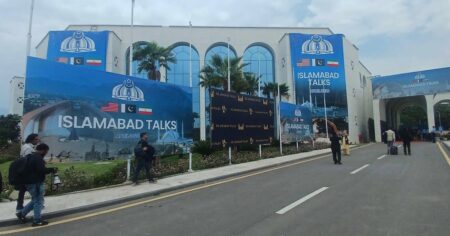
In the aftermath of marathon negotiations that failed to produce a breakthrough, Pakistan is working overtime to keep diplomatic channels open between the United States and Iran. A senior Pakistani government official confirmed that Islamabad has significantly ramped up its efforts to bring both nations back to the negotiating table, despite the disappointing outcome of this weekend’s face-to-face talks. What’s particularly notable is how Pakistani officials are now reframing these discussions—what was initially called the “Islamabad Talks” is increasingly being referred to as the “Islamabad Process.” This subtle but significant shift in language suggests Pakistan’s intention to establish this as an ongoing diplomatic track rather than a one-time meeting, signaling their commitment to facilitating continued dialogue between these longtime adversaries.
The urgency of Pakistan’s diplomatic push cannot be overstated. With the current ceasefire set to expire around April 22, there’s a rapidly closing window to reach some kind of workable understanding before the region potentially plunges back into all-out war. Pakistani authorities, while cautiously optimistic about the prospects for continued engagement, are acutely aware that time is not on anyone’s side. High-level sources indicate that Pakistan is in active contact with both Washington and Tehran, urging them to resume dialogue at the earliest opportunity. The goal is clear: facilitate a second round of talks within this narrow timeframe and prevent a return to the devastating conflict that has already taken such a heavy toll on the region. These diplomatic initiatives are being pursued under the direct instructions of Pakistan Prime Minister Shehbaz Sharif and Army Chief Field Marshal Asim Munir, both of whom played crucial roles in bringing the two sides together and were present at various points throughout the 21 hours of inconclusive talks. Pakistan is now waiting anxiously for responses from both the U.S. and Iran.
Trump Announces Blockade as Tensions Escalate
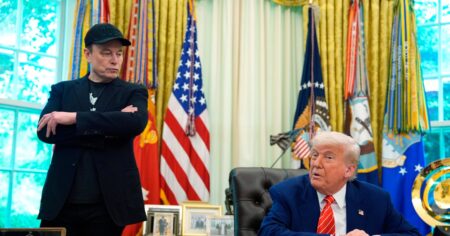
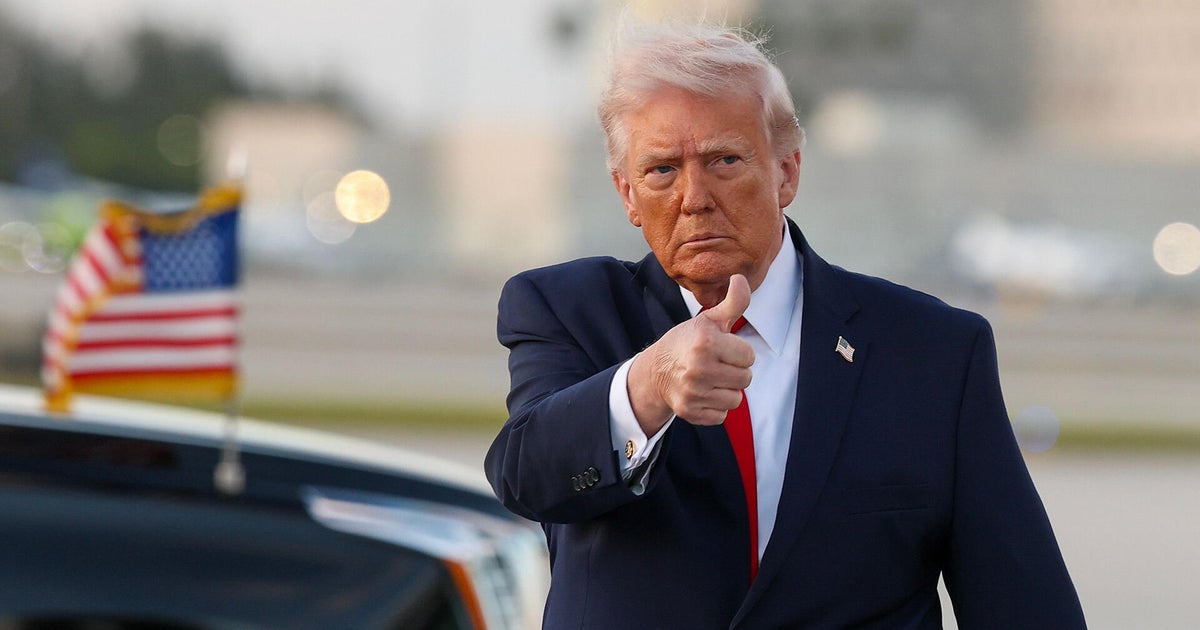
Just as diplomatic efforts intensify, President Trump has announced a dramatic escalation that threatens to derail any hope for renewed negotiations. In a characteristic late-night social media post on Truth Social shortly after midnight Monday, Trump declared: “The United States to Blockade Ships Entering or Exiting Iranian Ports on April 13 at 10:00 A.M. ET. Thank you for your attention to this matter! President DJT.” This blockade represents a significant military action that will affect not only Iranian ports but also the strategically vital Strait of Hormuz, through which Iran has been controlling traffic. This narrow waterway is absolutely critical for global commerce, serving as a transit point for oil, fertilizer, and countless other essential goods that keep the world economy running.
However, there’s an important distinction in how this blockade will operate. While Trump has announced restrictions on Iranian ports, U.S. Central Command has clarified that the U.S. Navy won’t stop vessels heading through the strait to and from non-Iranian ports. This suggests an attempt to target Iran specifically while minimizing disruption to international shipping more broadly—though the practical implementation of such a selective blockade remains to be seen. The timing of this announcement is particularly striking, coming immediately after the failure of weekend talks in Islamabad involving U.S., Iranian, and Pakistani negotiators to reach any agreement on ending the broader Middle East conflict. The move represents a shift from diplomacy back to pressure tactics, raising serious questions about whether negotiations can continue in this increasingly hostile environment.
Iran Responds with Defiance and Warnings
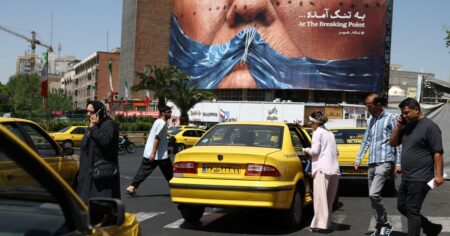
Iran’s response to the blockade announcement has been swift and uncompromising. The Iranian military’s central command center, Khatam Al-Anbiya, issued a statement that was read on state television, declaring the U.S. naval blockade illegal and tantamount to piracy. “The restrictions imposed by criminal America on maritime navigation and transit in international waters are illegal and constitute an example of piracy,” the statement declared, reflecting Iran’s view that the blockade violates international law governing freedom of navigation. But Iran didn’t stop at merely condemning the action—they issued a direct warning that significantly raises the stakes for the entire region.
“If the security of the Islamic Republic of Iran’s ports in the waters of the Persian Gulf and the Arabian Sea is threatened, no port in the Persian Gulf and the Arabian Sea will be safe,” the military statement continued. This warning is particularly concerning because the Persian Gulf region contains numerous ports belonging to other countries, including U.S. allies like Saudi Arabia, the United Arab Emirates, Kuwait, Bahrain, and Qatar. Iran’s threat suggests they may target shipping and port facilities throughout the region in retaliation for the U.S. blockade, potentially drawing other countries into the conflict and disrupting global energy supplies even further. Iranian parliament speaker Mohammad Bagher Qalibaf added another dimension to Iran’s response by posting a map of gas stations near the White House with a pointed message: “Enjoy the current pump figures. With the so-called ‘blockade’, Soon you’ll be nostalgic for $4–$5 gas.” This highlights Iran’s belief that the blockade will hurt American consumers through skyrocketing fuel prices, a vulnerability that could erode domestic support for the administration’s aggressive stance.
Diplomatic Breakdown: The Red Lines That Couldn’t Be Crossed
The failure of the Islamabad talks becomes more understandable when examining the specific areas where the two sides couldn’t find common ground. Vice President JD Vance, who represented the United States during the 56-hour Pakistan journey for these high-level negotiations, returned to Washington Sunday afternoon without the deal everyone had hoped for. According to U.S. government officials, the talks collapsed over several of America’s non-negotiable “red lines”—demands that the Iranian delegation simply could not or would not agree to. Understanding these sticking points is crucial to grasping why the path to peace remains so elusive and why both sides seem prepared to continue down a potentially catastrophic road.
The list of unresolved issues is extensive and touches on virtually every aspect of the conflict. Iranian delegates would not agree to end uranium enrichment or dismantle major nuclear enrichment facilities—the core issue that has driven Western concern about Iran’s nuclear program for years. They also refused to allow the retrieval of Iran’s highly enriched uranium, the material that could potentially be used to create nuclear weapons. Beyond the nuclear issue, Iran rejected accepting a framework for broader peace, security, and deescalation that would include regional allies, and they would not commit to ending funding for Hamas, Hezbollah, and the Houthis—the proxy groups through which Iran has extended its influence throughout the Middle East. Finally, Iran would not agree to fully open the Strait of Hormuz without charging passage tolls, an issue that has now become even more contentious with Trump’s blockade announcement. These fundamental disagreements suggest that the gulf between the two sides remains vast, making a quick resolution increasingly unlikely.
Broader International Implications and Growing Coalition
As the confrontation between the United States and Iran intensifies, other countries are being drawn into the expanding conflict. President Trump claimed that other nations would join the U.S. blockade of the Strait of Hormuz, and a senior NATO military official confirmed to CBS News that concrete planning is indeed underway. “The U.K. is leading planning efforts of a coalition comprised of more than 40 nations from around the world, many of which are from NATO, to reopen the Strait of Hormuz and protect freedom of navigation,” the official stated. While specific details weren’t provided, the official noted that these nations “are discussing what to do and when to do it, including the pre-positioning of assets now,” suggesting that military deployments may already be in motion.
However, Trump’s relationship with NATO remains complicated. He has been highly critical of the alliance throughout the war, telling reporters Sunday night, “I’m very disappointed in NATO, they weren’t there for us. We pay trillions of dollars for NATO, and they weren’t there for us.” This criticism highlights the complex dynamics at play, where the U.S. seeks international support for its actions while simultaneously expressing frustration with its traditional allies. Meanwhile, the economic consequences of the escalating crisis are already being felt by ordinary Americans. The situation in the Strait of Hormuz has sent global energy costs skyrocketing, with AAA reporting that the price of a gallon of regular gas has increased 40% since the day before the war with Iran began. When asked in a Fox News interview whether oil and gas prices would be lower before the midterm elections in November, Trump offered little reassurance: “It could be, or the same, or maybe a little bit higher, but it should be around the same.” For consumers watching prices climb at the pump, this answer provides cold comfort.
Human Rights Concerns Amid the Crisis
As international attention focuses on the military and diplomatic dimensions of the U.S.-Iran confrontation, a disturbing human rights situation continues to unfold within Iran itself. Two non-governmental organizations—the Norway-based Iran Human Rights (IHR) and Paris-based Together Against the Death Penalty (ECPM)—released a report Monday revealing that Iranian authorities executed at least 1,639 people in 2025, the highest number since 1989. This represents a shocking 68 percent increase from the 975 people Iran put to death in 2024 and includes 48 women who were hanged. The organizations emphasized that this figure represents an “absolute minimum” for the number of hangings, as the majority of executions are not reported in Iranian official media, and IHR requires two independent sources to confirm each execution before including it in their count.
The timing and scale of these executions appear directly connected to internal dissent and the external pressures facing the Iranian regime. The NGOs warned that if the Islamic Republic “survives the current crisis, there is a serious risk that executions will be used even more extensively as a tool of oppression and repression.” Particularly concerning is the fate of protesters arrested during January 2026 demonstrations against the authorities—a crackdown that rights groups say left thousands dead and tens of thousands detained. “Hundreds of detained protesters remain at risk of death sentences and execution” after being charged with capital crimes, according to the report. IHR director Mahmood Amiry-Moghaddam explained the regime’s strategy: “By creating fear through an average of four to five executions per day in 2025, authorities tried to prevent new protests and prolong their crumbling rule.” This grim domestic situation adds another layer of complexity to the international crisis, as it suggests a regime under severe internal pressure that may feel it has little room for compromise, even as external threats mount from the most powerful military in the world.