
The Broken Easter Truce: Russia and Ukraine Trade Accusations Over Ceasefire Violations
A Ceasefire That Never Really Was
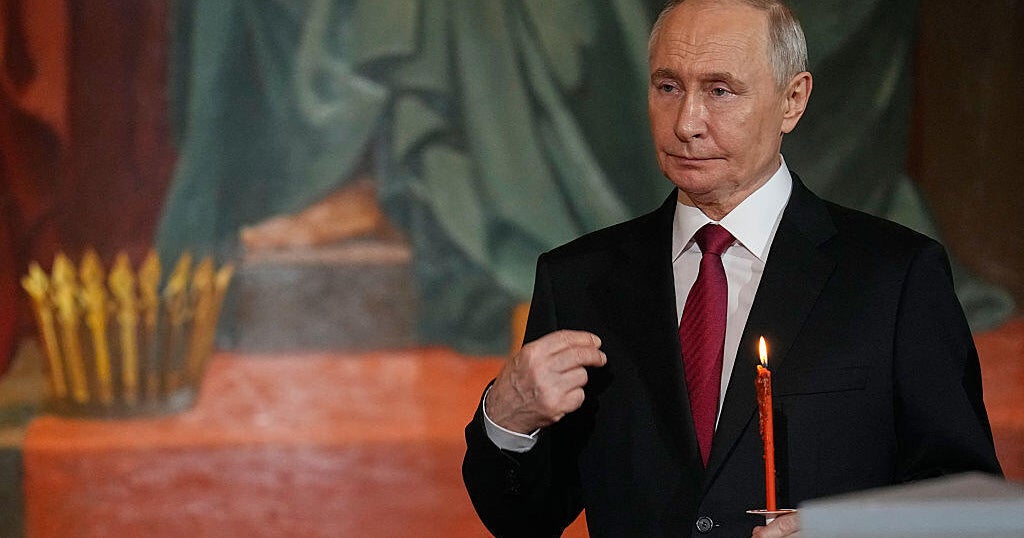
When Russian President Vladimir Putin announced a 32-hour ceasefire over the Orthodox Easter weekend, many held cautious hope that the guns might finally fall silent, even if just temporarily. The truce was meant to begin at 4 p.m. on Saturday and continue through the end of Sunday, offering a brief respite during one of the holiest periods in the Orthodox Christian calendar. Ukrainian President Volodymyr Zelenskyy agreed to honor the ceasefire but made it clear that Ukraine would respond swiftly to any violations. By Sunday morning, however, both nations were pointing fingers at each other, each claiming the other had shattered the fragile peace multiple times over. What was supposed to be a moment of reflection and spiritual observance instead became yet another chapter in the ongoing tragedy of this war, with both sides presenting vastly different versions of events and massive tallies of alleged violations.
Counting the Violations
The numbers themselves tell a grim story of how completely the ceasefire collapsed. Ukraine’s armed forces reported an astonishing 2,299 ceasefire violations by 7 a.m. on Sunday morning alone. According to their statement, these weren’t just minor infractions but included 28 enemy assault actions, 479 instances of shelling, 747 strikes by attack drones, and a staggering 1,045 strikes by FPV (first-person view) drones. Russia’s Defense Ministry countered with its own accounting, claiming to have recorded 1,971 ceasefire violations from the Ukrainian side. Their breakdown included accusations that Kyiv fired 258 times using artillery or tanks, conducted 1,329 FPV drone strikes, and dropped various types of munitions on 375 separate occasions. The fact that both sides documented such extensive violations raises troubling questions about whether either side ever truly intended to honor the ceasefire, or whether the brief truce was simply a public relations exercise. What’s clear is that for the soldiers and civilians caught in the crossfire, the promised Easter peace never materialized.
Political Posturing and Impossible Demands
Kremlin spokesman Dmitry Peskov made Russia’s position abundantly clear in an interview that aired on Sunday. Speaking to Russian news agencies, Peskov stated that Russia would not extend the temporary truce unless President Zelenskyy accepts Moscow’s terms—terms that essentially require Ukraine’s capitulation. “Sustainable peace can come when we secure our interests and achieve the goals we set from the very start,” Peskov declared, adding that this could happen “literally today” if Zelenskyy would simply accept what he called “well-known solutions.” The thinly veiled ultimatum continued with Peskov warning that “until Zelensky musters the courage to assume this responsibility, the special military operation will continue after the truce expires.” This rhetoric reveals how far apart the two sides remain. For Russia, “peace” means Ukraine surrendering to Russian demands, while for Ukraine, genuine peace requires the restoration of its territorial integrity and sovereignty. Recent months have seen several rounds of U.S.-brokered negotiations fail to bridge this fundamental gap. The diplomatic process, already challenging, has stalled even further since the outbreak of conflict in the Middle East, which has divided international attention and resources.
Faith Amid the Bombs
Despite the broken promises and continued violence, Ukrainians gathered to celebrate Easter with remarkable resilience and determination. Outside Kyiv, thousands of people came together at an open-air national heritage park, choosing to observe their faith traditions even while skeptical that any ceasefire would actually hold. The scene captured something profoundly human—people refusing to let war completely rob them of their spiritual life and cultural traditions. Worshippers clustered around wooden churches, participating in the annual blessing of baskets that would grace their holiday tables. Families arrived carrying the traditional symbols of Easter: intricately dyed eggs and paska cakes that had been lovingly baked the night before. Many women wore colorful traditional scarves, adding splashes of brightness to a landscape otherwise dominated by the gray reality of war. Some waited patiently for the blessing of their food, while others had already begun picnicking on the grass, creating small islands of normalcy in an abnormal world. These celebrations represented more than just religious observance—they were acts of defiance, declarations that the spirit of a people cannot be bombed into submission.
Hope Tempered by Hard Reality
Among the Easter celebrants was Irena Bulhakova, whose words captured the complicated emotional landscape many Ukrainians now inhabit. She expressed deep skepticism about the prospects for genuine peace, drawing on bitter experience to support her doubts. “Every time a ceasefire is announced for a holiday, the shelling continues regardless,” she observed, her statement reflecting a painful pattern that has repeated itself throughout this conflict. Previous attempts to secure even temporary ceasefires have had little or no meaningful impact on the ground, teaching Ukrainians to expect disappointment when truces are announced. Yet despite this hard-earned cynicism, Bulhakova still found room for hope in the Easter message itself. “Good triumphs over darkness, and we hope for that very much,” she said, her words embodying the resilience that has allowed Ukrainians to endure years of warfare. This tension between realistic pessimism and stubborn hope defines the Ukrainian experience today—a people who have learned not to trust promises of peace while simultaneously refusing to abandon the belief that peace will eventually come.
The Long Road Ahead
The failed Easter ceasefire is more than just a broken promise—it’s a symptom of the deeper crisis that has now stretched more than three years since Russia’s February 2022 invasion. What both sides’ willingness to immediately violate the truce (or to accuse the other of doing so) demonstrates is that the fundamental conditions for peace simply don’t exist. Russia continues to frame the war as a “special military operation” with specific objectives that must be achieved, while Ukraine views it as an existential fight for survival and sovereignty. These incompatible positions leave little room for compromise. The international community’s attention has been divided by other crises, particularly in the Middle East, making sustained diplomatic pressure more difficult. Meanwhile, ordinary people on both sides continue to pay the price for their leaders’ inability or unwillingness to find common ground. The Orthodox Easter celebrations, with their themes of resurrection and renewal, offered a poignant contrast to the reality of continued violence. For Ukrainians gathering around those wooden churches, blessing their Easter baskets while remaining under the shadow of war, the holiday serves as a reminder of what they’re fighting to preserve—not just territory, but a way of life, a culture, and the freedom to observe their traditions without fear. Until the political will exists to move beyond ultimatums and accusations, scenes like this will continue: people celebrating life while death remains just a drone strike away, holding onto hope while preparing for the worst, marking holy days that are anything but peaceful.