
Ukraine’s Wartime Innovation: Trading Drone Defense Expertise for Advanced Weapons
From Necessity to Global Defense Player
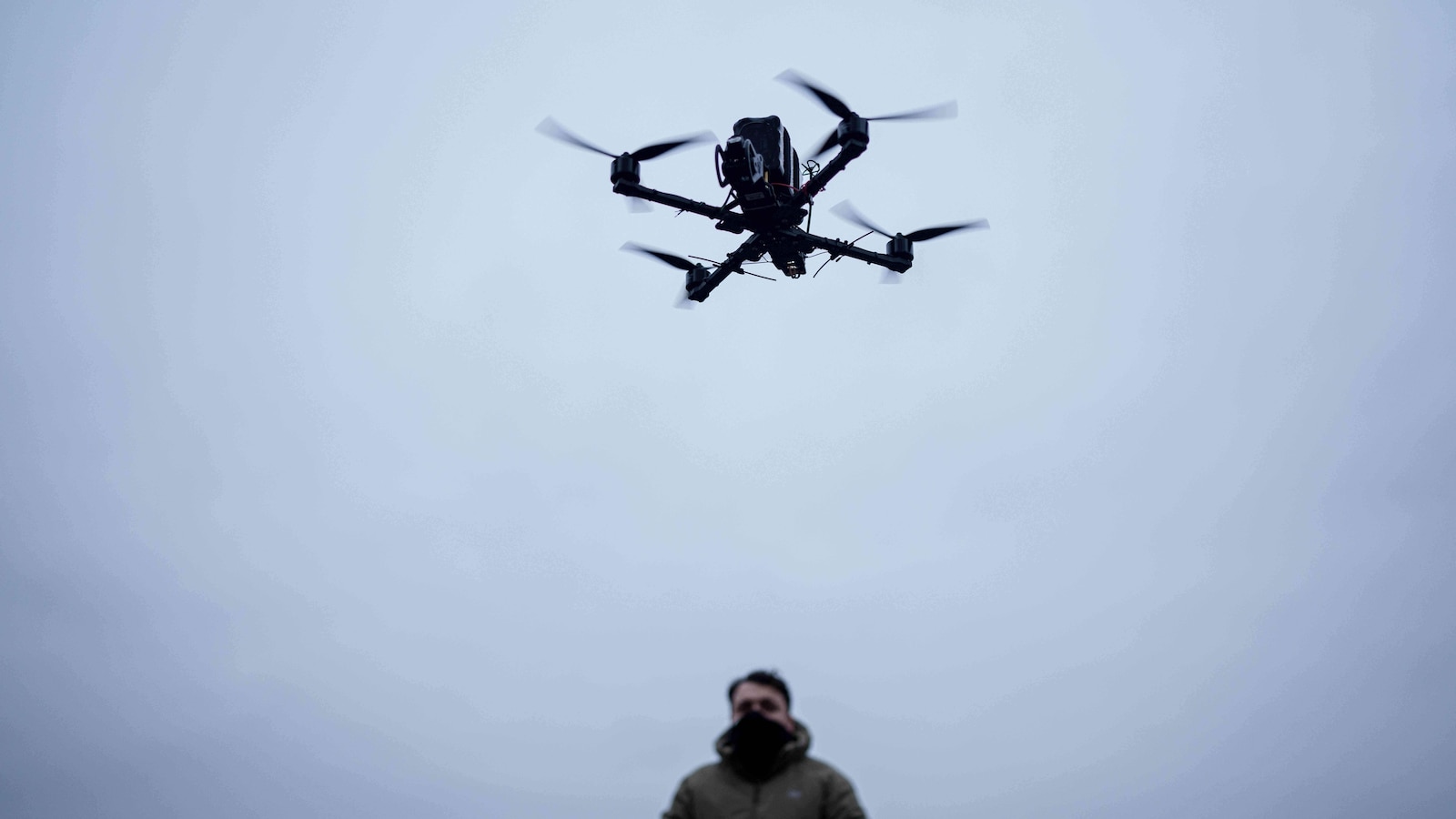
Ukraine’s transformation from a nation with a struggling defense industry to a world leader in anti-drone technology represents one of the most remarkable wartime innovations of the 21st century. When Russian forces launched their full-scale invasion four years ago, Ukraine’s domestic arms production was severely limited and inadequate for the challenges ahead. Survival became the ultimate motivator for innovation, and what emerged was a thriving defense sector that has caught the attention of global military powers. At the center of this transformation are low-cost interceptor drones specifically designed to neutralize Iranian-style Shahed attack drones—the same weapons Russia now deploys by the hundreds against Ukrainian targets. Now, as conflicts in the Middle East create similar challenges for U.S. allies, Ukraine sees an opportunity to leverage its hard-won expertise into something more valuable: access to the high-end weapons systems it cannot produce domestically but desperately needs to survive.
The proposal is straightforward yet strategically complex. President Volodymyr Zelenskyy has offered to share Ukraine’s interceptor drone technology and combat-tested expertise with the United States and Gulf partners struggling with their own drone defense challenges. In return, Ukraine hopes to receive Patriot missiles and other advanced air defense systems that remain beyond its manufacturing capabilities. The U.S. has already requested “specific support” against Iranian-designed Shaheds operating in the Middle East, prompting Zelenskyy to order the deployment of Ukrainian equipment and specialists, though the specific details remain classified for security reasons. This potential arrangement represents more than a simple arms trade—it’s a geopolitical gambit that could establish Ukraine as a significant player in modern warfare technology while addressing critical vulnerabilities in its own defense infrastructure.
The Economics of Asymmetric Warfare
The financial mathematics driving interest in Ukrainian technology reveals the unsustainable economics currently plaguing Middle Eastern air defense. Gulf states have been burning through stockpiles of expensive Patriot interceptor missiles to shoot down relatively cheap Shahed drones from Iran, creating a cost imbalance that favors the attacker. A single Iranian-designed Shahed drone costs approximately $30,000 to produce, while the interceptor missiles used by U.S.-made Patriot air defense systems cost several million dollars each. This disparity means defenders are spending hundreds of times more than attackers to neutralize threats—an equation that cannot be sustained indefinitely without depleting both financial resources and critical missile stockpiles.
The scale of this problem became starkly apparent during recent Middle Eastern conflicts. Zelenskyy revealed that Middle Eastern nations expended over 800 Patriot interceptor missiles in just three days of defensive operations—a number that exceeds Ukraine’s entire reserve stockpile accumulated throughout four years of war. Even at maximum production capacity, American defense contractor Lockheed Martin produced only 600 PAC-3 MSE interceptors for Patriot batteries during all of 2025, underscoring how quickly current consumption rates could exhaust available supplies. Against this backdrop, Ukraine’s development of interceptor drones priced between $1,000 and $2,000 represents a paradigm shift in cost-effective air defense. These systems can neutralize Shahed drones at a fraction of the cost of traditional missile interceptors, fundamentally changing the economic calculation of asymmetric warfare.
Ukraine’s achievement lies not merely in developing these systems but in moving them from prototype to mass production within months during 2025. According to Oleh Katkov, editor-in-chief of Defense Express, Ukraine possesses the only mass-produced interceptor drone system already proven effective in actual combat conditions. “There is a huge difference between a mass-produced system proven to work in real combat and something others only promise to develop,” Katkov explained. “It’s like selling the house, not just the bricks.” This real-world validation gives Ukrainian technology a competitive advantage that laboratory testing and simulations cannot replicate, making it particularly attractive to nations facing immediate threats.
The Strategic Exchange: Drones for Patriots
Ukraine’s proposal centers on what Zelenskyy characterizes as a straightforward “swap” arrangement with international partners. “Our message is very simple,” the president stated. “We’d like to quietly receive the Patriot missiles we have a deficit of, and give them a corresponding number of interceptors.” This exchange addresses complementary vulnerabilities: Ukraine has surplus capacity in low-cost drone interceptors but lacks defenses against ballistic missiles, while Gulf states possess advanced missile defense systems but need economical solutions for drone threats. The arrangement would theoretically benefit all parties—Ukraine would gain the high-altitude, long-range defensive capabilities essential for protecting cities and critical infrastructure from ballistic missile attacks, while partner nations would receive cost-effective tools for countering the drone swarms that have proven so problematic.
Ukrainian manufacturers indicate they possess both surplus stocks and the capacity to dramatically scale production without compromising their own national defense. Marco Kushnir, spokesperson for General Cherry, a Ukrainian weapons manufacturer producing one of the country’s best-performing interceptor drones, stated his company could be ready to supply partners within days and has the capacity to produce “tens of thousands” of interceptors monthly. Another manufacturer, Skyfall, claims production capacity reaching up to 50,000 units per month for their 3D-printed P1-Sun interceptor, which costs approximately $1,000 and can reach speeds exceeding 300 kilometers per hour. These production figures suggest Ukraine could supply substantial quantities to international partners while maintaining adequate domestic defense capabilities.
However, the actual implementation faces significant complications beyond simple manufacturing capacity. Ukraine currently maintains a wartime ban on weapons exports that would need modification or exemption to permit such transfers. Ukrainian officials have only recently begun discussing the shift from a complete export freeze to a state-regulated market system, though specifics about timing and structure remain unclear. “We need more than just presidential statements. We need action,” cautioned Yevhen Mahda, executive director of the Kyiv-based Institute of World Policy. “How can we talk about exports if we officially aren’t selling anything yet?” The legal and regulatory framework necessary to facilitate these transfers represents a substantial hurdle that presidential optimism alone cannot overcome.
Navigating the Complex Global Arms Market
Beyond regulatory challenges, Ukraine faces the intricate geopolitical realities of the international defense market, where established relationships, political considerations, and strategic interests often matter as much as technological capabilities. Mahda warns that entering this arena requires more than having an effective product and a compelling narrative. “Weapon trading is an incredibly subtle and sensitive issue,” he explained, noting that the United States dominates this market and that it would be “naive” to expect markets to open simply because Ukraine has developed impressive technology under wartime pressure. “It requires a tough, calculated diplomatic game,” Mahda emphasized, suggesting that successful market entry will demand sophisticated negotiation and strategic patience beyond Ukraine’s current approach.
The interest from potential customers appears genuine and substantial. According to three Ukrainian weapons producers, the United States and multiple Gulf countries—including the United Arab Emirates, Bahrain, Saudi Arabia, and Qatar—have made repeated requests for Ukraine’s domestically produced interceptor drones. While these nations did not immediately respond to requests for comment from The Associated Press, the consistency of these reports from multiple independent sources suggests serious interest. Ukrainian manufacturers express readiness to fulfill these requests, with General Cherry’s Kushnir stating, “We are ready to share them, and we want to share them,” while acknowledging that final decisions rest with government authorities and President Zelenskyy.
The competitive advantage Ukraine offers extends beyond hardware to include irreplaceable combat experience. Several Ukrainian firms have developed and field-tested effective systems under the most demanding conditions imaginable—actual wartime deployment against a determined adversary. General Cherry’s “Bullet” interceptor, developed in late 2025, has successfully downed several hundred Shahed drones according to company representatives, providing real-world performance data that no simulation can match. This operational history gives potential customers confidence that the systems will perform as advertised under actual combat stress, not just controlled testing environments. In a market where reliability can mean the difference between protected populations and catastrophic casualties, this proven effectiveness carries enormous value.
Beyond Hardware: The Human Element
While the physical interceptor drones represent impressive technological achievement, Ukraine’s most valuable and difficult-to-replicate asset may be the human expertise developed through years of continuous combat operations. Interceptor drones are not standalone products that can simply be shipped and immediately deployed. They must be integrated into broader defensive systems incorporating radar detection, tracking capabilities, command and control infrastructure, and trained operators who understand both the technology and the tactical employment doctrines that maximize effectiveness. As Andrii Taganskyi, director of the Camera Business at Odd Systems, which supplies cameras for interceptor drones made by Wild Hornets, explained, training foreign crews to operate the systems and adapt tactics to their specific operational environments will be essential for successful deployment.
President Zelenskyy has repeatedly emphasized Ukraine’s willingness to send instructors who can teach partner nations how to effectively employ these interceptors. This knowledge transfer represents a critical component of any potential agreement, as the technology’s effectiveness depends heavily on proper integration and operation. “This is a tool that requires training,” Katkov noted. “And the real, proven expertise—not just on paper—exists only in Ukraine.” While some interceptor models incorporate partial automation, manufacturers stress that crews still require substantial training to use them effectively, particularly in integrating drone operations with radar systems that detect and track incoming targets at long range. The tactics, techniques, and procedures developed through Ukraine’s brutal trial-by-fire cannot be learned from manuals alone.
However, deploying Ukrainian military specialists abroad to train foreign forces represents a significant strategic sacrifice given Ukraine’s own desperate personnel situation. With Russian forces maintaining constant pressure along extensive front lines and launching relentless drone and missile attacks against Ukrainian territory, every trained soldier represents a vital and increasingly scarce asset. “We do not have a surplus of military personnel at the front,” Katkov acknowledged frankly. The decision to potentially send experienced drone operators and instructors abroad means accepting reduced domestic defensive capabilities in the short term. Yet Ukrainian leadership appears willing to make this sacrifice based on calculated assessment of potential long-term benefits. “However, there is a clear understanding that the benefits of such cooperation might far outweigh the risks,” Katkov explained, suggesting confidence that advanced weapons systems received in exchange would more than compensate for temporary personnel gaps.
The Path Forward: Uncertainty and Opportunity
Ukraine stands at a potentially transformative moment, with the opportunity to leverage wartime innovation into geopolitical influence and enhanced defensive capabilities. The country’s emergence as a leading producer of cost-effective anti-drone technology addresses a genuine and growing global security challenge, creating demand for Ukrainian expertise in regions far from Eastern Europe. If cooperation with international partners succeeds as envisioned, Ukraine could establish itself as a significant new player in modern warfare technology, diversifying its economy and creating sustainable defense industrial capacity that will serve the nation long after the current conflict ends. This transformation would represent a remarkable achievement for a country whose defense industry was considered inadequate just four years ago.
However, substantial uncertainty remains about whether Ukraine’s defense industry can successfully scale to meet these ambitions while maintaining adequate domestic protection. Expanding into global markets requires navigating complex regulatory environments, establishing reliable supply chains, managing intellectual property concerns, and building the diplomatic relationships that facilitate international defense cooperation. The gap between presidential statements of intent and functional export frameworks remains significant, and bridging it will require sustained effort across multiple government agencies and legislative bodies. Additionally, the primary mission of Ukraine’s defense industry remains supporting the country’s survival against ongoing Russian aggression—a priority that cannot be compromised for export opportunities, no matter how lucrative or strategically valuable they might appear.
The coming months will reveal whether Ukraine’s ambitious vision of trading anti-drone expertise for advanced weapons systems can overcome these practical obstacles. Success would provide a model for how nations facing existential threats can innovate under pressure and translate battlefield necessity into strategic advantage. It would demonstrate that smaller nations can achieve technological breakthroughs that interest major powers and leverage those achievements for vital national security gains. Failure, conversely, would highlight the difficulties of entering established international markets despite possessing valuable technology and the challenges of balancing immediate survival needs against longer-term strategic opportunities. Regardless of the outcome, Ukraine’s rapid development of effective, economical anti-drone systems has already influenced global thinking about asymmetric warfare and cost-effective defense, ensuring that the innovation born from desperate necessity will have lasting impact on military technology and doctrine worldwide.