


Iran’s Controversial Control of the Strait of Hormuz: A Critical Turning Point in Global Oil Politics
Defining “Non-Hostile” Access to the World’s Most Strategic Waterway
In a move that has sent ripples through international shipping and energy markets, Iran’s Ministry of Foreign Affairs has formally notified the United Nations’ International Maritime Organization that the Strait of Hormuz—one of the world’s most vital oil transit routes—will remain open only to what Tehran considers “non-hostile” vessels. This declaration, contained in a letter dated March 22, establishes a new and potentially troubling precedent for international maritime law. According to the Iranian government, “non-hostile” ships are specifically defined as those flying flags of countries that “neither participate nor support acts of aggression against Iran” attributed to the United States and Israel. Furthermore, these supposedly friendly vessels must “fully comply with the declared safety and security regulations,” though Iranian authorities have been conspicuously vague about what these regulations actually entail. The letter explicitly states that any vessels, equipment, or assets belonging to “the aggressor parties—namely the United States and the Israeli regime—as well as other participants in the aggression, do not qualify for innocent or non-hostile passage.” This dramatic assertion effectively transforms one of the world’s most important international waterways into a selectively accessible channel under Iranian control, fundamentally challenging the principle of freedom of navigation that has underpinned global maritime commerce for generations.
Iran’s Strategic Calculus and the Rejection of Peace Proposals
This bold declaration comes at a particularly tense moment in Middle Eastern geopolitics, coinciding with the Trump administration’s delivery of a comprehensive 15-point plan aimed at ending the military conflict that erupted on February 28 with a coordinated attack by American and Israeli forces. However, according to Press TV, Iran’s state-run English-language media outlet, an Iranian official confirmed that Tehran has firmly rejected this proposal. The official’s statement was unequivocal: “Iran will end the war when it decides to do so and when its own conditions are met.” According to Press TV’s reporting, among Iran’s conditions for peace is formal recognition of its sovereignty over the Strait of Hormuz—a demand that would fundamentally reshape the international legal framework governing this critical waterway. Iranian Foreign Minister Abbas Araghchi reinforced this position in a separate interview on state television, declaring that “Iran’s power is the Hormuz Strait.” He elaborated on Iran’s current policy, explaining that “from our point of view, the Hormuz Strait is not completely closed; it is closed only to our natural enemies. We are in a wartime situation; the region is a war zone. There is no reason to allow the ships of our enemies and their allies to pass, but it is free for the rest.” This statement reveals Iran’s strategic thinking—using control of the strait not as a blanket blockade but as a selective tool to divide potential adversaries from neutral or sympathetic nations.
America’s Military Response and the Escalating Conflict
The United States has responded to Iran’s actions with a combination of diplomatic pressure and military force. During a White House briefing, press secretary Karoline Leavitt emphasized the administration’s determination to address what she characterized as an escalating oil crisis, stating that “our military also remains laser focused on eliminating the regime’s threat to the free flow of energy through the Strait of Hormuz.” Leavitt detailed recent American military operations, noting that “over the weekend, we dropped several 5,000-pound bombs on an underground facility used to store equipment, including anti-ship cruise missiles and mobile missile launchers positioned along the coastline of the strait.” She expressed confidence in the ongoing campaign, asserting that “our military efforts grow more successful with each passing day, steadily degrading Iran’s ability to terrorize merchant ships.” However, when pressed by reporters on when oil tankers might be expected to travel freely through the strait once again, Leavitt declined to provide any specific timeline, suggesting that the administration recognizes the complexity and potentially prolonged nature of this confrontation. The military dimension of the crisis further intensified when Iran’s Defense Council issued a stark warning on Tuesday, threatening to deploy naval mines across the “entire Persian Gulf” if the United States commits ground troops to Iranian territory—a threat that would dramatically escalate the conflict and potentially make the waterway impassable for all vessels regardless of their national origin.
The Human and Economic Toll on Global Shipping
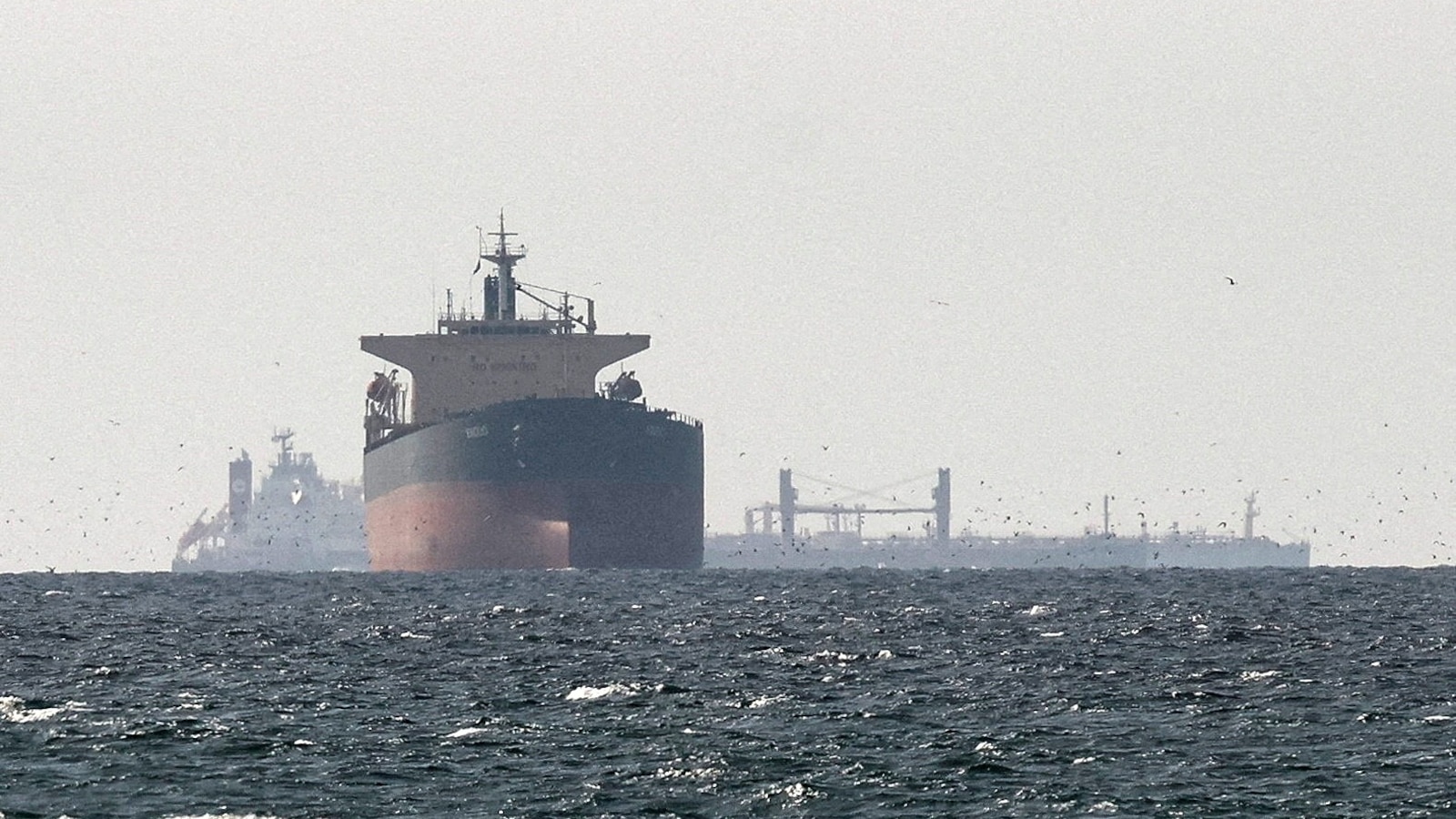
The human and economic consequences of this crisis are already becoming painfully apparent. An IMO spokesperson confirmed on Wednesday that 18 commercial ships operating in the Persian Gulf near the Strait of Hormuz have been targeted in strikes, resulting in the deaths of seven seafarers and one port worker. According to an independent analysis conducted by ABC News, at least five oil and gas tankers have already been hit by Iranian strikes in the Persian Gulf. Beyond the tragic loss of life, the IMO spokesperson revealed that approximately 20,000 seafarers are currently stranded in the Persian Gulf due to the closure of the strait, and these maritime workers are “facing mental strain, fatigue and decreasing supplies.” This humanitarian dimension of the crisis often receives less attention than the geopolitical and economic implications, but for the thousands of individuals trapped in what has effectively become a war zone, the situation is desperate and deteriorating. Ed Finley-Richardson, a shipping investment analyst for Contango Research, offered a blunt assessment of Iran’s letter to the IMO: “Iran has targeted neutral commercial vessels with no ties to the U.S. or Israel in order to create an atmosphere of terror which prevents an essential trade corridor from functioning.” This analysis suggests that Iran’s assurances about allowing “non-hostile” passage are essentially meaningless in practice, as the regime has demonstrated a willingness to attack ships regardless of their actual neutrality.
Global Energy Markets in Crisis
The stakes in this confrontation extend far beyond regional politics—they reach into the energy security of nations across the globe. In 2024, an average of approximately 20 million barrels of oil per day passed through the Strait of Hormuz, representing roughly 20% of all liquid petroleum consumed worldwide, according to data from the U.S. Energy Information Administration. The vast majority of this oil is destined for Asian markets, with nearly 5 million barrels per day arriving in China via the strait and about 2 million barrels per day reaching India. The potential disruption of this flow has profound implications for the global economy, potentially driving oil prices to unprecedented levels and triggering economic instability in energy-dependent nations. Interestingly, data from MarineTraffic, a global ship tracking service, indicates that some vessel traffic may be cautiously resuming through the strait. Since Tuesday, nine vessels flying the flags of India, Palau, Comoros, Curacao, and Panama have reportedly transited the strait safely. Finley-Richardson noted that “we are also now seeing occasional passage granted to Indian and other Asian vessel owners, but it seems to be on an unpredictable, ad hoc basis.” This selective reopening suggests that Iran is attempting to implement its stated policy of distinguishing between hostile and non-hostile vessels, though the unpredictable nature of passage permissions creates enormous uncertainty for shipping companies trying to make operational decisions.
Iran’s Sophisticated Geopolitical Strategy
According to experts analyzing Iran’s approach, there appears to be a calculated strategy at work that goes beyond simple military confrontation. Ramanan Krishnamoorti, a professor of petroleum engineering at the University of Houston, suggests that Iran is attempting to appease major energy consumers like China and India by selectively allowing their vessels passage. “I think those are the countries that have not been in the crosshairs of the Iranians because they’re looking to trade with them and they’ve got partnerships with them. And, in fact, a lot of their oil goes to China and India,” he explained. However, Krishnamoorti also believes Iran is simultaneously trying to create “economic war between the U.S. and China and India,” capitalizing on the natural tensions that arise when allies must choose between political alignment and economic necessity. “In some ways, the Iranians are playing this global game of appeasing certain groups to make sure that they aren’t seen as the villains of the world,” Krishnamoorti observed. He also noted that Iran may be attempting to create “fissures to the links between the United States and Europe,” which depends heavily on oil shipped through the strait. “Some of this is going to relieve the stress on Europe. Europe has been steadfast in its approach that this is not their war,” he said, suggesting that by selectively allowing European-bound shipments, Iran might weaken European support for American policies. Krishnamoorti characterized the Iranian approach as “playing a very strong political game,” adding that “we might have decapitated a lot of the leadership, but they are still able to find ways to create fissures in our ecosystem.” This analysis highlights the sophistication of Iran’s strategy—using control of the Strait of Hormuz not simply as a weapon of war but as a diplomatic tool to divide adversaries, reward potential allies, and reshape the international response to the conflict in ways favorable to Tehran’s long-term interests.