
U.S. Intelligence Reveals China and Russia’s Support for Iran Amid Middle East Conflict
Growing Concerns Over International Alliance Against American Interests
In the aftermath of military operations that began last month between U.S.-Israeli forces and Iran, American intelligence agencies have identified troubling developments that suggest the conflict may be expanding beyond its original scope. According to multiple U.S. officials with knowledge of sensitive national security matters, both China and Russia have taken steps to support Iran in ways that could significantly complicate American and Israeli military strategies in the region. The Defense Intelligence Agency, which serves as the Pentagon’s primary military intelligence organization, has assessed that Chinese officials have been actively considering whether to supply Tehran with sophisticated radar technology. Meanwhile, separate intelligence reports have confirmed that Russia has been sharing critical information with Iran regarding the locations and movements of American military assets throughout the Middle East. While Russian intelligence sharing has been previously documented by news organizations, the potential Chinese involvement represents a more concerning development, suggesting that major global powers are increasingly willing to coordinate—whether formally or informally—in efforts to challenge and constrain U.S. influence and military operations in this strategically vital region.
Advanced Technology That Could Change the Battlefield
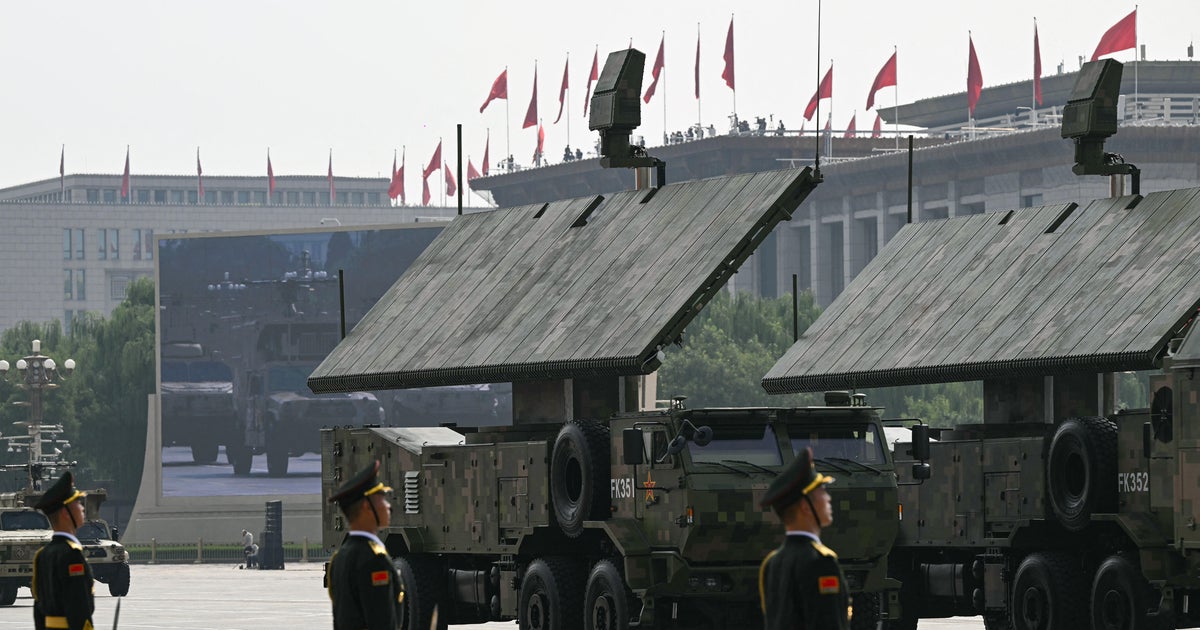
The specific technology that China has reportedly considered providing to Iran carries significant implications for the military balance in the region. U.S. officials, speaking confidentially due to the classified nature of the intelligence, revealed that Beijing has deliberated supplying Iran with X-band radar systems, representing some of the most advanced detection technology available. These sophisticated radar systems would dramatically improve Iran’s defensive capabilities by enabling Iranian forces to identify and track a wide range of incoming threats with far greater accuracy and at longer ranges than their current systems allow. Most critically, X-band radar would enhance Iran’s ability to detect low-flying threats such as drones and cruise missiles—precisely the types of weapons that have been central to U.S. and Israeli military operations. This technology would also help protect Iran’s existing air defense installations against the kind of precision strikes that have been employed against Iranian military infrastructure. At this time, American intelligence agencies have not confirmed whether China actually completed any transfer of this radar technology to Iran, but the mere fact that such assistance was under serious consideration has raised alarm bells throughout the U.S. national security establishment. The situation underscores a fundamental concern among American strategic planners: that the Iranian conflict is attracting support not just from regional adversaries but from major global competitors who appear willing to provide substantial military assistance without directly entering the conflict themselves.
Satellite Intelligence and Space-Based Surveillance
The intelligence picture became even more complex this week following reports that Iran’s Islamic Revolutionary Guard Corps has been utilizing commercial satellite imagery obtained from Chinese sources to enhance its targeting of American military bases across the Middle East. According to a report published by the Financial Times, leaked Iranian military documents revealed that the Revolutionary Guard had secretly purchased access to a spy satellite operated by Chinese company Earth Eye Co., using the high-resolution imagery to identify and track U.S. military positions. Two U.S. officials familiar with classified intelligence assessments confirmed to CBS News that Tehran has indeed used satellite imagery provided by Chinese sources during the current conflict involving Israel and American forces, though these officials could not independently verify whether Earth Eye Co. specifically was the supplier. This revelation takes on additional significance in light of findings published in a Pentagon report last December examining China’s military capabilities, which noted that as of 2024, multiple commercial satellite companies based in China had established business relationships with Iran’s Islamic Revolutionary Guard Corps. The intelligence community’s 2026 Annual Threat Assessment, an unclassified evaluation of global security challenges, explicitly warned that China has dramatically accelerated its development of space-based capabilities and now represents the primary competitor to American space dominance, having surpassed Russia in this domain. The assessment stated clearly that “Beijing’s rapid deployment of space capabilities positions it to use space to advance its foreign policy goals, challenge U.S. military and technological superiority in space, and project power on a global scale.”
Broader Military Support and Delivery Methods
Beyond radar systems and satellite imagery, U.S. intelligence has also detected evidence that China may be weighing the transfer of additional air defense systems to Iran through methods designed to obscure Beijing’s direct involvement. According to two officials with knowledge of the intelligence, these potential transfers could be routed through third-party countries as a way to provide Iran with enhanced defensive capabilities while maintaining plausible deniability about China’s role as the original supplier. CNN reported last week that the intelligence community had specifically identified preparations for China to deliver shoulder-fired surface-to-air missile systems, commonly known as MANPADs (Man-Portable Air Defense Systems), to Iranian forces. Democratic Senator Mark Warner of Virginia, who serves as vice chairman of the Senate Intelligence Committee and therefore has access to some of the government’s most sensitive intelligence, characterized the reports of potential Chinese provision of new air defense systems to Iran as “significant” developments. Speaking on CBS’s “Face the Nation” program on Sunday, Senator Warner addressed China’s typical practice of attributing such activities to private commercial entities rather than government agencies, stating bluntly: “They try to hide themselves. China says, well, this is their private sector. We all know there is no such thing as a true private sector in China. Every company in China has to have its first loyalty to the Communist Party.” This comment reflects a broader U.S. government position that distinctions between Chinese commercial companies and the Chinese government are essentially meaningless when it comes to activities that support Chinese strategic interests.
Diplomatic Efforts and Presidential Communications
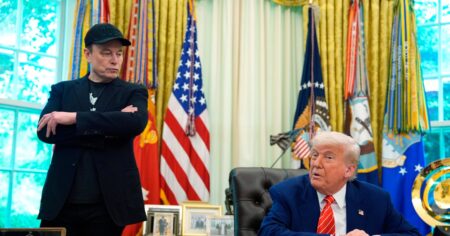
The Trump administration has undertaken direct diplomatic engagement with Chinese leadership in an attempt to prevent Beijing from providing military assistance to Iran. President Trump revealed in an interview that aired Wednesday on the Fox Business Network that he had sent a letter to Chinese President Xi Jinping explicitly asking him not to supply weapons to Iran, though the President did not specify when this correspondence was exchanged. Defense Secretary Pete Hegseth, when questioned Thursday about the intelligence assessments regarding potential Chinese military support for Iran, sought to downplay concerns by emphasizing the personal relationship between the two leaders: “President Trump has a very strong and direct relationship with President Xi, and they’ve communicated on that, and China has assured us that that indeed is not going to happen.” President Trump is scheduled to visit China next month for what is being described as a high-stakes summit that will address multiple overlapping crises and strategic interests between the two powers. A spokesperson for the Chinese Embassy in Washington declined to provide specific responses to questions about the letters President Trump referenced, but offered a general statement characterizing China’s position on Iran as “open and aboveboard,” claiming that “We uphold an objective and impartial stance and have made efforts to promote peace talks. We never engage in actions that escalate conflicts.”
Economic Threats and International Responses
The Trump administration has attempted to use economic leverage to deter countries from providing military support to Iran. Last week, President Trump issued a stark warning that any country supplying weapons to Iran would face immediate tariffs of 50% on their exports to the United States—a threat clearly directed at major trading partners like China. The Chinese government responded firmly to these threats, with Foreign Ministry spokesperson Guo Jiakun stating on Wednesday that media reports alleging Beijing was supplying Tehran with weapons were “purely fabricated” and warning that any tariffs imposed by the Trump administration based on such allegations would be met with countermeasures from China. This exchange highlights the increasingly complex intersection of trade policy, military competition, and regional conflicts that characterizes the current U.S.-China relationship. The situation places the upcoming summit between President Trump and President Xi in a particularly challenging context, as the two leaders will need to navigate not only their longstanding trade disputes and technology competition but also their conflicting interests regarding Iran and the broader Middle East. For American policymakers and intelligence officials, the apparent willingness of both China and Russia to provide varying forms of support to Iran represents a concerning development that could significantly complicate U.S. military operations and strategic objectives in the region while also reflecting the emergence of a more coordinated effort among major powers to challenge American influence in critical parts of the world.