


High-Stakes Diplomacy: U.S. Engages in Critical Talks with Iran and Russia Over Nuclear Program and Ukraine Conflict
Cautious Optimism Emerges from Iran Nuclear Negotiations
In a significant diplomatic effort to address mounting international tensions, American officials met with their Iranian counterparts in Geneva this week to discuss Tehran’s nuclear energy program. The Tuesday talks yielded what U.S. officials described as modest progress, though substantial obstacles remain. Following the discussions, a U.S. official acknowledged that while headway was made, numerous details still require extensive negotiation. Iranian representatives indicated their willingness to continue the dialogue, promising to return within two weeks with detailed proposals aimed at bridging the existing gaps between the two nations’ positions. This commitment to continued engagement represents a potentially important step forward in what has been a contentious and complicated diplomatic relationship spanning decades.
However, the optimism was tempered by comments from U.S. Vice President JD Vance, who revealed during a Fox News interview that fundamental disagreements persist. Vance explained that President Donald Trump has established certain non-negotiable “red lines” that Iranian officials have not yet acknowledged or shown willingness to address. He emphasized that while the agreement to continue meeting was encouraging, the diplomatic process remains fragile. The Vice President made clear that President Trump retains the authority to determine when diplomatic efforts have exhausted their potential, though he expressed hope that such a determination wouldn’t become necessary. This balanced assessment reflects the delicate nature of negotiations with Iran, where decades of mistrust and conflicting national interests create significant challenges for any diplomatic breakthrough.
Iranian Foreign Minister Abbas Araqchi offered a more optimistic perspective, characterizing the talks as opening a “window of opportunity” for sustainable solutions. Speaking to the United Nations Conference on Disarmament, Araqchi expressed hope that negotiations could produce an agreement serving the interests of all relevant parties and contributing to broader regional stability. However, he also issued a subtle warning, referencing a military confrontation from June 2025 to emphasize that Iran remains prepared to defend itself against any threats or acts of aggression. Araqchi didn’t shy away from criticizing past American actions, particularly the unilateral U.S. withdrawal from the Joint Comprehensive Plan of Action (JCPOA) during Trump’s first administration. He argued that this withdrawal, which he characterized as a clear violation of an internationally endorsed agreement, had severely damaged trust in multilateral obligations and undermined the credibility of the current negotiating process. This historical grievance continues to cast a shadow over contemporary diplomatic efforts.
Intensive Negotiations Continue on Ukraine Crisis
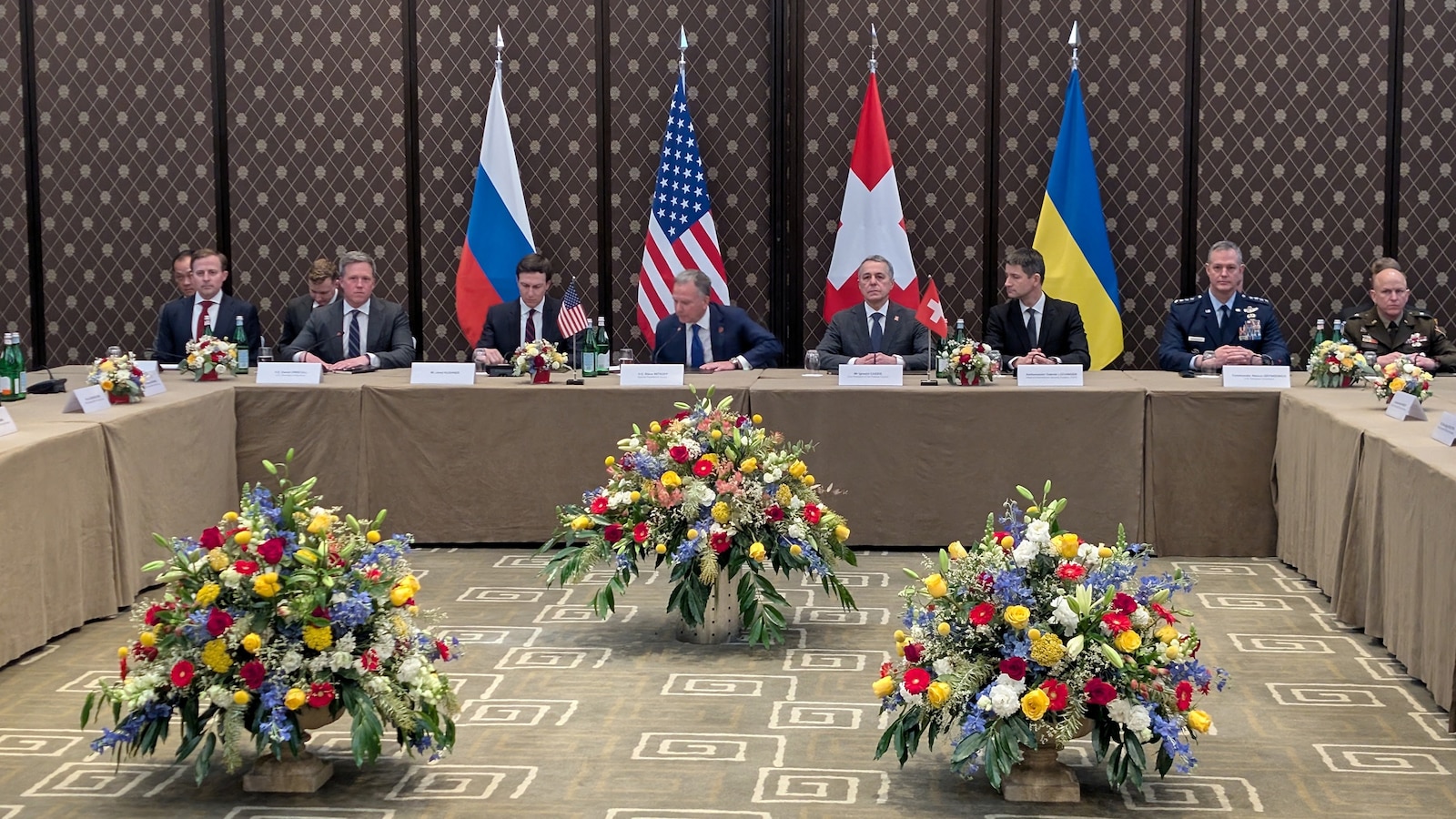
Simultaneously, another critical set of negotiations unfolded in Geneva, addressing Russia’s ongoing full-scale invasion of Ukraine. American negotiators led by Special Envoy Steve Witkoff and Jared Kushner, President Trump’s son-in-law, engaged in approximately six hours of discussions with Russian and Ukrainian representatives. These trilateral talks, the third installment following two previous rounds in the United Arab Emirates, focused on what Ukrainian officials described as “practical issues” and “the mechanics of possible solutions.” Rustem Umerov, Secretary of Ukraine’s National Security and Defense Council, confirmed that discussions would continue the following day, suggesting that while no immediate breakthrough had been achieved, the parties remained committed to the diplomatic process. Both Russian and Ukrainian officials echoed this commitment to continued dialogue, though the substance of what progress, if any, was made remained largely undisclosed.
The previous rounds of trilateral negotiations had been characterized as constructive but ultimately failed to produce breakthroughs on several contentious issues. Key sticking points include the future of Ukraine’s partially occupied eastern Donbas region, the fate of the Russian-occupied Zaporizhzhia nuclear power plant, and proposed Western security guarantees for Kyiv. These fundamental disagreements reflect the enormous complexity of resolving a conflict that has already claimed hundreds of thousands of lives and displaced millions. President Trump, speaking to reporters before the talks commenced, suggested the negotiations would be “very easy,” placing responsibility on Ukraine to “come to the table fast.” His comment that “we are in a position” to make a deal with Russia raised concerns among some observers about whether the U.S. might pressure Ukraine into accepting unfavorable terms. This approach represents a marked shift from the previous administration’s steadfast support for Ukrainian sovereignty and territorial integrity.
Violence Continues Despite Diplomatic Efforts
Underscoring the urgency of the diplomatic efforts, Russia launched a devastating attack on Ukraine’s energy infrastructure overnight, even as negotiators prepared to meet in Geneva. The Ukrainian Air Force reported that at least 396 drones and 29 missiles of various types targeted twelve regions across the country, causing extensive damage and leaving tens of thousands of people without heat and water supply. At least nine people, including children, were injured in the strikes. Ukrainian President Volodymyr Zelenskyy condemned the assault as “a combined strike, deliberately calculated to cause as much damage as possible to our energy sector.” He emphasized that such continuing aggression must be addressed in the negotiations, particularly with American representatives who had proposed that both Ukraine and Russia refrain from attacks. The timing of the strikes appeared calculated to undermine Ukraine’s negotiating position while demonstrating Russia’s continued military capability and willingness to inflict civilian suffering.
Zelenskyy responded to the attacks with a statement reaffirming Ukraine’s commitment to a just peace agreement while emphasizing his nation’s readiness to defend itself. “Ukraine is ready. We do not need war. And we always act symmetrically—we are defending our state and our independence. Likewise, we are ready to move quickly toward a just agreement to end the war,” he declared. The Ukrainian president said he was awaiting reports from his delegation regarding the day’s negotiations. The Russian Defense Ministry, meanwhile, claimed its forces had shot down 151 Ukrainian drones overnight, though such claims are difficult to independently verify. Poland’s Armed Forces Operational Command reported scrambling NATO aircraft and placing air defenses on alert in response to the Russian strikes, though no violations of Polish airspace were detected. These military actions occurring simultaneously with peace talks highlight the fundamental challenge facing negotiators: building trust and finding compromise while active combat continues.
Trump Administration Takes Hardline Approach to Iran
President Trump indicated he would be “indirectly” involved in the Iran negotiations, describing them as “very important” while acknowledging that Iran is “a very tough negotiator.” The Trump administration has articulated ambitious goals for any potential agreement with Tehran, including demands that Iran completely end all nuclear enrichment activities, accept constraints on its ballistic missile program, and cease support for regional proxy forces. These objectives represent longstanding American policy priorities but go significantly beyond the terms of the JCPOA, from which Trump withdrew during his first term in office. Iranian leaders have consistently rejected such comprehensive restrictions on their nuclear program and regional activities, viewing them as infringements on national sovereignty and legitimate security interests. The gulf between American demands and Iranian willingness to compromise suggests that achieving a comprehensive agreement will be extraordinarily difficult, despite both sides’ stated commitment to continued dialogue.
The negotiations have been conducted against a backdrop of escalating military tensions, with the United States significantly increasing its military presence in the Middle East. This buildup has been interpreted by some analysts as both a deterrent against Iranian aggression and potential preparation for military action should diplomacy fail. Iranian officials have responded with their own warnings, stating that Iranian forces will retaliate against both U.S. and Israeli targets if Iran is attacked. This mutual posturing reflects the deep mistrust characterizing the U.S.-Iran relationship and the very real possibility that miscalculation or escalation could lead to armed conflict. The stakes could hardly be higher, as a war involving the United States and Iran could destabilize the entire Middle East, disrupt global energy markets, and potentially draw in other regional and international powers.
Domestic Upheaval in Iran Complicates Diplomatic Landscape
The latest round of talks also occurs in the aftermath of major anti-regime protests that swept across Iran, initially sparked by deteriorating economic conditions but quickly expanding into broader challenges to the government’s legitimacy. President Trump publicly offered support to the demonstrators, telling them to “keep protesting” and promising that “help is on its way.” This statement, while appealing to those seeking regime change in Iran, complicated the diplomatic process by reinforcing Iranian suspicions that the United States seeks not merely behavioral changes but the overthrow of the Islamic Republic itself. The Iranian security forces violently suppressed the demonstrations, killing at least 7,000 people according to data published by the U.S.-based Human Rights Activists News Agency (HRANA). This brutal crackdown has further damaged Iran’s international standing and complicated efforts to build the trust necessary for successful negotiations.
The intersection of these various factors—nuclear negotiations, ongoing conflicts, domestic instability, and historical grievances—creates an extraordinarily complex diplomatic environment. Both the Iran and Ukraine negotiations represent critical tests of whether diplomacy can resolve seemingly intractable international conflicts or whether military confrontation remains inevitable. The coming weeks will likely prove decisive in determining whether the “window of opportunity” Iranian Foreign Minister Araqchi described can produce meaningful agreements or whether the diplomatic process will collapse, leaving military options as the default approach. For millions of people in Ukraine, Iran, and throughout the Middle East, the outcome of these Geneva talks could determine whether they face continued war and instability or the possibility of peace and reconstruction. The international community watches anxiously as these high-stakes negotiations continue, hoping that skillful diplomacy can succeed where force and coercion have thus far failed to produce lasting solutions.